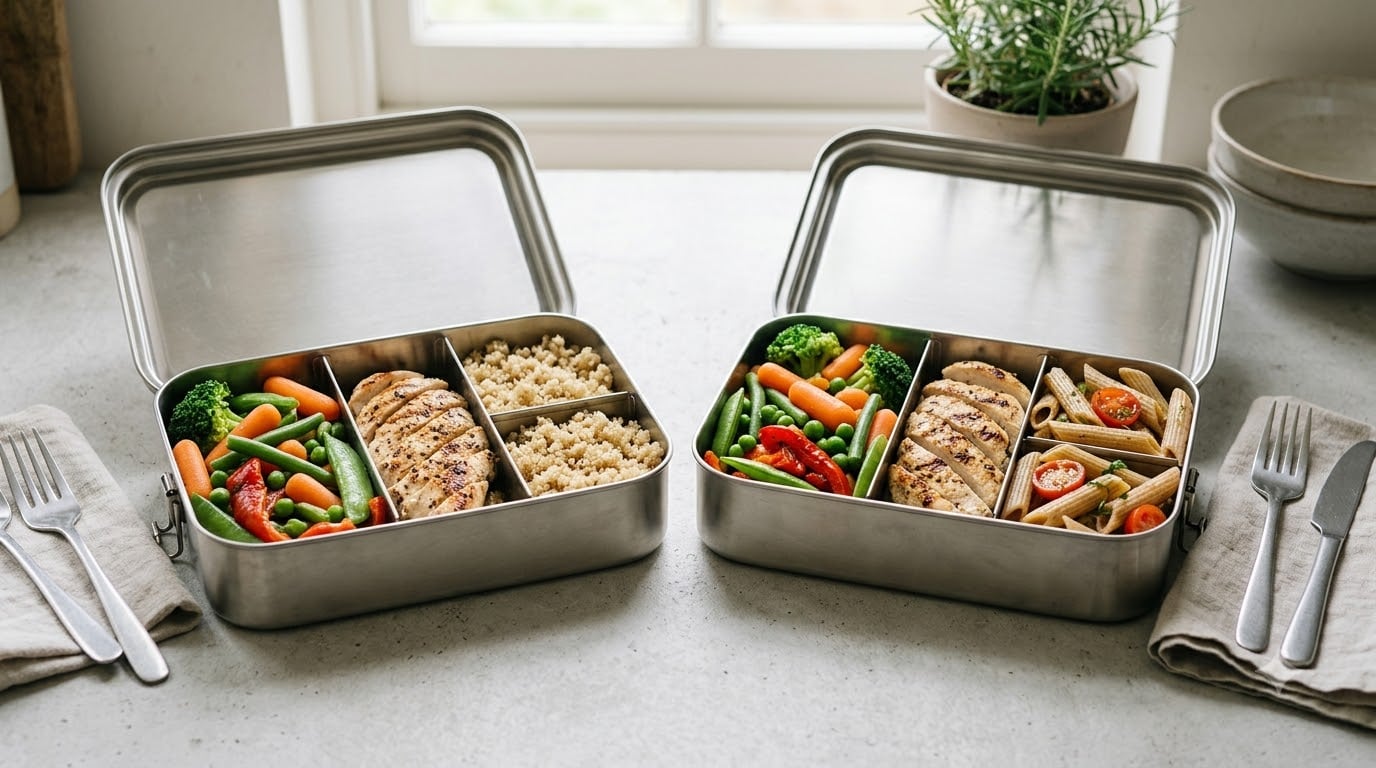
If you have to pick one approach for weight loss, pick the one you will still be doing in six months. On low carb vs low fat for weight loss, the honest answer is that the calorie deficit does most of the work, and the pattern matters mainly because it changes how hungry you feel, how much food volume you get, and whether you can actually keep the routine. Head-to-head trials that matched calories found no meaningful difference in weight lost at one year.
That leaves a practical question: which pattern fits your appetite, your food preferences, your grocery budget and your health history? This guide compares the two on the things that decide real-world results, then gives you a way to choose.
One note before we start. This is general nutrition information, not a treatment plan. If you have diabetes, take insulin or other medication, are pregnant, have kidney or liver disease, or have a history of disordered eating, talk with your doctor or a registered dietitian before changing how you eat.
Table of Contents
- Low Carb vs Low Fat for Weight Loss at a Glance
- How Does Low Carb vs Low Fat Weight Loss Work?
- Low carb vs low fat for weight loss: which changes the outcome?
- Which Approach Helps You Feel Fullest?
- What Nutritional Differences Should You Consider?
- Which Diet Is Easier and More Affordable?
- Who May Prefer Low Carb and Who May Prefer Low Fat?
- How to Choose a Sustainable Weight Loss Approach
- Which Should You Choose?
- Choose a lower-carb pattern if
- Choose a lower-fat pattern if
- Choose a moderate, flexible plan if
- Frequently Asked Questions
- Which burns more calories, low carb or low fat?
- Do you have to count calories on a low-carb or low-fat diet?
- What is the healthiest way to do a low-carb diet for weight loss?
- Will a low-fat diet still work if I eat carbohydrates?
- How much weight can you lose in the first month on either diet?
- Conclusion
Low Carb vs Low Fat for Weight Loss at a Glance
| Factor | Lower-carb pattern | Lower-fat pattern |
|---|---|---|
| What gets limited | Carbohydrates, often 50 to 130 g a day; very low-carb versions go under 50 g | Fat, often under 30 percent of daily calories |
| What gets more room | Protein and fat: meat, fish, eggs, dairy, nuts, olive oil, avocado | Carbohydrates and lean protein: grains, legumes, vegetables, fruit, fish, skinless poultry |
| How weight loss happens | A calorie deficit, often reached by dropping refined carbs and added sugar; early scale drop includes water weight | A calorie deficit, often reached by cutting oil, butter, and large portions of cheese and fatty meat |
| Fullness per calorie | High from protein and fat; water and fiber can fall if you cut out grains and fruit | High from food volume; can dip if fat is replaced with refined carbs |
| Blood sugar | Flatter day to day, especially with insulin resistance or type 2 diabetes | Depends heavily on which carbohydrates you choose |
| Typical weakness | Constipation, the first-week adaptation people call keto flu, social friction at very low carb | Hunger between meals if the diet is heavy on starch and light on protein and vegetables |
| Grocery pattern | More eggs, meat, cheese, nuts and specialty low-carb bread and wraps | More grains, beans, frozen vegetables, canned tuna and bulk produce |
| Best fit | People who want fewer spikes, hate snacking on crackers and chips, or are working with insulin resistance | People who want big plates of rice, beans, oats and vegetables and eat with a family that eats that way |
Read the table as a set of tradeoffs rather than a scoreboard. Every row has a catch attached to it.
How Does Low Carb vs Low Fat Weight Loss Work?
Both patterns work by putting you into a calorie deficit, the state where you take in fewer calories than you burn. That single mechanism explains most of what you see in the research, and it is why any diet built on a rigid food rule eventually plateaus for people who stop following the rule.
The Stanford DIETFITS trial is the clearest test, because 609 adults were assigned to a healthy low-fat diet or a healthy low-carb diet and followed for 12 months. Average weight loss came out at a little under 12 pounds in both groups, with no significant difference between them. A 2022 meta-analysis of 39 studies reached the same shape of conclusion: the gap between the two diets showed up at six and twelve months, then disappeared by the two-year mark.
So where do the differences actually come from? Lower-carb eating cuts out refined carbohydrates and added sugar, which tend to be high in calories and easy to overeat. Cutting carbohydrate also lowers insulin and pulls stored water out with the glycogen it sits on, so the first week often drops several pounds that are not fat.
Lower-fat eating removes nine-calorie-per-gram fat from the plate, which lets most people eat a larger volume of food for the same calories. Fat is easy to overeat precisely because it is dense, so the swap only works if you replace it with vegetables, legumes, and lean protein rather than with bread and crackers.
Low carb vs low fat for weight loss: which changes the outcome?
The mechanism differences change the experience of the diet far more than they change the scale. Both lower blood sugar differently and both lower calorie intake differently, and neither difference reliably produced more fat loss in matched-calorie trials. What reliably separated outcomes was how long people stayed on the plan.
That is also why reading a single study is misleading. Trials last six months to two years, and most diets diverge after that. The people who still look lean at year two are the ones whose pattern survived contact with real life.
Which Approach Helps You Feel Fullest?
Fullness comes down to three things: protein, fiber and food volume, in that order of reliability. Fat adds to fullness too, but it is a weaker signal than protein for most people, and it is calorie-dense enough that it can quietly push intake up.
A lower-carb pattern tends to score high on protein, which is why people on it often report fewer between-meal cravings. A lower-fat pattern can score high on fiber and volume, which is why it tends to work better for people who naturally eat a lot of vegetables and grains.
The trap is substitution. Cut fat and replace it with white bread, and fullness drops while calories stay flat. Cut carbohydrates and replace them with butter and heavy cream, and calories climb fast. Either way the pattern looks like it is failing, when actually the substitution is the problem.
Individual response matters more than the research average here. Some people genuinely feel hungrier on a low-fat plan because fat takes up space they want filled with food, while others feel unrestrictable on very low carb because carbohydrate is what makes a meal feel complete to them. There is no test for this, which is why a two-week trial beats a spreadsheet.
What Nutritional Differences Should You Consider?
Fiber is the biggest practical gap. Lower-carb plans often push grains, legumes and fruit out, and those are among the best fiber sources in a normal diet. Going under 30 g a day can mean constipation and a less satisfying plate, so if you go this route, most dietitians suggest keeping non-starchy vegetables, berries and nuts in the plan rather than slashing all fruit.
Fat quality is the biggest difference on the other side. A well-built lower-fat diet leans on olive oil, nuts, seeds, avocado and fish. A lower-carb diet is where the saturated fat question comes up, because processed meats, butter and full-fat cheese become staples when carbohydrate is cut back. If you have high cholesterol or a family history of heart disease, that trade is worth discussing with your doctor.
Protein is the overlap both camps agree on. Most adults do better on weight loss with roughly 1.2 to 1.6 grams of protein per kilogram of body weight per day, and enough protein also helps preserve muscle while dieting.
Micronutrients get shortchanged when a diet gets narrow. Restricting carbohydrate can push you under your fiber, calcium and potassium targets; restricting fat can push you short on vitamin E and essential fatty acids unless you choose nuts, seeds and oily fish deliberately. A multivitamin is cheap insurance on either plan, but it is not a substitute for a plate with real variety.
One more thing to watch: the scale lies for a week or two on either approach. Water weight moves with sodium, carbohydrate intake, muscle soreness and bowel habits. Judge progress on a four-week average, not on Monday morning.
Which Diet Is Easier and More Affordable?
Neither is automatically cheaper, and the difference mostly comes down to how much meal planning you are willing to do. Low-carb eating is cheaper at the shelf-stable level, because eggs, chicken thighs, canned tuna, frozen vegetables and meat are inexpensive protein. It gets expensive fast if you lean on specialty bread, wraps, chips and snacks, which many low-carb shoppers describe as the real budget killer.
Low-fat eating draws more on grains, beans, dried pasta, oats and frozen produce, which are among the cheapest things in a grocery store and keep well for a week of leftovers. The catch is that low-fat versions of prepared foods often get replaced with sugar, so a low-fat granola bar or fat-free yogurt can cost you more than the regular one in the long run.
Time tells a similar story. Lower-carb cooking is faster: a protein plus vegetables needs twenty minutes. Lower-fat cooking often means batch cooking grains and beans on Sunday so the weekday meals exist, which takes more planning but less evening effort.
Neither approach is easy at a restaurant, though for opposite reasons. A lower-fat diner can usually order fish and vegetables and just leave the butter alone. A lower-carb diner often has to navigate sauces, bread baskets and sides that were not counted as the main event. Travel splits the same way, and both get harder once you are eating at a colleague’s house twice a week.
Who May Prefer Low Carb and Who May Prefer Low Fat?
Lower-carb eating tends to suit people who are bothered by constant snacking and cravings, who already eat a fair amount of meat, eggs and dairy, or who are working with insulin resistance, prediabetes or type 2 diabetes and want steadier blood sugar. It also suits anyone who finds starch unsatisfying and feels hungry two hours after rice.
One caution on blood sugar with diabetes: cutting carbohydrate while taking insulin or sulfonylureas can cause low blood sugar quickly, so medication usually needs adjusting. That adjustment belongs with your prescriber, not with a food blog.
Lower-fat eating tends to suit people who want large volumes of food at a meal, who love grains, beans and fruit, who eat with a family that eats that way, or whose reason for eating less fat is cholesterol and heart health rather than calories. It is also gentler on social situations, because most dishes can be modified rather than replaced.
Highly trained endurance athletes often struggle on very low carbohydrate, because long sessions burn fat for fuel while the brain and muscles still prefer glucose. If training is heavy or you notice your performance dropping in week two, a moderate-carb version of the lower-carb approach usually fixes it.
If you have any medical condition, take medication, or have been through restrictive eating before, do not pick a pattern on your own. A registered dietitian can adapt either one to your labs and your history in a way a generic plan cannot.
How to Choose a Sustainable Weight Loss Approach
This is the part competitors skip, so here is a process that takes about twenty minutes.
- Write your non-negotiable foods. Ten foods you will not give up. If bread, rice, pasta or fruit is on that list, a strict very-low-carb plan is going to fight you every week.
- Build one realistic day on each plan. Include a normal breakfast, your commute snack, lunch out and dinner. Count nothing yet. Notice which day you would rather actually eat.
- Check protein and fiber. Each plan should hit roughly 1.2 to 1.6 g of protein per kilogram of body weight and at least 25 to 30 g of fiber. If either falls short, fix it before you start.
- Set a measurable goal. Pick a weekly rate around 0.5 to 1 percent of body weight, and define how you will track it, for example a weekly weigh-in averaged over four weeks.
- Give it a real trial. Two to four weeks, long enough to get past the adaptation period on either plan. Keep a one-line note each day about energy and hunger.
- Keep what worked and change one thing. If you stalled, change one variable rather than everything, since swapping plans often is the reason people yo-yo.
If you plateau, check the obvious things first: portions of oil and nut butter, liquid calories, weekend meals, and portion creep. Those account for most plateaus. Then give the plan another month before deciding it does not suit you.
Which Should You Choose?
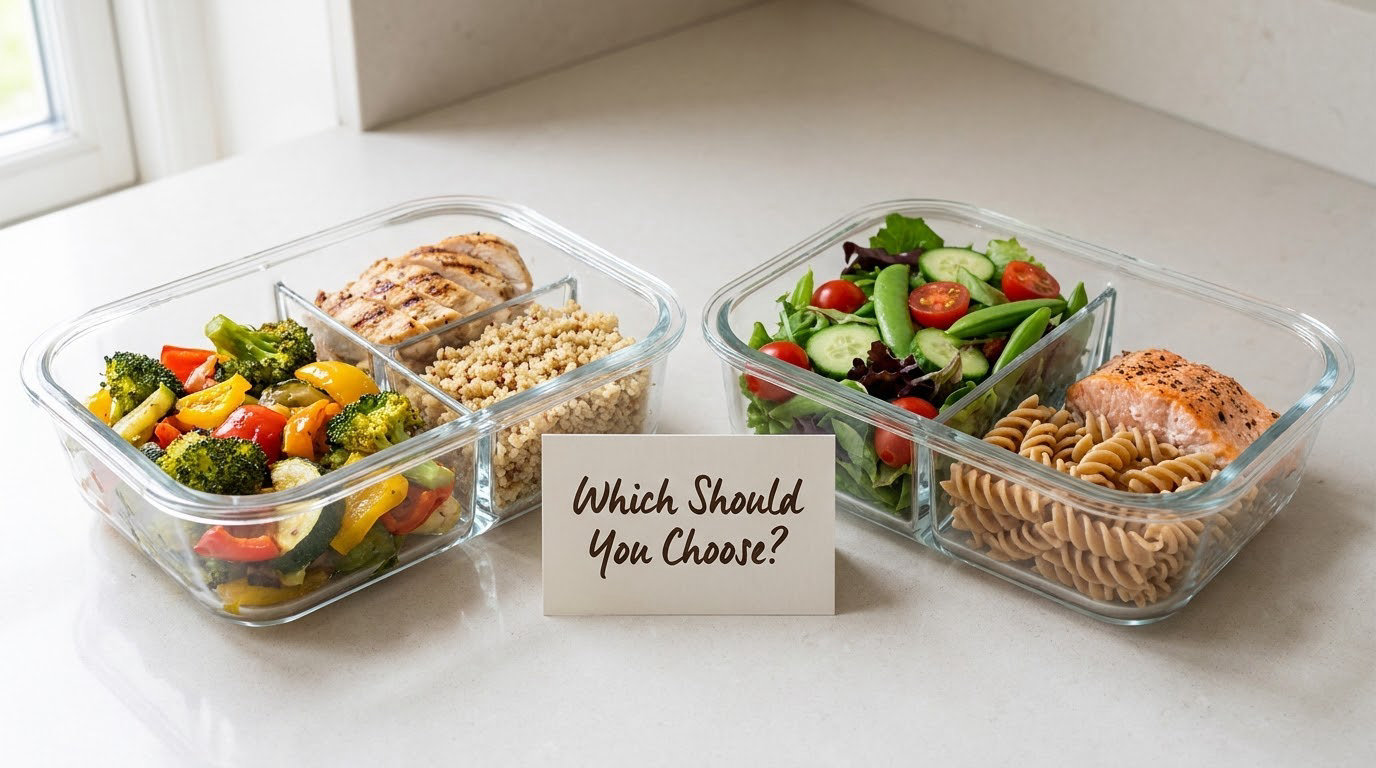
Choose a lower-carb pattern if
You get hungry between meals, you snack mindlessly on crackers and chips, you are working with insulin resistance or type 2 diabetes, or your household already eats a lot of meat and eggs. Keep vegetables, nuts and berries in the plan so fiber does not disappear, and expect a fast first week that is mostly water.
Choose a lower-fat pattern if
Rice, beans, oats and vegetables are the foods you actually look forward to, you eat with a family that eats that way, or your main reason for cutting fat is cholesterol and heart health. Build the plate around volume and lean protein, because a starch-heavy version will leave you hungry by mid-afternoon.
Choose a moderate, flexible plan if
You have been through several diets that ended in a rebound, or you suspect you cannot sustain either restriction. Eating consistently less food across a wider set of choices, with protein at every meal and vegetables at two, will beat a strict plan you abandon. Most long-term maintainers describe exactly this, and none of them describe a rule they never broke.
Frequently Asked Questions
Which burns more calories, low carb or low fat?
Neither, in the sense that most people mean. Total daily calorie intake and expenditure drive fat loss, and matched-calorie trials such as the Stanford DIETFITS trial found no meaningful difference at 12 months. What changes is how the calories arrive: protein and fat are satiating per calorie, while fat is calorie-dense per bite. Lower-carb eating also burns a little more fat for fuel, but not enough to outweigh adherence in most people’s results.
Do you have to count calories on a low-carb or low-fat diet?
Not strictly, but you still have to control how much you eat. Lower-carb diets lower appetite for many people early on, which does a lot of the counting for you. That effect usually softens after a few months, and calories tend to creep back up. Tracking for two or three weeks is a useful way to learn what a portion looks like without turning it into a permanent job.
What is the healthiest way to do a low-carb diet for weight loss?
Keep the foods that matter and cut only the ones causing trouble. Build meals around vegetables, protein and unsaturated fat, keep some fruit or berries in for fiber, and stay hydrated with sodium and electrolytes during the first two weeks. Avoid the very low-carb version unless a clinician recommended it, since it brings constipation and social difficulty for a fast initial drop that is mostly water.
Will a low-fat diet still work if I eat carbohydrates?
Yes. Carbohydrates are not the problem by default; the ones high in refined flour and added sugar are. A lower-fat plan built on beans, oats, brown rice, fruit and vegetables can absolutely produce weight loss when it creates a calorie deficit. Watch for the common failure mode: dropping fat and replacing it with pastries, crackers and sweet drinks, which fills the calorie gap it was supposed to create.
How much weight can you lose in the first month on either diet?
Roughly 4 to 8 pounds of scale weight for many people, though results vary widely and that range includes water. On a lower-carb plan, much of the first week’s drop is glycogen and the water attached to it, which is why week two often feels stalled. Steady fat loss usually shows up in a four-week average rather than week one, so judge progress on averages, not single weigh-ins.
Conclusion
Low carb vs low fat for weight loss is not a contest with a winner. Both produce the same result when calories match, so the deciding factor is how well each one fits your appetite, your food preferences, your budget and your health history.
Start tonight with the short version: write down ten non-negotiable foods, build one realistic day on each approach, and pick the one you would rather eat again on Sunday. Run it for three to four weeks, weigh in once a week and track the average, and change one thing at a time if it stalls. If you are managing a medical condition or taking medication, bring the plan to your doctor or a registered dietitian before you start.