
The signs you are eating too little usually show up as a cluster rather than a single symptom: tired but hungry, cold in a warm room, hair thinning in the shower, periods stopping, and irritability that sleep does not fix. Any one of those can have a completely different cause, so none of them proves anything on its own. What matters is the pattern, and whether it has lasted more than a few weeks.
Undereating simply means taking in less energy than your body uses over time. It happens far more often by accident than on purpose, especially when someone is dieting hard, training a lot, or juggling a packed week. Mainstream nutrition guidance from bodies like the NIH and the CDC treats a persistent shortfall as a real health concern rather than a badge of discipline.
Below is what to look for, why it happens, and what to do next. It is general information, not a diagnosis, and your own needs can only be worked out properly with a doctor or a registered dietitian.
Table of Contents
- What Are the Signs You Are Eating Too Little?
- 8 Signs Your Food Intake May Be Too Low
- Constant Hunger and Food Fixations: Early Signs You Are Eating Too Little
- Fatigue, Weakness, or Low Energy
- Trouble Sleeping or Feeling Irritable
- Changes in Menstrual Cycles or Hair
- Feeling Cold, Nauseous, or Physically Unwell
- Why Does Eating Too Little Happen?
- How to Tell Whether You Are Eating Enough
- Simple Ways to Adjust Your Intake Safely
- When Should You Talk With a Healthcare Professional?
- Frequently Asked Questions
- How do I know if I am eating too little?
- Is feeling hungry after every meal always a sign of under-eating?
- Can eating too little cause fatigue and dizziness?
- How many calories should I eat to lose weight?
- What should I do if I am losing weight too quickly?
- When should symptoms that may be related to low intake see a doctor?
What Are the Signs You Are Eating Too Little?

Not eating enough is about totals over weeks, not about one small meal. Skipping breakfast on a six a.m. gym day is not undereating. Eating 1,400 calories a day for three months while running 30 miles a week probably is, even if the number looks disciplined on paper.
It helps to sort what you notice into three groups. Physical signs cover energy, temperature, digestion, hair and immunity. Mental and emotional signs cover mood, sleep, concentration and how much space food takes up in your head. Hormonal signs cover periods, libido and thyroid-related symptoms, mostly in people of reproductive age. Most readers who are undereating eventually notice something in all three groups.
Needs also vary a lot between people. A 25-year-old who trains twice a week and a 55-year-old with a desk job have different requirements, and two people of the same age and size can still differ by a few hundred calories a day. That is why no single calorie number can tell you whether you are eating too little.
8 Signs Your Food Intake May Be Too Low
Here is the quick version before the detail. If several of these have shown up over the past month or two, it is worth a closer look at your intake.
- Hunger that never fully switches off, and constant snacking
- Fatigue that a full night of sleep does not fix
- Trouble falling asleep or staying asleep
- Irritability, anxiety or low mood
- Period changes, missing periods or low libido
- Thinning hair, dry skin or brittle nails
- Feeling cold, or shivering in a normally warm room
- Dizziness, nausea or feeling physically unwell
Constant Hunger and Food Fixations: Early Signs You Are Eating Too Little
Persistent hunger that arrives back an hour after a meal is one of the earliest signals. So is thinking about food constantly, opening the fridge without deciding to, and cooking more than you eat.
Sometimes this is not a calorie problem at all. A meal of mostly refined carbs with little protein or fat leaves you hungry quickly, and long gaps between meals create a rebound appetite that feels more intense than it is. Fixing meal structure often fixes the hunger.
Food preoccupations are a different story. When eating starts to dominate your thoughts, when you plan meals around rules rather than hunger, or when you feel guilt after a normal portion, that deserves attention from a professional rather than a tighter target.
Fatigue, Weakness, or Low Energy
Persistent tiredness is the sign readers describe most often. You feel heavy getting out of bed, your warm-up takes forever, and stairs that were easy a year ago now leave you catching your breath.
Readers on weight-loss forums describe this pattern constantly: normal bloodwork, adequate sleep on paper, and still no energy. One poster eating 1,300 to 1,800 calories while running three miles a day described being exhausted no matter how much she slept, with normal results except low vitamin D. Another user prescribed 1,400 to 1,550 calories felt so lethargic she switched from running to walking long distances, and felt noticeably better within weeks when she ate above her target.
Fatigue has many possible causes, from anemia and thyroid problems to poor sleep and overtraining. Persistent or severe fatigue needs a medical workup, not a guess about calories.
Trouble Sleeping or Feeling Irritable
Sleep often changes before anything else does. You wake at 3 a.m. hungry, or you lie awake with mental chatter about food. Very low carbohydrate intake tends to make this worse, especially with evening training.
Irritability rides along with it. Cortisol rises when the body is running on an energy shortfall, and low carbohydrate intake can pull serotonin down. The result is short tempers over small things, lower tolerance for noise and crowds, and a general sense of being on edge. Plenty of readers describe snapping at family over nothing, which is one of the least discussed and most common effects.
Changes in Menstrual Cycles or Hair
Periods becoming lighter, irregular or absent are among the most serious signs of low intake, and they are routinely ignored. When energy availability stays low for long enough, the hypothalamus slows hormone signalling and ovulation stops. Clinicians call it functional hypothalamic amenorrhea, and it can happen at any body size, including at a normal weight.
Alongside that, hair thinning at the temples or across the crown, dry flaky skin, and nails that break easily are common. The body routes limited nutrients to essential organs first, so hair, skin and nails take the hit last and most visibly. Libido often drops at the same time.
Any change in your cycle that lasts more than a few cycles should go to a doctor. Missing a pregnancy is the first thing to rule out, and fertility planning deserves real medical input rather than another cut in calories.
Feeling Cold, Nauseous, or Physically Unwell
Cold hands and feet, a lower body temperature, and shivering in a room that used to feel fine are classic signs of reduced metabolic activity. Muscle loss shows up as strength dropping and clothes fitting differently even when the scale has not moved much.
Less obvious physical complaints include dizziness on standing, headaches, nausea, constipation, bloating, overactive thirst, and getting sick more often than you used to. Slow-healing cuts and bruises are worth noting too.
Some red flags mean you should stop reading articles and get help today: fainting, severe or repeated dizziness, chest pain, confusion, a racing heart, or repeated vomiting. Those need prompt medical attention.
Why Does Eating Too Little Happen?
Most unintentional undereating comes from a few repeatable patterns.
- Deficit too big for too long. A 500-calorie deficit is manageable for many people. A 1,200-calorie deficit is not, and most people cannot sustain one for months without symptoms showing up.
- Exercise calories ignored. Targets are often set for a sedentary day and then used on a day with an hour of hard training or a manual job. Underfueling athletes hit this constantly.
- Skipped meals collapsing into catch-up eating. Missing meals all day then overeating at night produces big swings in blood sugar, poor sleep and constant hunger.
- Busy schedules. No breakfast, a desk lunch, then a stressful evening is how a normal week quietly becomes a low-intake week.
- Numbers from an app treated as a prescription. A recommended number is a population average, not a medical target, and it rarely knows about your training, your job or your history.
- Stress, poor sleep and low appetite. Stress suppresses appetite on its own, and sleep loss raises next-day hunger while lowering self-control, so short sleep quietly lowers total intake.
- Aging and appetite changes. Adults over 65 often report reduced hunger and taste, which means less food eaten can mean meaningful deficiencies faster.
Competing pressures make this common in specific groups: people cutting for a competition, those tracking macros strictly, anyone doing intermittent fasting beyond their tolerance, and anyone whose food rules were built for weight loss and kept long after the weight came off.
How to Tell Whether You Are Eating Enough
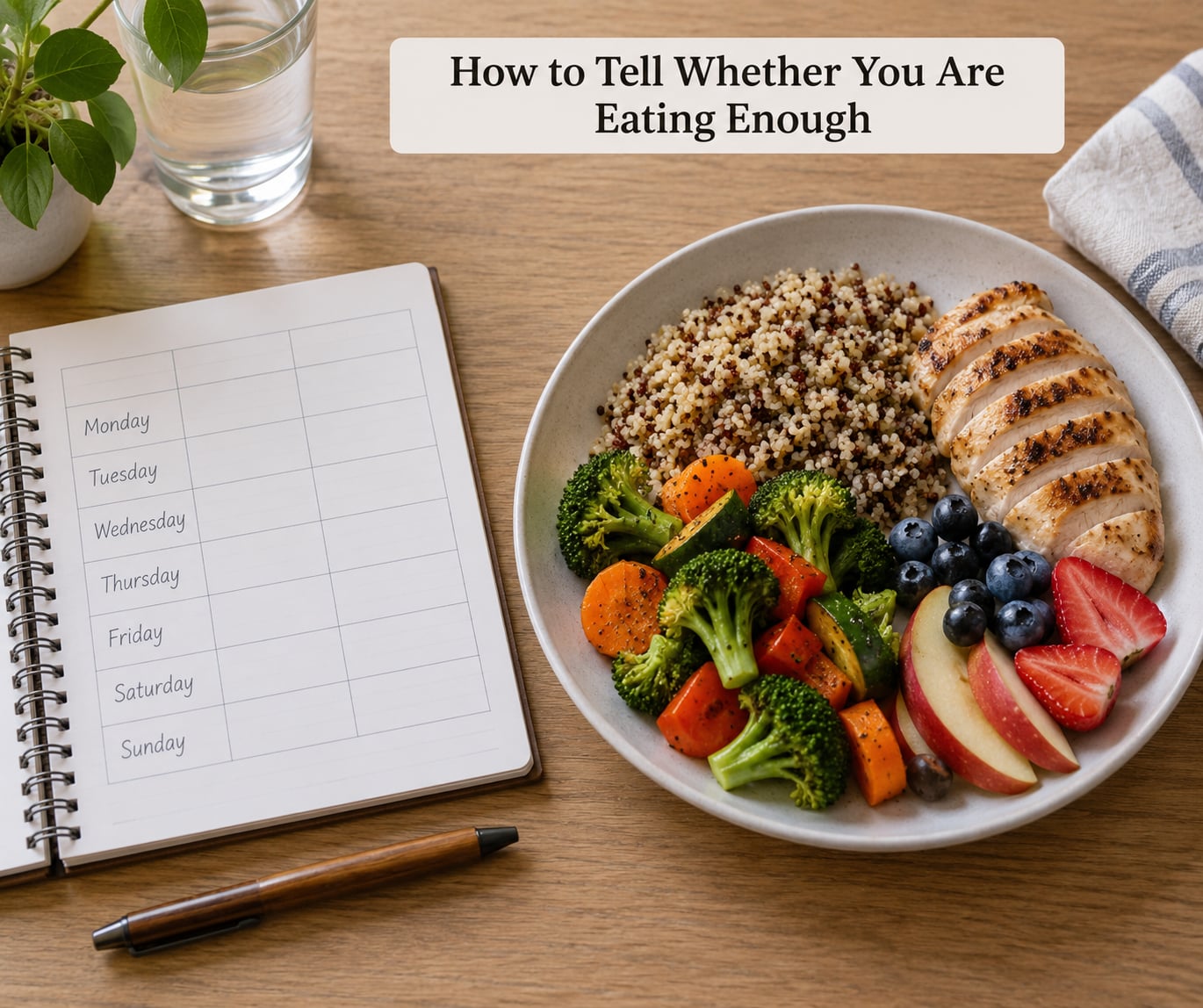
No single sign settles this, so look for consistency across a few weeks rather than one bad day. Five checks cover most of it.
- Meal regularity. If you routinely skip two or more eating occasions a day, treat that as data rather than efficiency.
- Hunger between meals. Mild hunger that resolves at the next meal is normal. Ravenous hunger within an hour or two, every day, is not.
- Recovery after training. Your workouts should get easier across weeks. Performance that keeps dropping while you restrict usually means fuel is the limit.
- Variety and protein. Around 30 different foods a week is a practical proxy for variety. Adequate protein at each meal keeps fullness steady.
- Changes in weight, cycle and strength. A slow trend is far more informative than a single weigh-in, because water weight moves several pounds overnight.
Weight alone is a poor test. People undereating for months sometimes hold steady or gain while losing muscle, because the body lowers its own burn and holds onto water. A stable scale with falling strength, falling hair and worsening mood is undereating in progress.
| What you notice | Normal fluctuation | Worth investigating |
|---|---|---|
| Hunger | Appetite rises before a long gap between meals | Ravenous within an hour or two of finishing, most days |
| Energy | A slow afternoon after a light lunch | Tired despite a full night of sleep, several weeks running |
| Temperature | Feeling cool when you go outside | Cold hands and feet indoors, shivering at normal room temperature |
| Mood | One irritable day under stress | Low mood, anxiety or snapping at people most days |
| Sleep | One bad night before a deadline | Waking hungry, night sweats or unrefreshing sleep repeatedly |
| Weight | Water weight swings of a few pounds | Loss continuing despite adequate intake, or strength dropping while weight holds |
Timing helps too. The first signs of undereating usually show up within days to weeks. Hair, skin, nails and cycle changes are later signals that usually reflect months of low intake. Getting help at the earlier stage is far easier than repairing the later one.
Simple Ways to Adjust Your Intake Safely
If your patterns point to undereating, the fix is usually more regular and more satisfying food, not a bigger deficit.
- Set three eating occasions a day and protect them. Even two solid meals beat five tiny ones if the small ones get skipped on busy days.
- Add protein and fiber before adding calories. A palm-sized portion of protein plus vegetables and a fiber-rich carbohydrate at each meal raises fullness with the least fuss.
- Include some fat. Fat at meals supports hormones and takes the edge off hunger; very low fat intake shows up as poor sleep and mood.
- Eat before demanding training. Fueling around hard sessions matters far more for performance and recovery than the exact number on a tracker.
- Retire the rules that hurt. Any food rule that makes you anxious, rigid or social at meals deserves a review, even if it once produced results.
- Track less, notice more. For many people, obsessive logging is itself a symptom. A simple three-day photo record usually gives a more honest picture than a month of weighing every gram.
- Add slowly. Jumping straight to a large surplus after a long restriction can cause bloating and digestive discomfort, so build up in small steps across a few weeks.
If you have a history of disordered eating, pregnancy, an eating disorder diagnosis, or a medical condition affecting appetite or absorption, do not adjust your intake on your own. Get individual guidance instead.
When Should You Talk With a Healthcare Professional?
Book an appointment rather than adjusting your intake yourself if any of these apply.
- Weight is dropping unintentionally, or dropping faster than you intended
- Periods are irregular, lighter or absent, or you want to conceive
- You feel dizzy, faint, or physically unwell, or you have recurring injuries
- Food rules, guilt after eating, or intrusive food thoughts run the day
- You are getting sick often, or wounds and bruises are healing slowly
- You have a medical condition such as diabetes, thyroid disease, or a gastrointestinal disorder
- You are over 65, pregnant, or caring for someone with high energy needs
A registered dietitian can work through your history, training load and symptoms, and can tell you whether you need laboratory tests or a referral. A doctor should assess fainting, chest pain, severe weakness or confusion. If food thoughts come with fear, guilt or panic, a therapist who specialises in eating disorders is a good first call, and asking is not an overreaction.
Frequently Asked Questions
How do I know if I am eating too little?
Look for a pattern rather than a single symptom. Signs that are common together include fatigue despite good sleep, feeling cold indoors, constant hunger within an hour of eating, hair thinning, poor sleep, irritability and unintentional weight loss. Needs differ by body size, age, sex and activity, so compare yourself only to your own recent history. A registered dietitian can assess your intake and symptoms properly.
Is feeling hungry after every meal always a sign of under-eating?
No. Hunger soon after a meal often reflects what you ate rather than how much you ate in the day. Meals built mostly from refined carbohydrates, with little protein, fiber or fat, digest quickly and leave you hungry again. Meal timing matters too, and a large gap between eating occasions produces rebound hunger. Persistent hunger that arrives within an hour or two of finishing, most days, alongside low energy or strength, is a stronger reason to look at your total intake.
Can eating too little cause fatigue and dizziness?
It can. When intake stays below what your body burns, blood sugar dips between meals and the body conserves fuel by lowering metabolic activity, which commonly shows up as tiredness, weakness and lightheadedness on standing. Dehydration, low iron and low vitamin D can add to the same feeling. Because fatigue and dizziness have many causes, anyone with persistent or severe symptoms should see a doctor rather than assume the cause is calories.
How many calories should I eat to lose weight?
There is no single number. Common clinical starting points for intentional weight loss sit around 1,200 to 1,500 calories a day for women and 1,500 to 1,800 for men, and many guidelines treat roughly 1,200 to 1,500 for adults of any sex as a floor for unsupervised dieting. Numbers from apps are population averages, not medical targets. Personal needs depend on size, age, activity and health history, so a dietitian can give you a realistic range.
What should I do if I am losing weight too quickly?
Slow, steady progress is the goal, and weight dropping fast often signals a deficit that is too large. Most people do better with a modest deficit of about 10 to 20 percent of their maintenance needs than with an aggressive one they cannot sustain. Track the trend over several weeks rather than daily readings, and raise your intake gradually with regular, satisfying meals. If weight keeps falling, or you feel dizzy or unwell, speak to a doctor or registered dietitian.
When should symptoms that may be related to low intake see a doctor?
Arrange a medical review if symptoms last more than a few weeks, if weight is dropping unintentionally, if periods change or stop, if you feel dizzy or faint, or if injuries and illness keep happening. Get urgent care for fainting, chest pain, confusion, a racing heart or repeated vomiting. Food rules, guilt after eating or intrusive thoughts about food also deserve prompt support, since those point to a health issue rather than a tracking problem.
If you take one thing from this, look at the last two weeks honestly rather than today. Three regular meals that include protein, fiber and some fat at each sitting, plus a conversation with a doctor or registered dietitian if symptoms have lasted, is where I would start.