Does drinking water before meals help you lose weight? The honest answer is a small yes. A glass of water about 30 minutes before a meal can take the edge off hunger for some people, and if it replaces a sugary drink it cuts real calories. On its own, though, it will not move the scale much. Any benefit appears inside a calorie deficit, not instead of one.
That is a less exciting answer than the one usually attached to this advice. Plenty of people have grown up hearing a parent or grandparent insist on two glasses before every meal, and the habit has been repeated so often that it arrives with the authority of folk wisdom. It is also cheap, free of side effects and easy to picture, which makes it attractive to anyone who would rather not count calories.
What follows is what the research actually supports, how much water to drink and when, what the habit genuinely cannot do, and the situations where it is worth asking a clinician first. I am not going to pretend a glass of water is a fat-burning trick, because it is not one.
Table of Contents
- What Does the Research Say?
- How Could Drinking Water Before Meals Affect Appetite?
- Does Drinking Water Before Meals Help You Lose Weight?
- What Does the Available Evidence Actually Show?
- How Much Water Should You Drink Before a Meal?
- When Is the Best Time to Drink It?
- How Can Pre-Meal Water Fit Into a Healthy Routine?
- Are There Downsides or Situations to Be Careful About?
- Frequently Asked Questions
- How many cups of water should I drink before eating?
- Does a glass of water make you feel full?
- Should I drink water 30 minutes before a meal?
- Is pre-meal water better than drinking it with meals?
- Can drinking too much water interfere with weight loss?
- What to Do First
What Does the Research Say?
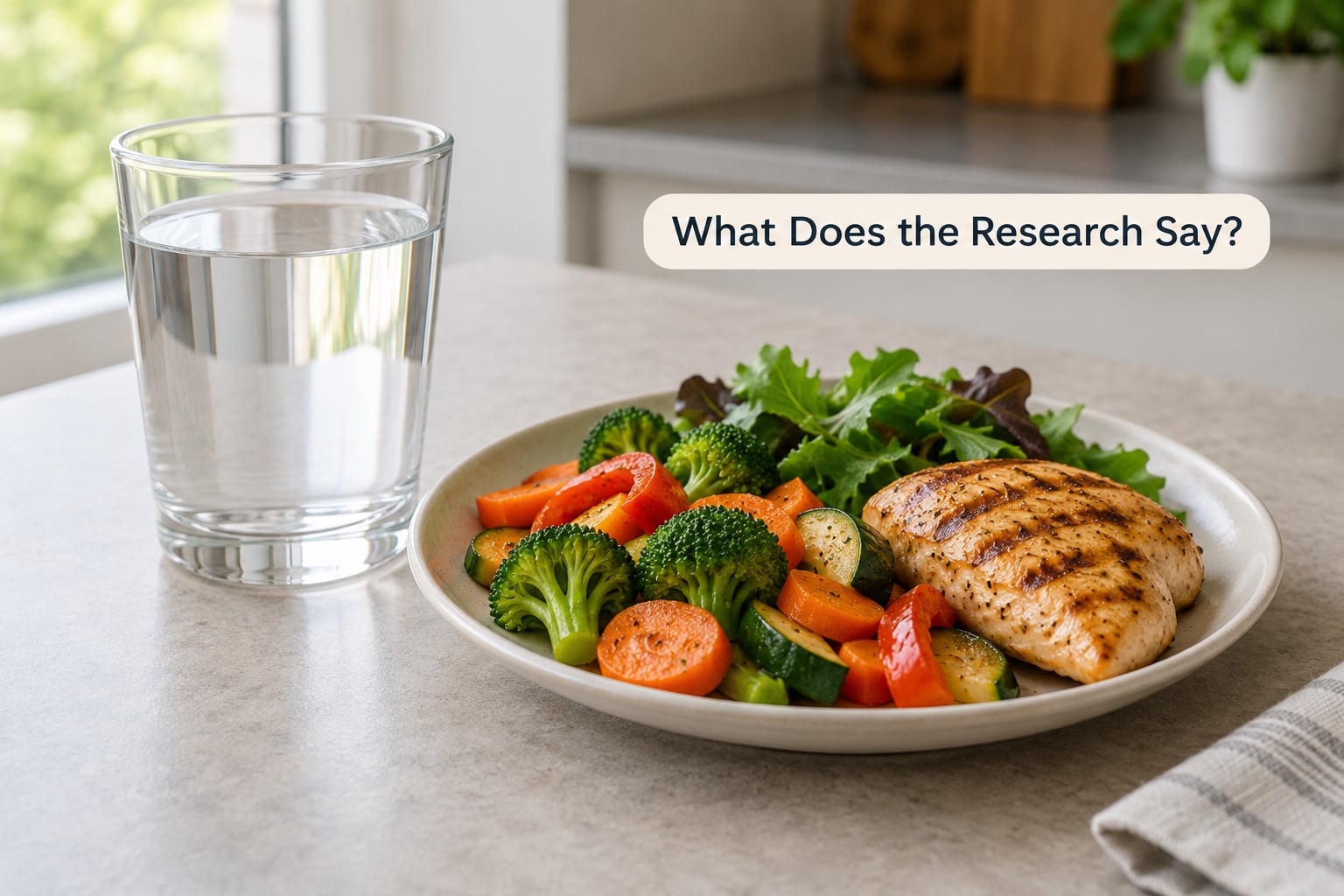
Trials in adults who were following a calorie-restricted diet found that drinking 500 mL of water before each meal produced roughly 2 kg of extra weight loss over 12 weeks, and a rate of loss about 44% faster than the same diet without it. In a separate 2015 trial summarised by the American Institute for Cancer Research, the water group gave up about 3 pounds more than a group that simply imagined having a full stomach.
Those are real numbers from real trials, and they are also modest numbers. Two kilos in three months is the sort of result that disappears the week you stop, which is the main reason plenty of people who try it conclude that nothing happened.
- Yes, it can help a little. Most trials point the same way: slightly less food eaten at the meal, slightly more weight lost over a few months.
- Only inside a calorie deficit. Adding water to an already excessive diet changes nothing. The studies added it to diets that were already restricted.
- Expect about 2 kg, roughly 3 to 5 pounds, over 12 weeks. Anything larger than that is not what the research found.
- It does not burn belly fat. There is no human evidence for that claim, and it is the most common thing people wrongly assume about it.
How Could Drinking Water Before Meals Affect Appetite?
The proposed mechanism is physical rather than magical. Water takes up room in the stomach, and a full stomach and a stomach holding a large meal produce broadly similar signals to the brain. If that signal arrives before the plate does, there is a reasonable chance the first few bites do less work than usual.
Does Drinking Water Before Meals Help You Lose Weight?
Any benefit is modest and depends on what the water replaces, plus your consistency with total calorie intake, diet quality, movement and sleep. If you eat 500 calories less at dinner and 500 more at a late snack, the glass changed nothing at all. Judge it by your portion sizes over several weeks, not by how full you felt on day three.
Here is the chain of events, in plain steps.
- Water enters the stomach. Roughly 500 mL raises the volume of its contents without adding any calories.
- Stretch signalling begins. The wall of the stomach sends signals along vagal pathways to the satiety circuits in the brain. Food triggers these receptors too.
- Fullness registers earlier. You may reach the point of feeling satisfied sooner, particularly if the water is drunk slowly rather than gulped.
- The meal portion often shrinks. This is the step most trials measure, and where most of the effect appears to come from.
- The gap matters. A 30-minute pause gives the signal time to land before food arrives. Drink it and eat immediately and there is no pause to use.
Gastric emptying slows with age, which is one reason the evidence is stronger in middle-aged and older adults. The same glass of water sits in the stomach longer and the fullness window lasts longer. It is an advantage later in life, not a disadvantage.
Thirst is also not the same signal as hunger. They run through partly different pathways, and the tidy idea that a glass of water fixes a craving is not well supported in humans. If you regularly mistake thirst for hunger, a glass before meals is a low-cost experiment, but it is not a physiological reset button.
What Does the Available Evidence Actually Show?
Short studies on small groups of people who are already dieting produce weak evidence, whatever they find. The table below is a plain summary of what has been studied and what it cannot establish.
| Study | Year | Who took part | Amount and timing | What happened | Main limitation |
|---|---|---|---|---|---|
| Dennis et al., Obesity | 2010 | Overweight and obese middle-aged and older adults on a calorie-restricted diet | 500 mL before each meal | About 2 kg extra loss over 12 weeks and a rate of loss about 44% faster than diet alone | Single trial, short duration, participants were already dieting |
| Daniels and Popkin, Nutrition Reviews | 2010 | Review of published studies on fluid intake and weight | Various | Supported water intake as a practical, low-risk part of weight management | Review of mixed study designs rather than a trial itself |
| Jeong et al. | 2018 | Adults examined for pre-meal water, energy intake and weight change | Pre-meal water | Results consistent with weight loss occurring through lower total energy intake | Benefit showed up mainly in people of average weight, not in those living with obesity |
| Ravagni et al. | 2016 | Small adult sample | Warm water after meals | Examined temperature and timing as appetite cues | Small sample, and warmth rather than pre-meal volume was the focus |
| Stookey et al. | 2016 | Review of evidence on drinking water | Various | Set out the negative, null and beneficial effects side by side | Water intake and weight are hard to separate from the rest of the diet |
| Hakam et al., JAMA Network Open | 2024 | Randomised trials testing water interventions | Varied volumes and timings | Pooled evidence on adding water as a weight-management tool | Interventions differed too much to isolate the timing as the cause |
Read across the limitation column and one pattern stands out. Almost every positive result comes from people who were already eating a restricted diet, measured over weeks rather than months. That tells you pre-meal water is a helpful detail inside a plan. It does not tell you the detail is the plan.
It also explains the disappointing forum reports. If weight does not move over a fortnight, that is not evidence the mechanism failed. It is more likely evidence that the measurement period was too short or that calories were being replaced somewhere else in the day.
How Much Water Should You Drink Before a Meal?
A commonly studied amount is about 500 mL, which is two cups, roughly 17 ounces, taken plain. A lighter starting point of one to two cups, around 8 to 16 ounces, is perfectly reasonable for most adults and easier to sustain. Treat either as a starting point rather than a prescription.
Fluid needs vary far more than any study suggests. Body size, a hot climate, a long run, pregnancy, breastfeeding, a high-sodium diet and a pile of daily medications all change what a sensible intake looks like. Someone training for a marathon needs a very different day of drinking from someone at a desk.
| Approach | Amount | Timing | Who it suits |
|---|---|---|---|
| Light start | 1 cup, about 8 ounces | 20 to 30 minutes before | People who find 500 mL uncomfortable or who are new to it |
| Studied amount | 2 cups, about 500 mL | 30 minutes before | Adults on a calorie-restricted diet, especially over 40 |
| Substitution approach | Whatever the sugary drink was | Whenever you would have had it | People who drink soda, juice, sweet tea or alcohol daily |
Plain is the version that was studied. Nothing in the research suggests tap, bottled, mineral or spring water makes any difference to the outcome.
When Is the Best Time to Drink It?
Roughly 20 to 30 minutes beforehand is the practical option, because it leaves a pause for the fullness signal to arrive before you start eating. No exact timing has been shown to be necessary, and nobody needs to drink the moment they sit down.
Water during the meal may work about as well. That comes from the clinical literature rather than folklore, and it suits people who find drinking before food uncomfortable. Try one approach for a couple of weeks before deciding it failed.
Drink it slowly if you can. A glass gulped at a sink on the way out the door gives the stomach less time to register the volume, and it is a good way to feel uncomfortable ten minutes later.
How Can Pre-Meal Water Fit Into a Healthy Routine?
Pre-meal water sits at the bottom of the list of things that move the scale. That is not a criticism of it; it just keeps expectations honest. Here is the order in which the levers actually pay out.
- Swap sugary drinks for water. This is the big one for people who drink soda, juice or sweet tea daily. Replacing a single sugary drink with water was associated with about 1.1 lb less weight gain over four years in the analysis most often cited for this.
- Hold a real calorie deficit. Everything else is a detail on top of this, and no drink changes the arithmetic.
- Get protein and fibre into meals. They produce a satiety effect that lasts far longer than water does.
- Control portions and eat slowly. Time to eat is one of the strongest levers, and it is free.
- Move regularly and sleep well. Both affect appetite regulation and energy expenditure, which is why the same glass behaves differently in a tired week.
- Then add pre-meal water. Small, cheap and worth doing, but last.
Two real-world problems are worth naming, because they explain most failures. The first is compensation: people eat less at one meal and more at the next, and the day lands exactly where it started. Watch the whole day, not one plate. The second is the short satiety window reported in online discussions, where a glass makes someone feel full for ten or fifteen minutes and then nothing. That happens, and it usually means the volume was small, drunk fast, or replaced with the same portion anyway.
There is a third, quieter problem. Drinking when you are not thirsty is unpleasant, and people rarely keep up a habit that feels forced. If a marked bottle on the counter works and cold tea does not, use the bottle. Drink to thirst for the rest of the day rather than forcing a total.
Track how you feel and what you eat over two to four weeks, and measure your waist as well as your weight. Day-to-day swings say almost nothing; you are watching fluid, sodium and gut contents, not fat.
Are There Downsides or Situations to Be Careful About?
The common complaints are mild: discomfort, feeling over-full, sloshing, and a genuine increase in toilet visits. Drinking a large volume very quickly is the version most likely to cause them.
A second risk is subtler. Using water to blunt appetite across the day can quietly replace food, and if that goes too far you may be short on protein, iron and other nutrients while feeling full. Appetite suppression is useful as a nudge, not as a way to skip meals.
Water toxicity, or hyponatraemia, is very rare in the general population and is mostly a concern with extreme intake in a short window, marathon-style events, or certain medications. It is worth knowing about, not worth worrying about day to day.
Some people should check with a doctor, pharmacist or registered dietitian before deliberately adding extra fluid:
- People with congestive heart failure or fluid restriction, where fluid balance is medically managed.
- People with reduced kidney function or liver disease.
- People managing prostate conditions, urinary incontinence, or limited mobility that makes reaching a toilet difficult.
- Anyone on a sodium-restricted plan, since plain water and salt balance interact.
- Anyone taking regular medication that affects fluid balance.
Older adults are generally at higher risk of dehydration, and they also tend to get more of the fullness benefit. That is one point in favour of the habit, but it does not override a fluid restriction from a clinician.
Frequently Asked Questions
How many cups of water should I drink before eating?
Most research used about 500 mL, which is two cups or roughly 17 ounces, taken 30 minutes before each meal. One cup is a fine starting point if you are new to it or find that amount uncomfortable. Plain water is the version studied, and tap or bottled makes no difference. Treat this as a starting point rather than a required dose.
Does a glass of water make you feel full?
It can, briefly, and for some people more than others. Water raises the volume of the stomach contents and triggers the same stretch signals food does, which reaches the brain’s satiety circuits. The effect is usually modest and short-lived, and it lasts longer in older adults because the stomach empties more slowly. Drink it slowly rather than gulping it.
Should I drink water 30 minutes before a meal?
It is the timing used in most studies, and it works because it leaves a pause for the fullness signal to arrive before food does. But no exact timing has been shown to be necessary, and drinking during the meal may work about as well. Nothing happens if you drink it immediately before eating, other than the loss of that pause.
Is pre-meal water better than drinking it with meals?
There is no good evidence that one is clearly better. Clinical sources note that water consumed during a meal may be about as effective as water taken beforehand, which is convenient for anyone who finds drinking before food uncomfortable. Pick the version you will actually repeat for weeks, because consistency matters more here than the exact placement.
Can drinking too much water interfere with weight loss?
It can, indirectly. Gulping a large volume quickly causes discomfort and bloating, and using water to blunt appetite all day can replace meals and leave you short on protein and other nutrients. More water across the whole day does not add meaningfully to weight loss. Stick to the pre-meal amount and drink to thirst the rest of the day.
What to Do First
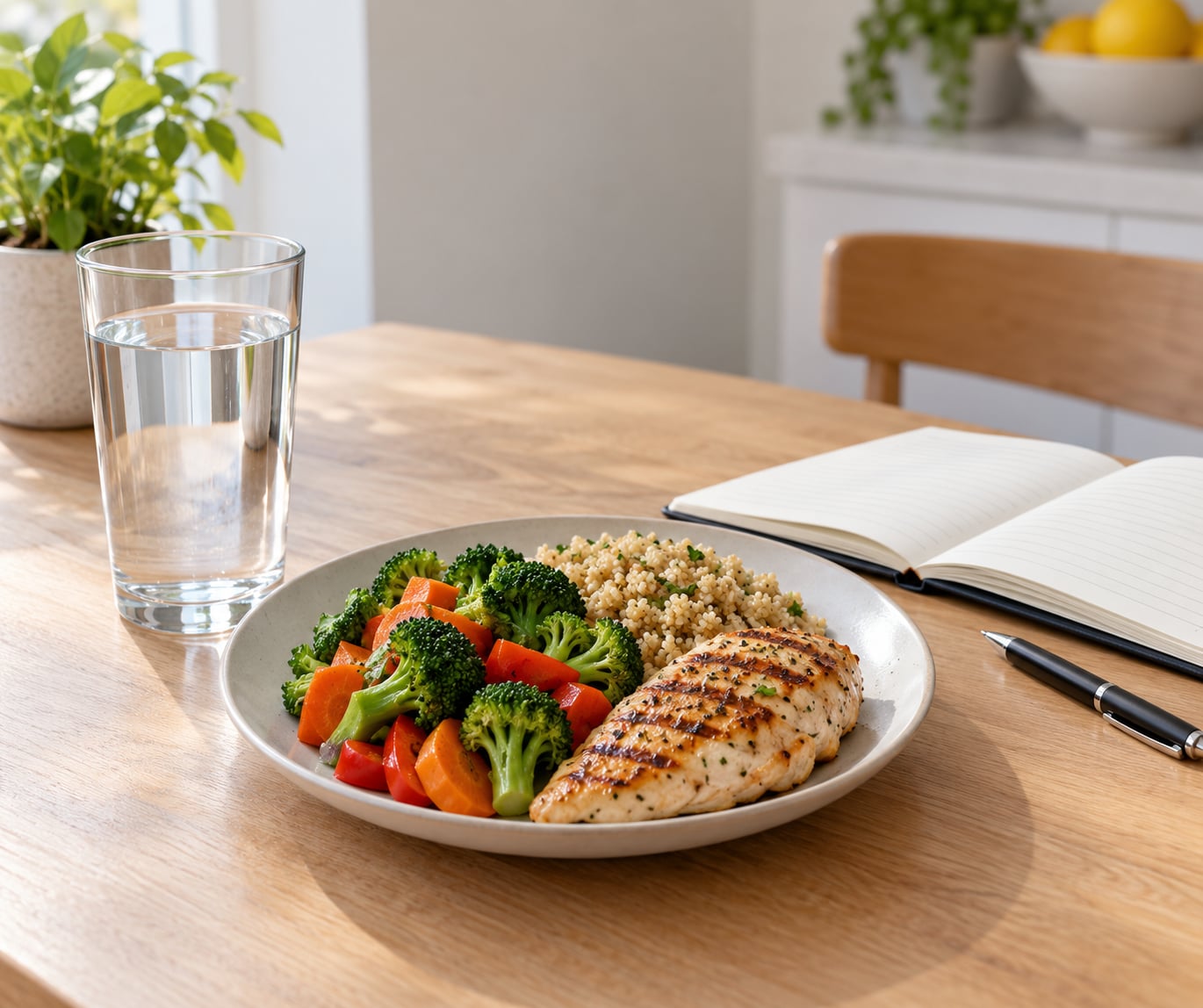
Try one glass of water about 30 minutes before one or two meals a day, for two weeks, and change nothing else. If you normally have a sugary drink at one of those meals, swap it instead of adding to it. That substitution is where most of the reliable benefit sits.
Write down what you actually ate at each meal for those two weeks, then look at the whole day rather than one plate. If portions dropped and you did not make them up later, keep it going. If nothing changed, the water is harmless and simply not your lever.
So, does drinking water before meals help you lose weight? It can add a couple of kilos over three months for some adults, mostly by making meals slightly smaller. Sustainable eating and movement habits do more, and if you have a heart, kidney or liver condition or take regular medication, ask a healthcare professional for fluid advice that fits you.