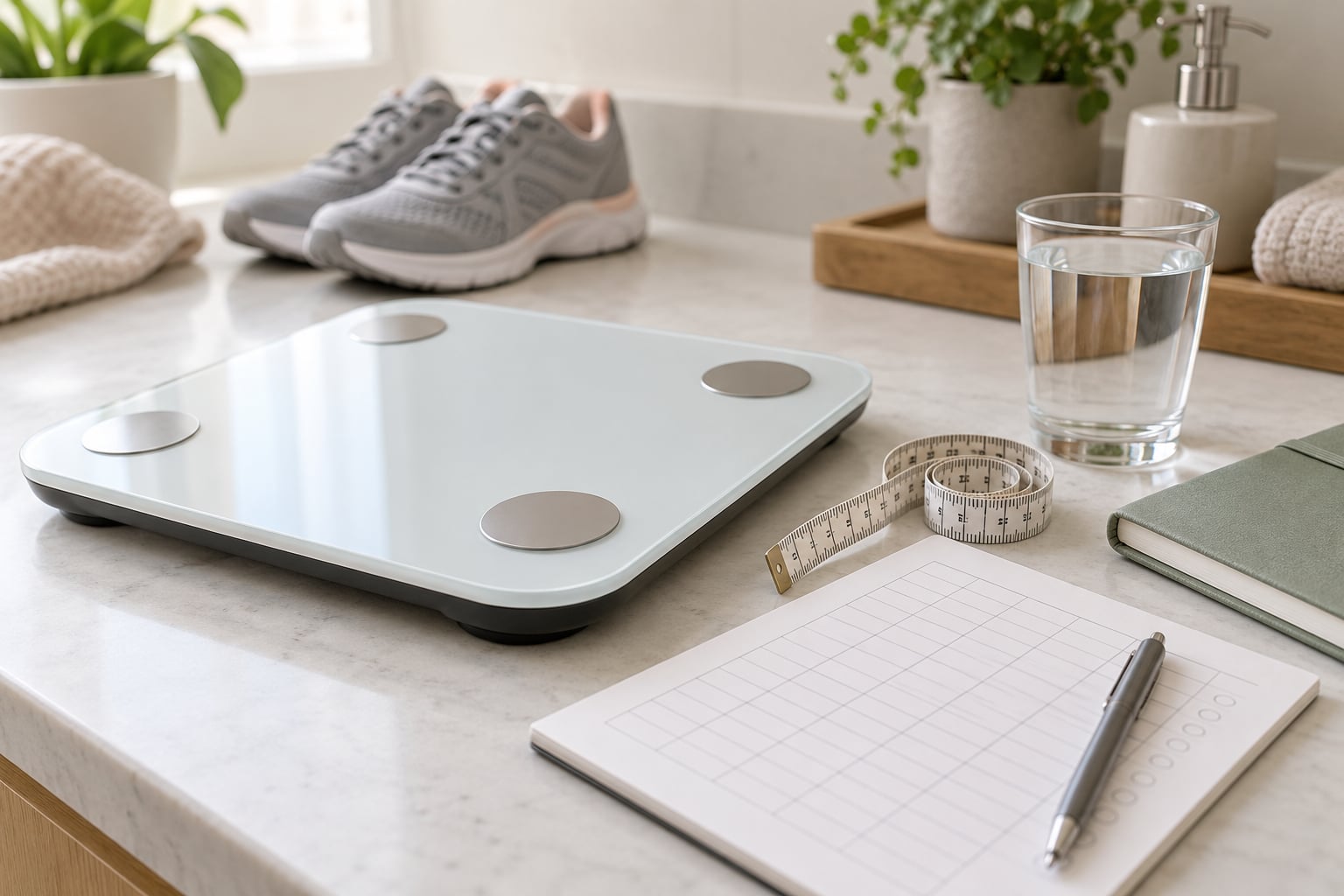
To break a weight loss plateau, first confirm it is real: three or more weeks of no change in your average weight, while your eating and activity habits stayed the same. Then change one thing at a time — tighten tracking, eat more filling food, add daily movement, and improve sleep — and give each change several weeks to work.
A plateau is not a failure and it usually is not a sign that your metabolism is broken. Body weight moves in a pattern rather than a straight line, and a lighter body needs fewer calories than a heavier one. The scale drifting sideways for a fortnight means very little on its own.
Here is the order I would work through it: check the trend, look honestly at what you actually ate, make meals more filling, move more during the day, add resistance work, fix sleep and stress, then reassess. If you have changed several things at once, skip ahead to Step 7 and pick a single change to test.
Table of Contents
- What You Need
- Step-by-Step
- Step 1: Confirm That You Are Actually at a Plateau
- Step 2: Review What You Are Actually Eating
- Step 3: Make Your Meals More Filling
- Step 4: Increase Everyday Movement
- Step 5: Add or Improve Strength Training
- Step 6: Improve Sleep and Stress Management
- Step 7: Reassess and Choose a Sustainable Next Step
- Common Mistakes
- Frequently Asked Questions
- How many weeks is considered a weight loss plateau?
- How do you shock your body out of a weight loss plateau?
- What happens when you hit a plateau in weight loss with intermittent fasting?
- How do I stop my metabolism from slowing down when dieting?
- Can my weight change without me gaining fat?
- When should I see a doctor about a weight loss plateau?
- Conclusion
What You Need
Before you change anything, gather five things. Without them you are guessing at a problem you have not actually identified yet.
- A weight trend, not a single reading. Weigh yourself at the same time of day, under similar conditions, and record it. Then look at the weekly average instead of individual numbers.
- A week of honest food records. Meals, snacks, drinks, sauces, cooking oils, and portions. A written record, not memory.
- An activity picture. Daily steps, weekly workouts, and how much of that is sitting.
- Sleep and stress patterns. Typical bedtime, wake time, hours of actual sleep, and what your weeks look like.
- Medications and health conditions. Some prescriptions and conditions affect weight in ways a food diary will never reveal.
Measurements matter more than people expect. A tape measure at the waist, hips, and thigh, taken in the same spot every two weeks, tells you far more than the scale during a plateau. So do photos in the same clothes and lighting, and how your clothes fit.
Weight fluctuates daily for ordinary reasons: water, salt, carbohydrate intake, bowel movements, workout inflammation, and poor sleep. None of that is fat. A plateau should only be declared after three to four weeks of consistent data showing a flat trend.
One more measurement worth having: your resting heart rate, checked in the morning before you get out of bed. It is a rough, free signal of how much stress and poor recovery you are carrying.
Step-by-Step
Step 1: Confirm That You Are Actually at a Plateau

Compare your weekly averages, not your daily readings. A real plateau shows a flat line across three to four consecutive weeks while your habits stay consistent.
Daily scale readings cannot tell you whether you are losing fat or retaining water. Watch for the other signals instead: your waist measurement, how your jeans button, whether your lifts or runs are getting easier, and your energy through the afternoon.
Some readers describe a repeating pattern where progress stalls every ten pounds or so before moving again. If that is your experience, a short flat stretch is part of your normal curve rather than something broken.
Step 2: Review What You Are Actually Eating
Record a typical full week, including the weekend. Most people track weekdays accurately and treat Saturday and Sunday as exceptions, and the weekend frequently erases the week’s deficit.
Then look for patterns, not rules. The usual suspects are restaurant meals where portions arrive large, snack foods that are easy to eat in large amounts, sweetened drinks, cooking oils and dressings added without counting, and snacks eaten straight from the package.
Nobody needs to label food as good or bad to do this. You are looking at quantities and frequency, because that is what changes the balance.
Small adjustments work better than severe restriction. Cutting food sharply usually produces a short drop followed by fatigue, constant hunger, and a rebound, which makes the next plateau harder.
Step 3: Make Your Meals More Filling
Protein, fiber-rich carbohydrates, fruit, vegetables, and a reasonable amount of fat all help you feel satisfied after a meal. That fullness is what makes a deficit survivable for months rather than weeks.
Concrete swaps help. Add beans to a grain bowl, pair an afternoon snack with protein such as yogurt, cheese, or nuts, choose a whole piece of fruit instead of juice, and let vegetables take up a third of the plate before adding the rest.
Protein deserves particular attention because it supports muscle retention while you lose weight, and muscle is what keeps your metabolism from dropping as far as you might expect. Distributing it across the day, rather than saving it all for dinner, works better for most people.
Adjust portions to your hunger and your activity rather than to a fixed number. A fixed target that no longer matches your day is a common reason people stall.
Step 4: Increase Everyday Movement
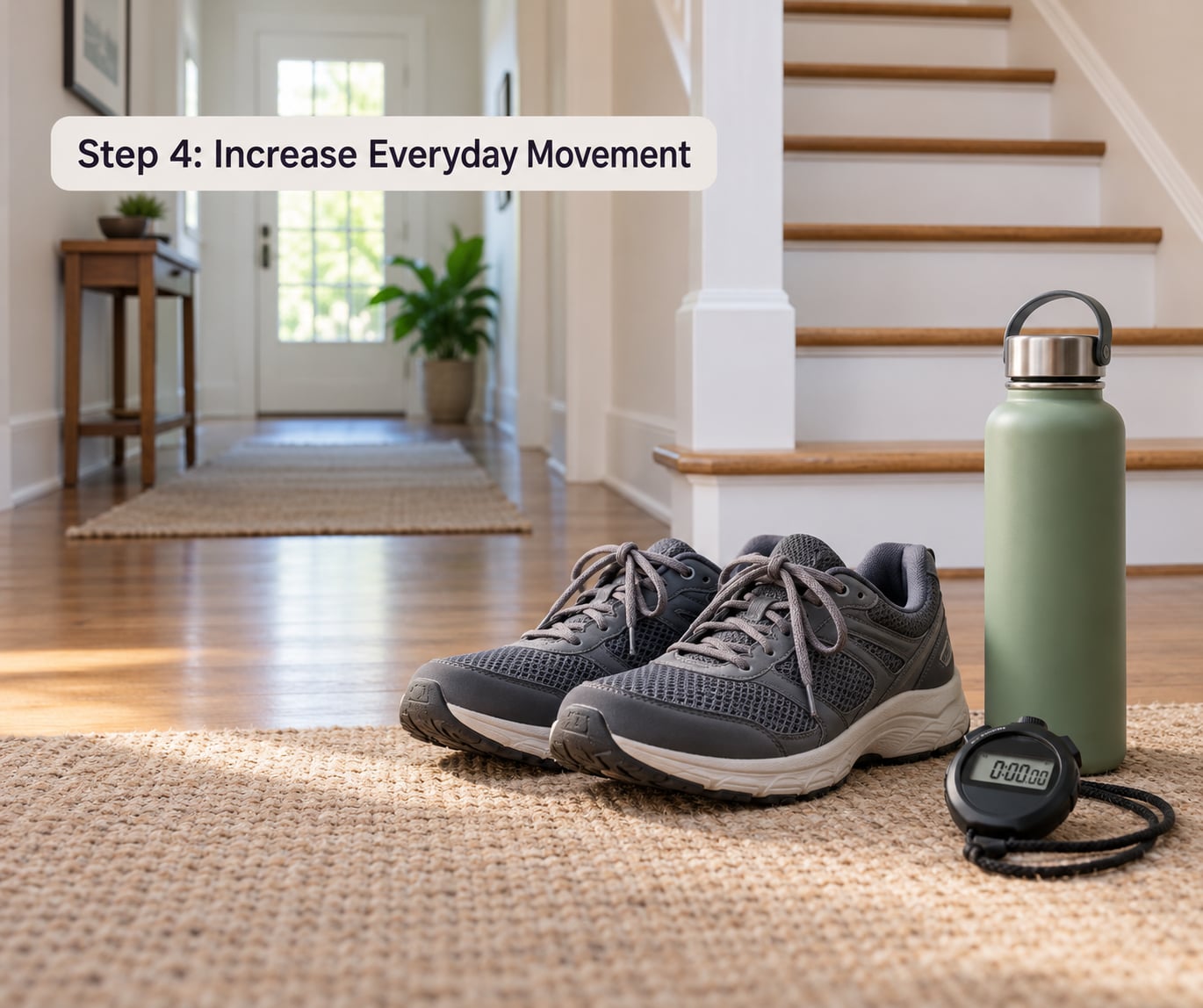
Daily movement is the easiest place to add calories burned without changing what you eat. Walking after meals, taking brief movement breaks through the work day, and taking stairs instead of the lift all count.
Build up gradually. A reasonable example is starting with one ten-minute walk and progressing to three shorter walks spread across the day, or moving from an average of five thousand steps to eight or ten thousand.
Choose movements that suit your joints, your fitness level, and any injuries you have. If walking is uncomfortable, swimming, cycling, or water walking are equally valid ways to add movement.
Track your steps for a week before you change anything. Most people are surprised by the real number, and that surprise is usually the fastest way to find spare movement.
Step 5: Add or Improve Strength Training
Resistance training supports muscle mass, which keeps your body composition improving even when the scale is still. It also makes changes in shape and clothing fit visible, which matters when the scale refuses to move.
For a beginner, cover the major muscle groups with simple, controlled movements: squats or a leg press, a row or pull-up, a press, a hinge, and core work. Learn the movement with a manageable load before adding weight.
Progress gradually and go consistently. The goal is a routine you can still be doing in three months, not a heroic month. If you are new to lifting or have a past injury, a certified trainer or a physiotherapist can set you up properly.
Cardio has its place too. Longer steady sessions are easy to drift out of, and shorter interval-style efforts are often more sustainable for people with limited time.
Step 6: Improve Sleep and Stress Management
Short sleep and high stress can make hunger harder to control, routines harder to keep, and recovery worse. A busy, unsettled week can easily show up on the scale through water retention alone.
Start with a consistent wake time, since it anchors everything else. Move caffeine earlier in the day, keep the room dark and cool, and build in a short wind-down before bed.
For stress, schedule small breaks rather than waiting until you are overwhelmed: five minutes of walking, some slow breathing between tasks, or a few minutes of stretching. Most people find it easier to follow when stress relief is on the calendar instead of optional.
If sleep problems or stress are persistent or severe, that is worth raising with a doctor rather than handling alone.
Step 7: Reassess and Choose a Sustainable Next Step
After a few weeks, look at the whole picture rather than the scale: weight trend, measurements, energy, strength, hunger, sleep, and how consistently you have actually followed the plan. Plateaus that end because a habit quietly lapsed are common.
Keep what helped, drop what made life harder, and change one factor at a time. Changing everything at once means you will not know what worked when the trend finally turns.
There is a clear point where a doctor or registered dietitian should be involved. Ask for a conversation if the stall is sudden and unexplained, if you have changed nothing for months, if you feel exhausted, dizzy, or cold all the time, if your menstrual cycle changes, or if you are dealing with an eating disorder history or an injury. They can check things a food log cannot, including thyroid function and medication effects, and help you build a plan that fits your medical situation.
Guidance here is general information, not personal medical advice. For individual assessment, a registered dietitian or your own doctor is the right person.
Common Mistakes
Reacting to one scale reading. The fix is to judge the trend. Compare weekly averages over three to four weeks before deciding anything changed.
Cutting food too severely. Deep restriction lowers energy, drives hunger up, and often ends in rebound eating. Slow, sustainable adjustments beat a sharp cut every time.
Relying on supplements or detox products. Most have no credible evidence for breaking a plateau, and some interact with medications. Money spent there is better spent on groceries that support the plan.
Adding punishing exercise. Training through fatigue, pain, or constant hunger tends to make the whole routine harder to keep. Progress activity gradually and keep it something you will still be doing in a few months.
Changing everything at once. Six simultaneous changes that produce nothing teach you nothing. Test one change for a few weeks at a time.
Ignoring sleep, medications, or medical factors. Poor sleep and some prescription drugs influence weight and appetite directly. If something about your health has changed, mention it to your doctor.
A few habits that help more than the fixes themselves: weigh in consistently but judge trends, keep a short written food record during the audit, progress activity in small steps, and let non-scale wins count. Energy through the afternoon, sleeping better, lifting heavier, and jeans fitting differently are all real progress that shows up later on the scale.
Frequently Asked Questions
How many weeks is considered a weight loss plateau?
Most people and clinics treat three or more weeks of no change as a plateau, and many wait for four to be sure. Judge the weekly average of your weight rather than daily readings, since water, salt, bowel movements and workout inflammation move the scale several pounds in either direction day to day. Add your waist measurement and how your clothes fit before deciding anything is wrong. A single flat stretch is common and usually resolves on its own.
How do you shock your body out of a weight loss plateau?
There is no shock that works reliably. What tends to work is a small, specific change applied for several weeks: tighten your food records, add protein and fiber to make meals filling, raise your daily step count, add resistance training, or improve sleep. Pick one, hold everything else steady, and reassess after three to four weeks. Changing several things at once makes it impossible to tell what moved the trend.
What happens when you hit a plateau in weight loss with intermittent fasting?
Time-restricted eating reduces total intake for many people at first, but the same meals in the same window stop producing a deficit once your needs change. Weight training or a busy week can also raise stress and water retention, which hides fat loss on the scale. Audit what you actually eat inside the window first, including drinks and cooking fats. Then adjust portions, add daily movement, and consider a structured diet break at maintenance.
How do I stop my metabolism from slowing down when dieting?
A lighter body genuinely needs fewer calories, and some drop in energy expenditure during a long deficit is normal rather than damage. What helps is preserving muscle with resistance training, eating enough protein, keeping daily movement high, and staying in a moderate deficit rather than an aggressive one. Planned diet breaks of one to two weeks at maintenance are a structured option worth discussing with a registered dietitian.
Can my weight change without me gaining fat?
Yes, and it happens often. Your body stores water in response to salt, carbohydrate intake, muscle soreness from new training, menstrual cycle changes, poor sleep and stress. That water can move your scale weight by several pounds in a few days, up or down. This is also why waist measurements, progress photos and strength gains sometimes move forward while the scale sits still.
When should I see a doctor about a weight loss plateau?
See a doctor if the stall is sudden and unexplained, if nothing has changed after several months of consistent effort, or if you feel exhausted, dizzy, unusually cold, or your menstrual cycle changes. Mention every medication you take, since some prescription drugs affect weight and appetite. A doctor can check thyroid function, hormone levels and other factors a food log cannot show, and refer you to a registered dietitian if that helps.
Conclusion
Start with the first action, not the whole list: confirm the trend, then look at the last two weeks of food records honestly. Pick one sustainable change from the steps above, give it three to four weeks, and judge the result by the trend, your measurements, and how you feel rather than a single number on a morning. If the stall persists or something feels off health-wise, that is the moment to talk to a doctor or registered dietitian, who can look at causes no food diary will ever show.