How to slow down while eating is mostly about three things: give each meal 20 to 30 minutes, chew every bite 15 to 30 times, and put your utensils down between mouthfuls so your stomach has time to report back. That report arrives through stretch receptors in the stomach wall and gut hormones such as cholecystokinin and leptin, and it takes roughly 20 minutes to reach your brain. Finish a meal in eight minutes and you finish before the signal gets there. This guide is about how people eat. If you came looking for a slow feeder bowl for a dog, that is a different problem.
I have slowed my own eating down more than once, mostly badly at first, and the version that stuck was boring: one change at dinner for about a fortnight. People who write about this online describe the same unglamorous thing. On r/loseit, one poster described relearning how to eat a meal and admitted the tips felt juvenile, then listed a kitchen-only rule, meals at the same time each day, and conversation as a natural pace-setter. Nothing fancy. That honesty is worth more than another list of rules.
Table of Contents
- What You Need
- Step-by-Step: How to Slow Down While Eating
- 1. Pause Before Taking the First Bite
- 2. Use Smaller Bites and Chew More
- 3. Put Down the Fork Between Bites
- 4. Check In With Your Fullness Cues
- 5. Create Some Distance Between Courses
- 6. Finish Slowly and Mindfully
- Common Mistakes
- Tips for Making Mindful Eating Easier
- Frequently Asked Questions
- What does eating slowly do?
- How long does it take to feel full?
- What is the 3-3-3 rule for eating?
- What does 80% fullness feel like?
- Is it better to eat food quickly or slowly?
- How do I eat slowly when my work lunch is only 15 minutes?
- Conclusion
What You Need
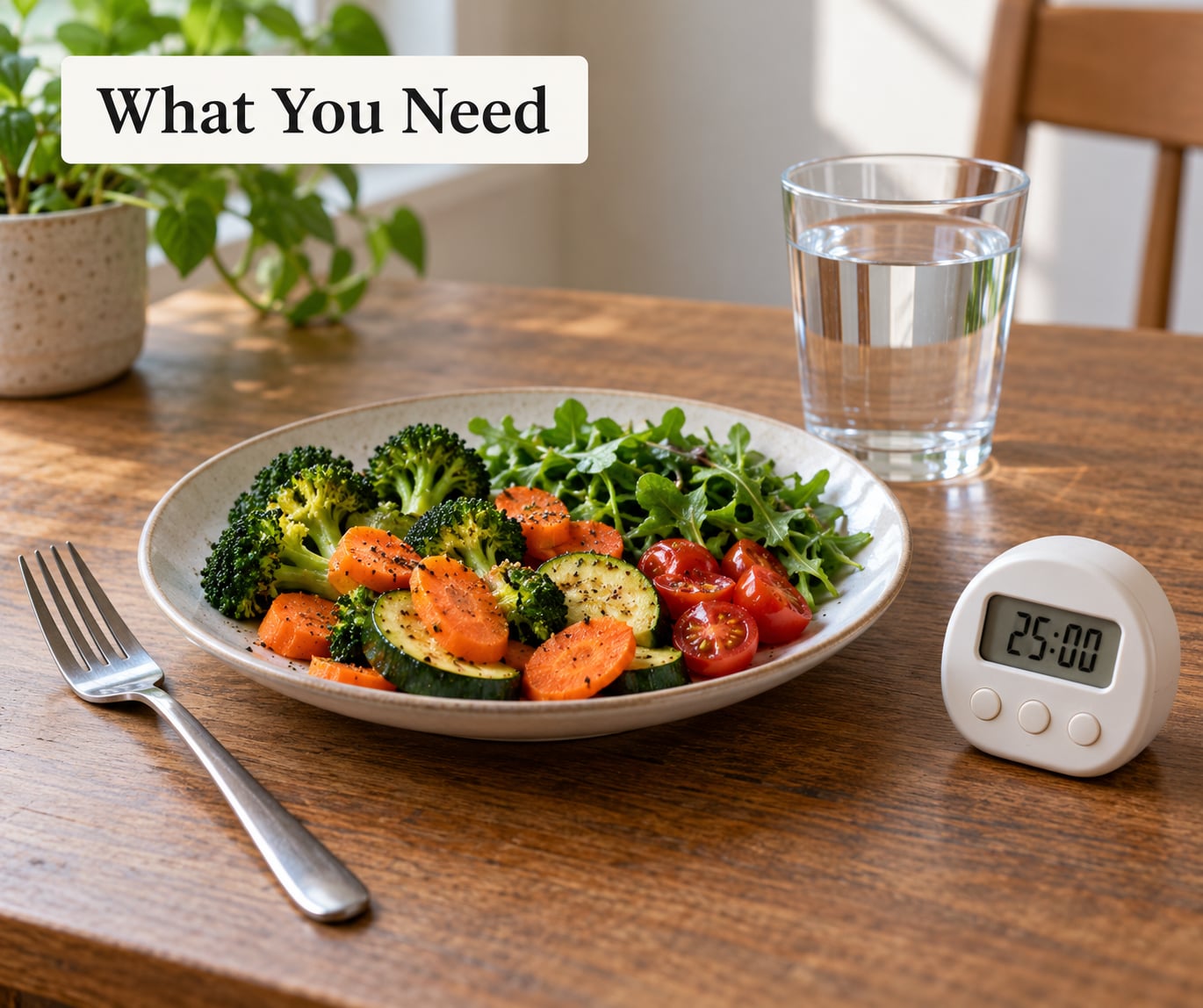
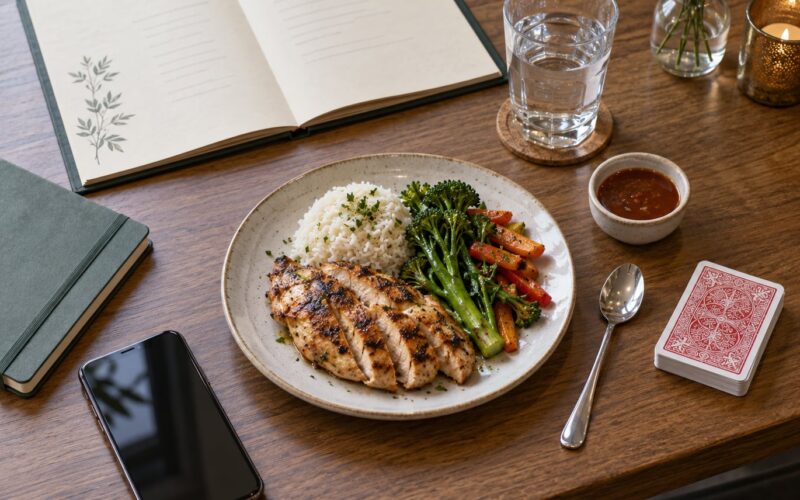
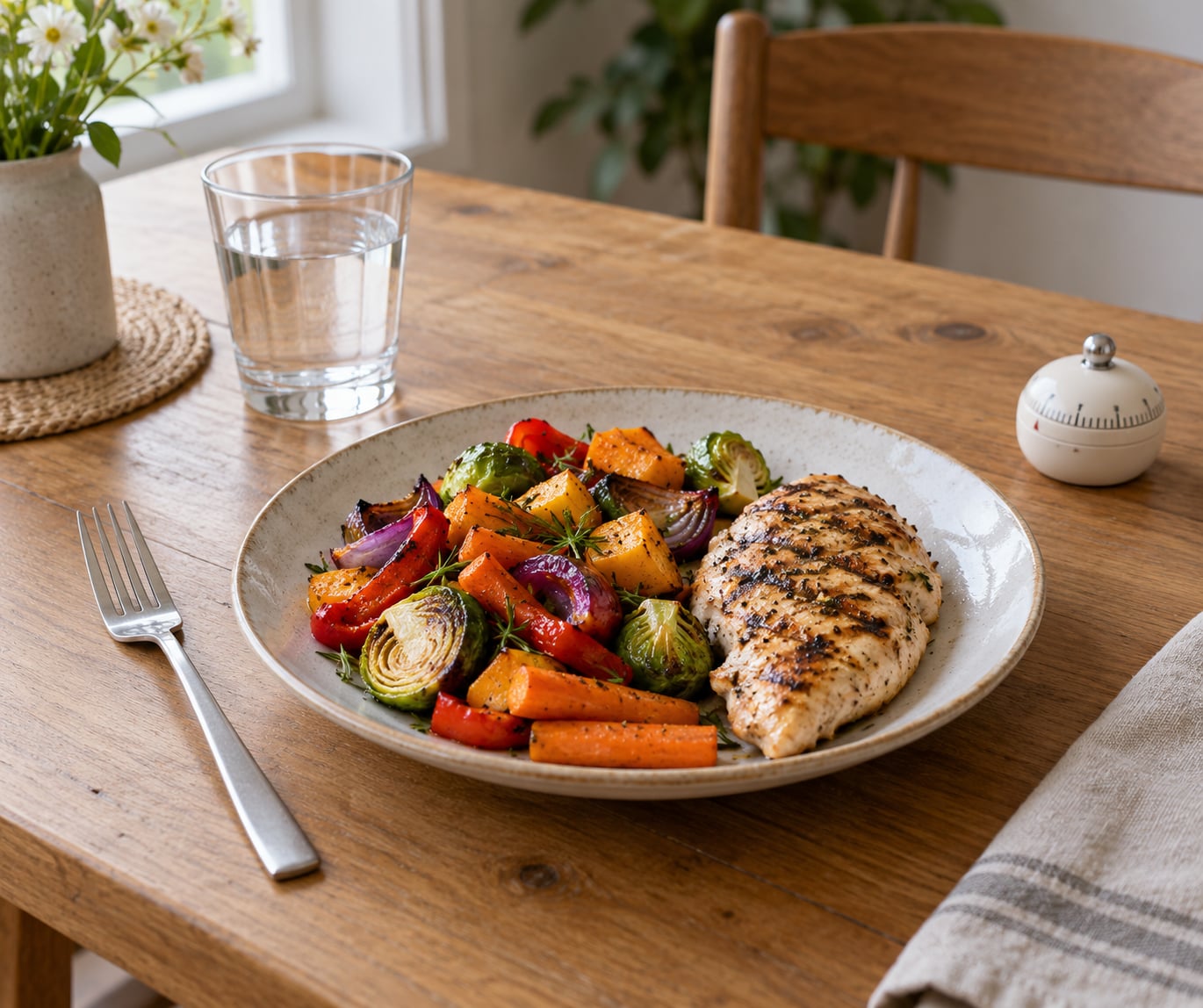
You need a plate, a fork, a glass of water and somewhere to sit. That is the whole equipment list. No timer app, no special bowl, no journal, unless you enjoy tracking.
A smaller fork helps more than it sounds. A dessert spoon or a salad fork moves far less food per trip than a dinner fork, which means fewer trips and more time. Some people use chopsticks for the same reason.
What matters more than gear is the spot. A chair at a table, screen face down and out of sight. A car seat, a desk or a sofa with the television on is the hardest place to pace a meal, and speed is habit, not character. People who keep a phone in another room report that the first three or four meals are the awkward ones, then it stops being a decision.
Step-by-Step: How to Slow Down While Eating
The aim is a meal that takes 20 to 30 minutes. Most people finish in under 12 without noticing, which means the meal is over before the gut has finished telling the brain about it. That single fact explains most of the advice below.
| What happens in the body | Eating in under 10 minutes | Eating over 20 minutes |
|---|---|---|
| Fullness signal | Arrives after the plate is empty | Arrives while food is still there |
| Typical intake | All of it, without a stopping point | Often stop partway through |
| Chewing | A few times, food swallowed in chunks | 15 to 30 times per bite |
| Swallowed air | More of it, more bloating afterwards | Less of it, less post-meal discomfort |
| After the meal | Often a food coma within 30 minutes | More even energy over the next couple of hours |
Harvard Health has explained for years that the brain relies on a sequence of signals from digestive hormones rather than on the stomach alone, and Cleveland Clinic’s dietitians put the same idea into plain words: the meal needs time for the fullness signal to register. Here is how to build that time in.
1. Pause Before Taking the First Bite
Sit down, put both hands in your lap, and take three slow breaths before you touch the food. Look at the plate. Notice how hungry you actually are, on a scale from one to ten, and write nothing down.
That pause is where a meal stops being fuel you are consuming and becomes an event you are taking part in. It costs about twenty seconds. If you are working out how to slow down while eating, this is the highest-leverage twenty seconds in the whole meal. You will know it worked when the first bite feels chosen rather than automatic.
2. Use Smaller Bites and Chew More
Cut everything into pieces roughly the size of a pea, take bites about half the size you normally would, and chew 15 to 30 times before swallowing. Count on the first few bites of each meal until counting stops being needed.
Chewing is not just about breaking food down. Saliva starts the carbohydrate and protein digestion in the mouth, and slowing the pace means each bite is chewed and swallowed properly instead of being washed down whole. This is also the single biggest difference between fast and slow eaters in the research: people who eat quickly do very little chewing.
Your signal of success is simple. When you look down, you have barely made progress on the plate, and you have been eating long enough to have tasted more than one thing.
3. Put Down the Fork Between Bites
Rest your utensils on the plate after every single bite, pick them up only when you are ready for the next one, and swallow completely before starting. A pause of five to ten seconds is enough.
This is the technique the AI summaries on this topic keep lifting, and it works because it inserts a physical barrier. One Reddit thread on learning to eat slower listed setting the fork down as the tip that started working first. Another described keeping the bowl planted on the table rather than lifting it, which sounds petty until you notice it stops the mechanical shoveling.
How do you know it is manageable? If you are still tracking every bite at the end of the week, the pause is too long. Aim for a rhythm where the pause lengthens on its own within a fortnight.
4. Check In With Your Fullness Cues
Halfway through the meal, stop and ask three questions. How hungry am I, on one to ten? When did I last feel satisfied? Is this portion sitting comfortably, or am I forcing it?
Comfort and satisfaction are the cues to use, not an empty plate and not a number. Most people have spent decades being told to clear the plate, so an empty dish feels like success while their body is asking them to stop. Satisfaction usually arrives before full, and full is the point of overeating.
You will know this step worked when you reach for the last portion of rice and choose not to.
5. Create Some Distance Between Courses
Serve food in smaller portions, use two plates instead of one, and wait five to ten minutes before serving seconds. Distance is what makes pacing bearable.
A study published in the International Journal of Obesity in 2018 linked eating speed with obesity rates and waist circumference, and one of the practical findings people took from it was simply that slower meals gave them more time to register satiety before the next portion arrived.
You can do this without setting a calorie target. Put the serving dish on the counter and leave it there, and keep food inside the inner circle of the plate rather than spread to the rim. The rim method is another trick from the r/loseit thread: a visible border marks how far you have got without anyone having to say anything.
6. Finish Slowly and Mindfully
The last five bites are where most people give up and speed through. Slow down there on purpose. Pause before each one, and stop eating when you are satisfied even with food remaining.
Leaving food on the plate feels wrong for a lot of people, usually because of childhood rules about finishing it. One of the more honest notes on that thread was that it is embarrassing to have to reteach yourself how to eat. It is. It also works, and people report that within a few weeks the discomfort of a partly full plate fades.
You know the habit has landed when you stop at the end of a meal, feel fine, and get up from the table without thinking about what you left.
Common Mistakes
Most people do not fail at slow eating because the advice is wrong. They fail because they apply all of it at once, in the wrong place, on the hardest day of the week. The four errors below come up constantly.
Eating while distracted. A screen, a newspaper or driving in the car makes bite counting nearly impossible, because attention is what powers pacing. Fix: one phone-free, screen-free meal a day. Start with dinner rather than lunch, because dinner has the least time pressure.
Counting bites rigidly. If you are tracking every mouthful, the meal becomes a chore and stops after a week. Fix: count only the first three bites of each meal until chewing becomes automatic, then drop the count. Or set a timer for the whole meal and forget bites entirely.
Making meals complicated. Buying a portioning system, prepping six different dishes, or committing to a 30-minute table setting for every meal is how people quit by week two. Fix: keep the food you already eat and change the pace, not the menu.
Changing everything at once. Fix: one technique for a fortnight. My own best version was chewing more; the fork-down habit came second, about two weeks later, once chewing was boring rather than effortful.
There is also a fourth obstacle that is not really a mistake. Twenty to thirty minutes per meal sounds exhausting, and one Facebook commenter put it plainly: they did not inhale their food but 30 minutes still felt like a long time. The fix is a shorter first target. Fifteen minutes is a real meal for most people and it already doubles the average pace.
Tips for Making Mindful Eating Easier
These come from people who have actually had to relearn this, mostly out of r/loseit and r/IWantToLearn, plus what consistently works in practice.
- Make one room the eating room. The kitchen-only rule from r/loseit is blunt on purpose. No food in front of the television, no plates in the car, no standing at the fridge. It removes the decision entirely.
- Drink two glasses of water across a meal. You have to put the fork down and get up to refill, which builds in pauses you would not have chosen.
- Keep salt and pepper on the table. Seasoning at the table makes you taste each bite properly, and tasting takes time.
- Eat with someone when you can. Conversation is a built-in pacer. It also works alone: answer one deliberate question to yourself between bites.
- Eat at the same times each day. Regular meals mean you arrive hungry enough to eat deliberately rather than to inhale whatever is closest.
- Start with water or vegetables. A glass of water or a small salad first gives the stomach time to signal before the main portion lands.
- Use a smaller, heavier bowl and a dessert spoon. Volume matters less than the size of what goes on the utensil per trip.
- Practise one meal a day, not all of them. If every meal becomes a project, the project stops. One solid attempt is enough to start.
- Work out your worst meal first. Most people have one meal that reliably goes wrong, usually a 20-minute desk lunch. Fix that one and the others follow.
- Give it three weeks. This is not a personal rule; behaviour research generally puts new habits at roughly three weeks to start feeling automatic, sooner for small physical ones like putting a fork down.
One honest caveat, because most articles on this topic skip it. Slow eating helps, but it is not a standalone weight loss fix. Harvard Health points out that in people with obesity, leptin resistance can blunt the long-term fat-store signal that leptin is supposed to send, so the appetite system may not respond the way the textbooks say. If eating slowly changes nothing after several weeks, that is a reason to talk to a registered dietitian rather than to try harder.
Slow eating also has a time cost, and it can feel awkward in social situations where the whole table is eating quickly. It is worth it for most people on most days, and not worth performing at every lunch with colleagues. Nobody has to notice.
For anyone with acid reflux, bloating, IBS or type 2 diabetes, slower meals are often recommended as a first-line change, and they may genuinely help with reflux and post-meal bloating. Manage those conditions with your doctor or a registered dietitian rather than with pacing alone, and get medical advice for any symptom that is new, severe or persistent.
Frequently Asked Questions
What does eating slowly do?
Eating slowly gives your stomach and intestines time to send fullness signals to your brain. Stretch receptors in the stomach wall and hormones such as cholecystokinin and leptin travel through the vagus nerve, and that message takes roughly 20 minutes to arrive. It also means more chewing, less swallowed air, gentler digestion, and usually a smaller intake because you stop while the meal is still on the plate.
How long does it take to feel full?
Most people begin to feel satisfied about 20 minutes after starting a meal, and clearly full a little after that. The signal builds rather than switches on, which is why a fast eater finishing in eight minutes has not yet received it. Waiting twenty minutes lets fullness arrive while food remains, which is the entire reason the 20-minute rule exists.
What is the 3-3-3 rule for eating?
The 3-3-3 rule is a framework that circulates on health blogs rather than one published by a medical body, and versions differ. The most common version is three meals a day, up to three snacks, and three components on each main meal, such as a protein, a vegetable and a starch. Read as a pacing guide, it is useful: it stops you skipping food early, grazing all afternoon, or eating a plate of carbs and calling it balanced.
What does 80% fullness feel like?
It is less dramatic than most people expect. You feel comfortable rather than stuffed, food still has some flavour and texture left, and you would accept a small dessert without feeling you had overdone it. Your plate still has food on it, and you are not reaching for seconds. The test is that you could still walk, talk and move comfortably straight after eating.
Is it better to eat food quickly or slowly?
Slower is better for most people, mainly because fullness takes about 20 minutes to reach your brain and fast eaters finish before it does. Slow eating also means more chewing, less swallowed air and less post-meal bloating. The case is not one-sided: slow eating takes more time, can feel awkward socially, and on its own it is not a weight loss plan, particularly for people with leptin resistance.
How do I eat slowly when my work lunch is only 15 minutes?
Do not try to make a 15-minute break into a 30-minute meal. Eat a smaller portion, skip the phone and the screen, use a dessert spoon, and put the fork down between bites. Two glasses of water add pauses without adding time. Most people find that the portion they chose is too large for the break anyway, which is often the more useful discovery.
Conclusion
Start with one thing: pause before the first bite, eat the next few bites slowly with 15 to 30 chews each, and stop when you feel satisfied rather than when the plate is bare. Do that at one meal a day for a fortnight before adding anything else.
That is the whole answer to how to slow down while eating, and it is deliberately unglamorous. Gradual changes beat a total overhaul, and they are the ones that survive a busy week. If you have reflux, bloating, IBS or diabetes, or if slower eating makes no difference to your hunger after several weeks, talk to a doctor or a registered dietitian rather than guessing. That goes for anything else in this guide too: it is general information, and individual advice belongs with a professional who knows your history.