You do not need a diet speech, a doctor, or a willpower reserve to learn how to say no to office snacks. You need one calm sentence with no excuse attached, plus something better to do with your hands for the next ten minutes. Three situations cause almost all of the difficulty: a communal snack bowl, a coworker handing you something directly, and an office event. The words differ. The principle does not.
Most people lose this one in the first two seconds. Someone opens a box of doughnuts and holds it out, and the refusal that should take half a second turns into a small negotiation with yourself while you are mid-sentence. By the time you decide, the doughnut is already in your hand and the moment has passed.
Here is the fix: rehearse the sentence in advance, decide what you will have instead, and then move the conversation somewhere else. That is the whole method. The rest of this guide is the specific wording, the specific moments it fails, and what to do when a coworker does not accept the first answer.
For context on why the pull is so strong, survey research cited in workplace wellness coverage has put work snacking at roughly 1,300 extra calories per person per week, with about 35% of employees reporting they snack at work at least three times a day. Those are self-reported figures, and your mileage will vary, but the pattern they describe is familiar: small, frequent, unplanned snacks, rarely counted, rarely noticed.
Table of Contents
- What You Need
- Step-by-Step: How to Say No to Office Snacks
- 1. Decide What You Are Ordering Instead
- 2. Notice the Offer Before Food Is Passed Around
- 3. Use a Short, Matter-of-Fact Refusal
- 4. Make the Reason Personal but Brief
- 5. Redirect Without Disrupting the Moment
- 6. Handle Pressure and Repeated Offers of Office Snacks
- 7. Plan for the Next Snack Break
- Common Mistakes
- Frequently Asked Questions
- How do I say no to office snacks without making my coworker feel offended?
- What can I say when a coworker keeps offering me food?
- How do I decline snacks during a work meeting?
- Can I eat my own snack at the office instead of joining the shared food?
- Do I need to tell coworkers that I am trying to lose weight?
- How can I stop feeling guilty or hungry after refusing an office snack?
- Conclusion
What You Need
Four things. None of them require a purchase or a decision from anyone but you.
A personal reason, one sentence long. Not a diagnosis and not a diet. Something like eating earlier, managing portions, or just not being hungry. You keep this in reserve for the second time someone asks, because the first refusal often gets a follow-up question.
A short response that requires no explanation. Four words is plenty. The moment you add a reason, you hand the other person something to respond to, and the exchange stops being over. On the r/loseit thread about a bulk cookie drop-off, the advice that recurred most was simply to use a complete, flat sentence and not open a discussion.
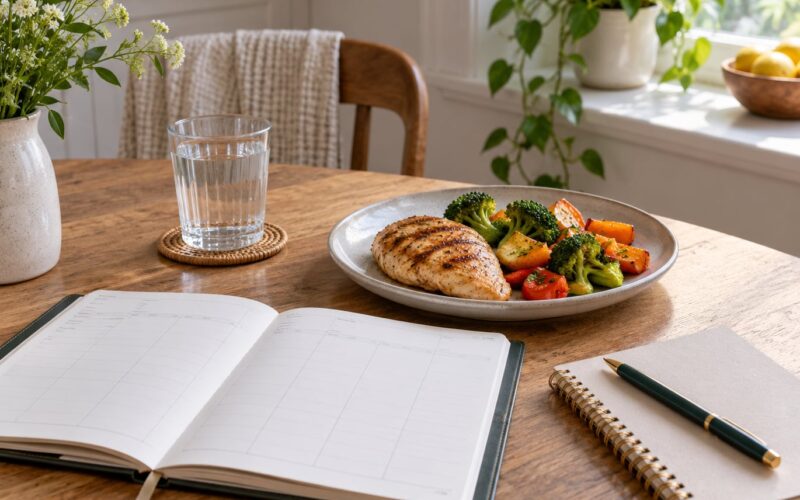
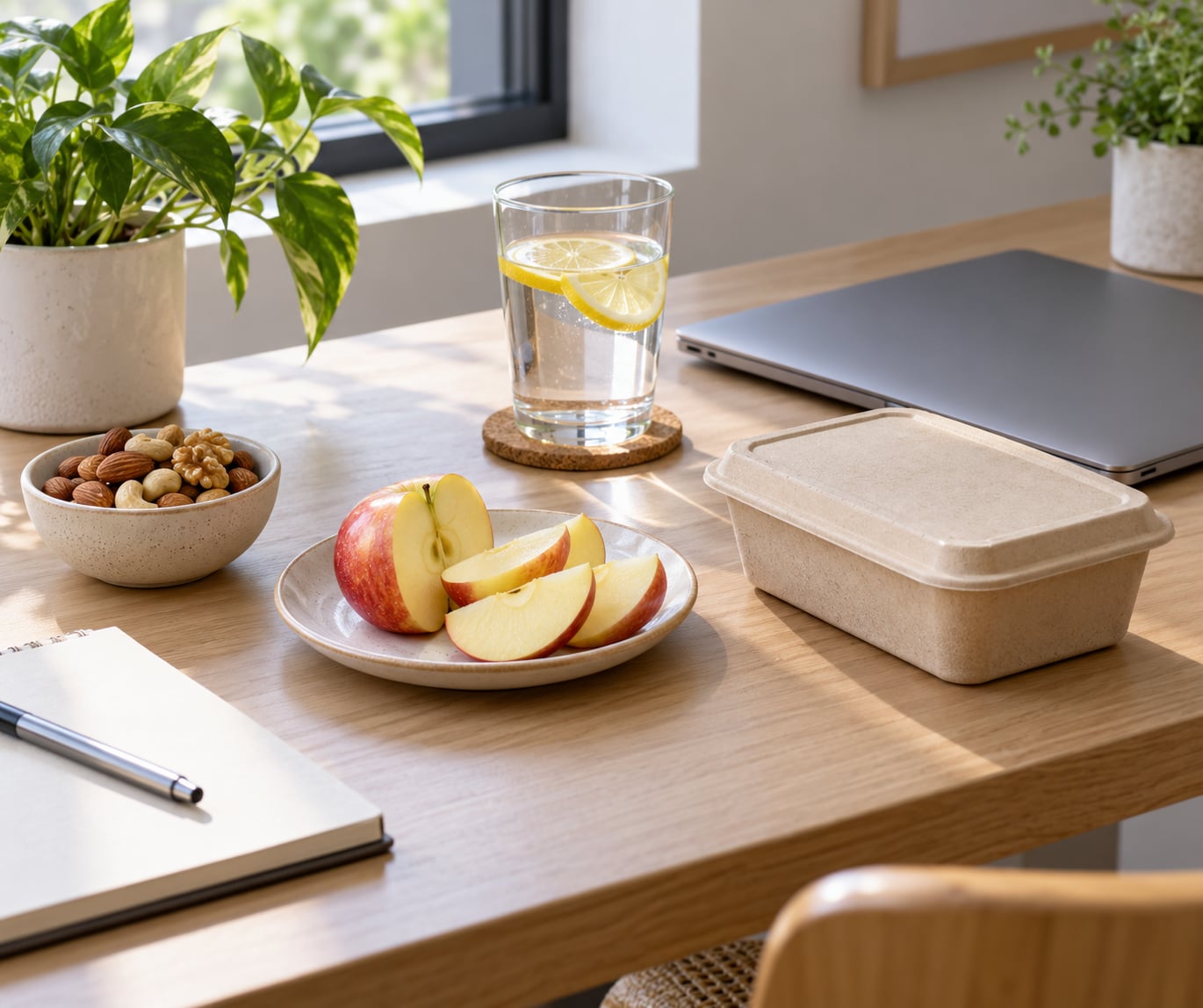
A backup snack or drink. A glass of water with lemon, a piece of fruit, yogurt, a small handful of nuts, or a portioned bar kept in your desk. The forums are consistent on this: the strongest tactic is having your own alternative within arm’s reach, so the bowl is not the only option in the room.
A redirect line. Something that moves the conversation forward without leaving you standing in the awkward space where an offer was just declined. You will find working examples in step five.
Step-by-Step: How to Say No to Office Snacks
1. Decide What You Are Ordering Instead
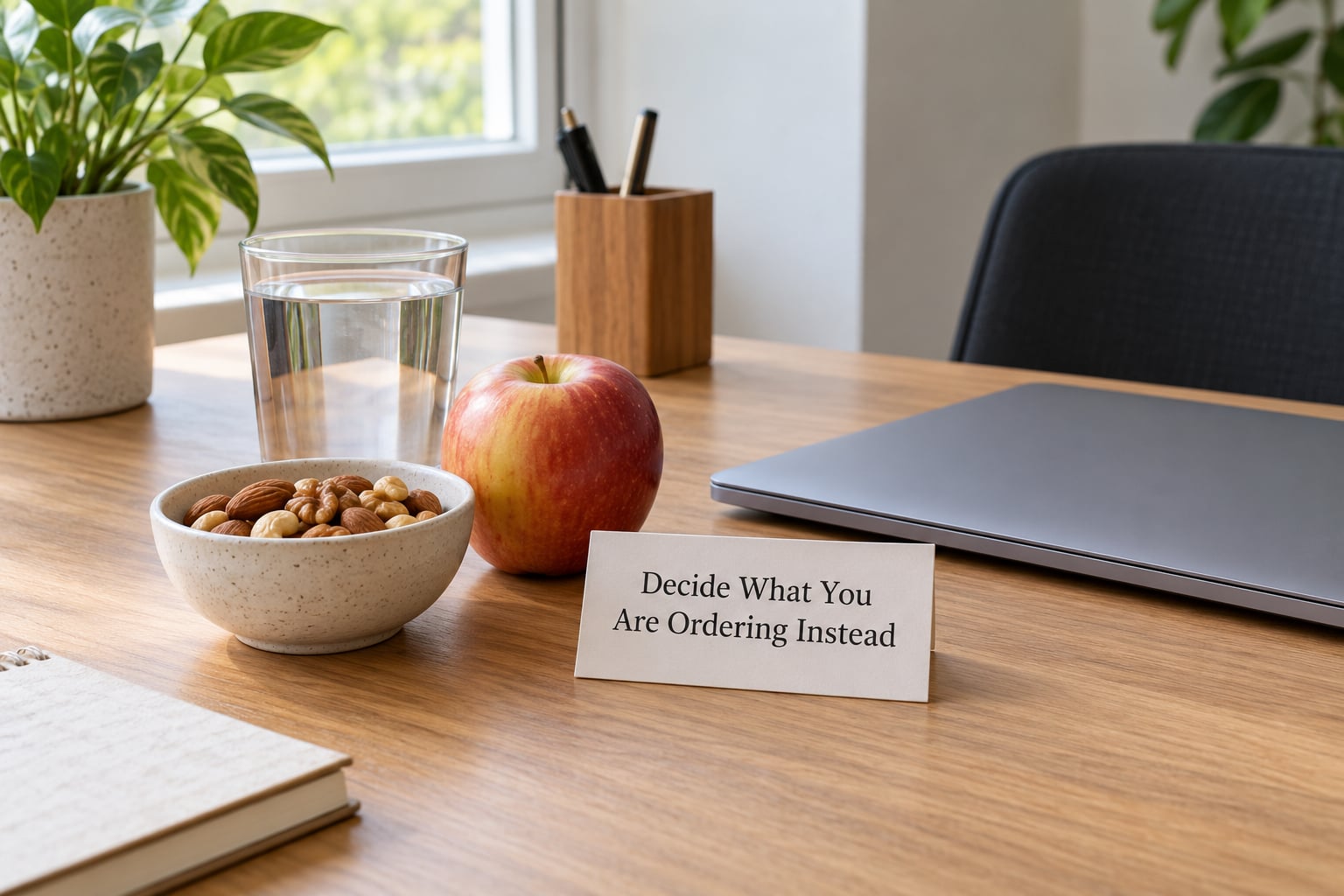
Deciding after the offer arrives is deciding too late. Pick your substitute before you walk into the office, when nothing is being offered and nothing is being implied.
The test is simple: would you actually eat this if no one had offered you anything? Water with lemon, an apple, plain yogurt, a small portion of nuts, or a protein bar all work because they are quiet, they leave no crumbs, and they do not make you the person eating during a presentation.
Keep it where your hand naturally goes. A drawer, a bag, the mug you drink from anyway. The people who manage this best are not fighting the urge in the moment; they never get far enough into the moment to have to fight it.
2. Notice the Offer Before Food Is Passed Around
Snack offers are almost always telegraphed. Someone heads toward the kitchen and comes back with a bag. A box appears in the meeting room. Someone says, “Who wants one?” before anyone has said what one is.
“Who wants one?” is the moment to speak, because it is a question and questions invite answers. If you wait until a plate is in your hand, the only honest response left is a refusal of a specific object, which feels heavier than declining an offer.
Also watch the time of day. The late afternoon dip is not a craving, it is usually low blood sugar, boredom, and a lull in work all landing together. One person in the Crumbl cookie thread described it precisely: hungry and bored at once, a combination they called pretty bad. Recognizing the timing in advance is half of the work.
3. Use a Short, Matter-of-Fact Refusal
Say it once, flat, with a pleasant tone, and then stop talking. These work:
- “No, thank you.”
- “I’m all set, but thank you.”
- “Not this time, thanks.”
- “I already ate, but that’s very kind of you.”
- “I’ll skip, I’m trying to eat less sugar this month.”
- “Not right now, I have water.”
- “You’ve been busy, go ahead.”
- “I’m doing fine, thank you.”
The tone note matters more than the wording. A refusal delivered while smiling warmly and continuing to speak normally reads as preference. The same words delivered while looking down, shrinking, or accelerating into a rush of explanation read as apology, and apologising invites reassurance, and reassurance turns into “come on, just a bite.”
Silence after your sentence is doing work. Let the other person be the one who moves on.
4. Make the Reason Personal but Brief
If someone asks a second time, one short reason is enough. It should describe a habit, not a body. “I’ve been eating less sugar this month” works. “I already had breakfast” works. “I am trying to manage my portion sizes” works.
Avoid reasons that invite debate or sound defensive: anything about your weight, a diagnosis you have not shared, or a plan the other person could argue with. Telling a coworker that you are tracking calories turns a private preference into a debate about your character, and it invites exactly the commentary you were trying to avoid.
One honest exception: some reasons are not up for discussion at all. Allergies, pregnancy, religious restrictions, infection-control rules where you work, and medical restrictions are not preferences, and saying so plainly is not rude. Frame it as fact, not as an apology: “I can’t eat that, I have an allergy.” No softening, no justifying.
5. Redirect Without Disrupting the Moment
A declined offer leaves a hole in the conversation. Fill it before it becomes awkward: ask about the project, join the discussion already happening a few feet away, or walk to the kitchen and get your own water.
Movement is the underrated part. If the bowl is on the desk cluster nearest you, the single most effective line in this whole guide is picking up your mug and walking to the other end of the floor. You do not need a sentence at all.
Readers on workplace forums describe the same tactic in different words: leave the area, take the stairs, walk to the car, put the food out of sight. Distance beats willpower, and distance takes five seconds.
6. Handle Pressure and Repeated Offers of Office Snacks
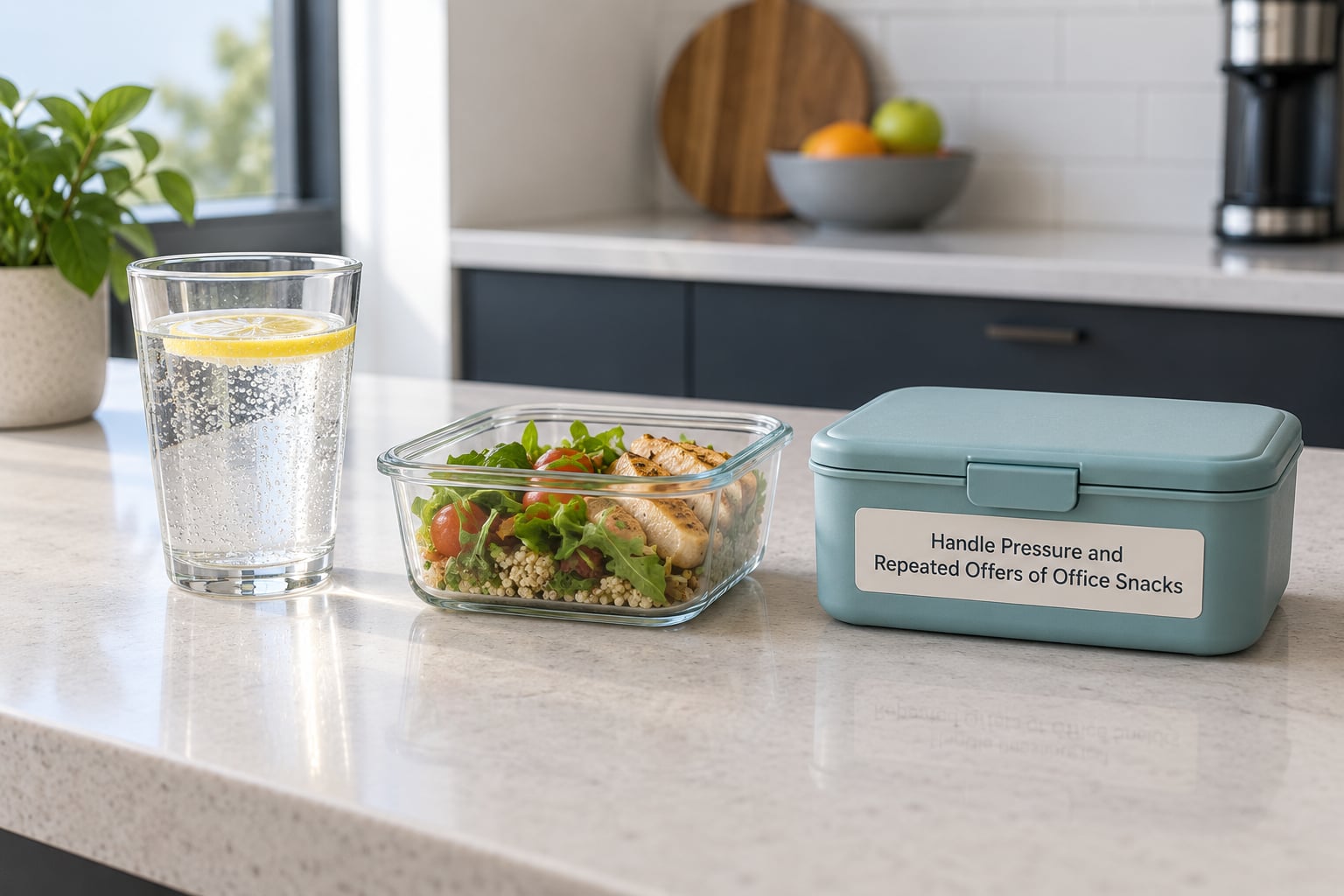
Some people ask once and accept the answer. Others ask three more times, because for them an unanswered offer is an unfinished interaction. You need a firmer script for these, and you need to stop treating the second ask as a request.
Say the same sentence again, unchanged. Repetition is not rudeness; it is consistency. “No, thank you” followed by silence handles most of it.
If it continues, add one boundary statement, said calmly and without heat: “I’m going to pass, but thank you for thinking of me.” Or, more directly: “I appreciate it, and I’m still going to say no.” Then exit the conversation physically. Staying and defending the decision is what turns a snack offer into a conflict.
There is a version of this where refusing genuinely is not an option: an allergy, a pregnancy, a medical restriction, an infection-control policy at your workplace, or simply a workplace where the food is a required part of a shared event, like a catered team lunch everyone is billed for. Say that plainly and move on. Guilt is worse than the doughnut.
7. Plan for the Next Snack Break
Do the recovery immediately, in the same way you would recover from any other skipped meal. Eat your planned snack only when you are actually hungry, not because you refused something twenty minutes ago. Drink water. Keep the alternative in the drawer.
Nothing about a declined snack needs compensating for. Skipping a snack is not skipping a meal, and treating it like a rule violation is how one refusal turns into a whole afternoon of reasoning about food.
If you did eat it, move on at the next meal. Eat what you would normally eat. Guilt is the mechanism that turns one unplanned snack into five, because shame makes the next decision feel like a verdict rather than a choice.
Common Mistakes
Overexplaining. Three sentences of justification is a request for permission. Use one, or none.
Apologising repeatedly. Sorry implies you did something wrong. Nothing happened. Thanking someone for an offer is courtesy; apologising for declining it is an admission.
Saying yes and then feeling bad. Taking a doughnut you did not want solves the social problem and creates the other one. The answer is to decline out loud, not to accept quietly.
Blaming your body or your diet. Anything about weight, size, or calories turns a snack into an argument about you, and you will lose that exchange. Talk about habits and timing instead.
Arguing about food choices. Nobody asked you to review their lunch. Correcting people about what they eat is a fast way to become the person nobody offers anything to.
Relying on willpower with nothing prepared. Refusing on empty is a fight you will lose eventually. The version of this that works has water in your hand and an alternative in your drawer.
One thing worth naming: some workplaces are genuinely hard, and that is not a personal failing. If your job keeps food in front of you all day, if you are eating large amounts quickly and often, if eating has become something you dread or hide, that is worth a conversation with a doctor or a registered dietitian. They can tell you whether what you are describing is stress eating, blood sugar, sleep, or something medical, and they can help. Nothing here replaces that.
For what to say when you want the office stocked with better options rather than just protecting yourself, that is a separate and different conversation, and it works best when you ask for what you want rather than critique what is there.
Frequently Asked Questions
How do I say no to office snacks without making my coworker feel offended?
Say no, say thank you, and say it once. A complete, friendly sentence like No, thank you, I’m all set ends the exchange without leaving anything to argue with. Adding a reason is what opens negotiation, because the other person now has something to respond to. Move on to another topic or another part of the room so the moment closes naturally instead of hanging.
What can I say when a coworker keeps offering me food?
Repeat the same sentence without changing it, then leave the conversation if it continues. Repetition reads as consistency, not rudeness, and changing your explanation each time invites a new argument. If it persists, add one calm boundary: I appreciate it, and I’m still going to pass. Then physically move away. Staying to defend the decision is what turns food into a conflict.
How do I decline snacks during a work meeting?
Decline before the food is served if you can, because who wants one is a question and questions invite answers. When the moment is not yours, keep it short and flat: Not this time, thanks. Take a drink of water as you say it, so your hands and mouth are occupied. Turning slightly toward the screen or the person speaking redirects the room without you having to interrupt anything.
Can I eat my own snack at the office instead of joining the shared food?
Yes, and for many people this is the whole solution. Keep a portioned snack in your desk so the communal bowl is never the only option in the room. Choose something quiet and crumb-free, like yogurt, fruit, or nuts in a sealed container, and eat it as part of your planned break rather than as a reaction to an offer. Your own snack is not a statement about anyone else’s food.
Do I need to tell coworkers that I am trying to lose weight?
No. Weight is a private matter and telling people usually invites commentary you did not ask for, including questions about your body and unsolicited advice about your eating. Talk about habits and timing instead: I’ve been eating less sugar this month, or I already ate. Those answers are true, they close the question, and they keep the conversation where you want it.
How can I stop feeling guilty or hungry after refusing an office snack?
Eat your planned snack only when you are genuinely hungry, and drink water in the meantime. A declined snack is not a skipped meal, so there is nothing to make up for and nothing to compensate for. If guilt shows up anyway, notice that it is a feeling following a rule, not new information. If persistent urges to eat at work interfere with your life, a doctor or registered dietitian can help you work out why.
Conclusion
Start with one thing: pick the sentence you will use and say it out loud once, today, until it stops feeling strange. No, thank you is enough. No, thank you, I’m all set is better, because it closes the offer and the conversation at the same time.
Then put something in your desk. The people who handle this well are not stronger than everyone else; they just have water, or fruit, or a portioned bar within reach, and they have already decided what they are having instead of deciding in the moment.
You are not rejecting your coworkers. You are eating on your own schedule, in your own way, and you are doing it politely. That habit is worth keeping for the rest of 2026, and it costs you nothing to start it on Monday.