You can start running when you are overweight, and the version that works is not the one you see on social media. It begins with walking, alternates short jogs with walking breaks, and builds up over roughly two months. Most people who try it start with five or six sessions of twenty-five minutes each, not a three-mile run.
The whole method comes down to three things: a pace you can hold while still talking, small increases from one week to the next, and at least one easy day between hard sessions. That sounds boring. It is also the approach most people stick to.
This is general information for healthy adults, not an individualized training or weight loss plan. If you have a heart condition, high blood pressure, diabetes, a joint problem, or are recovering from illness, talk to a doctor before you start.
Table of Contents
- What You Need
- Step-by-Step: How to Start Running When You Are Overweight
- Step 1: Check Your Starting Point and Set a Comfortable Baseline
- Step 2: Use a Walk-Run Routine for the First Two Weeks
- Step 3: Add Running Time Gradually
- Step 4: Build Consistency Before Speed or Distance
- Step 5: Know When to Seek Professional Advice
- Common Mistakes
- Starting with too much distance
- Running at full speed
- Skipping the warm-up and cool-down
- Ignoring pain to prove a point
- Chasing a comparison
- Trying to outrun a bad day
- Frequently Asked Questions
- Can I start running if I am overweight?
- How often should a beginner run when trying to lose weight?
- Is walking with running intervals enough to begin?
- How long should I walk before trying to run continuously?
- What should I wear when running for the first time?
- How do I know if running pain is normal soreness or a warning sign?
- Conclusion
What You Need
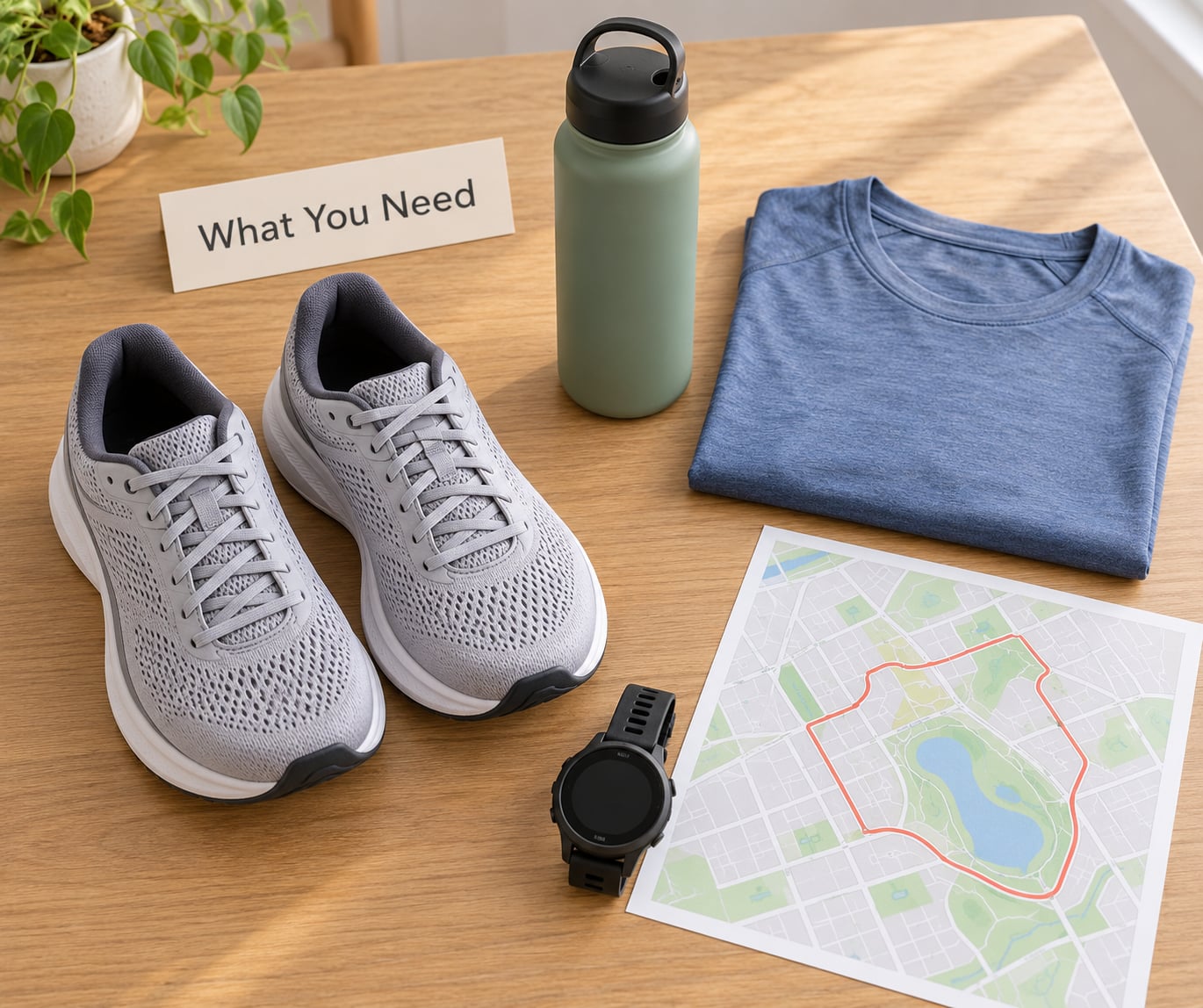
You need less than most people expect. None of this has to be bought before your first session, and the running shoe is the one item worth getting right.
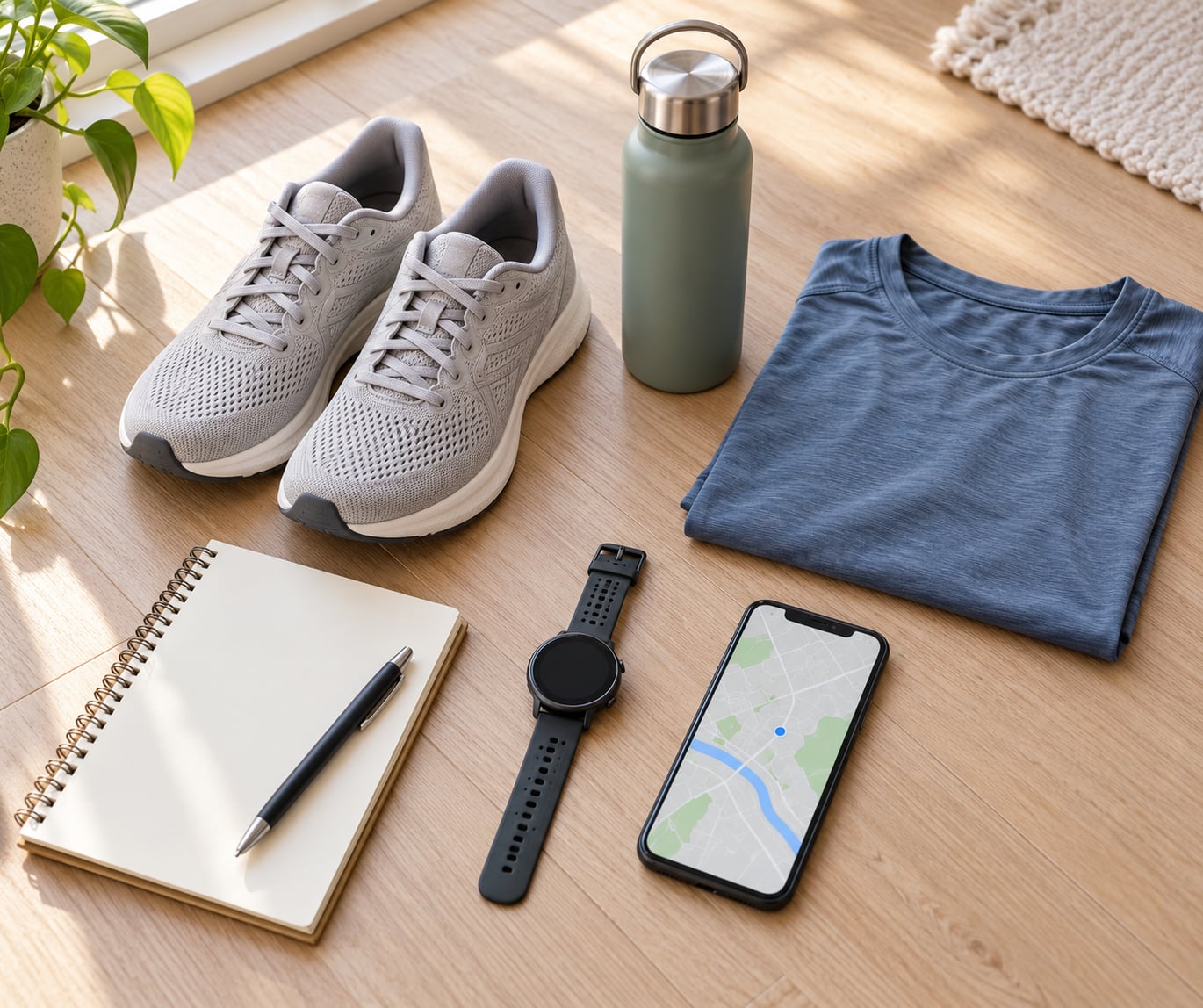
- Supportive running shoes. Get fitted at a specialty running store if you can, where staff will watch you move and check your gait. Tell them your weight honestly, because heavier runners need more cushioning and structure than a casual walking shoe provides.
- Comfortable clothing. Loose, moisture-wicking fabric, plus whatever support you normally wear. For women, a properly fitted sports bra matters more than any other running garment. Thigh chafing is common in the first weeks, so anti-chafe balm or compression shorts are worth having.
- A safe route or a treadmill. A treadmill gives you privacy and a predictable surface while you are still self-conscious. Outdoor routes offer daylight, weather and softer ground such as grass or a track.
- Water. A bottle, and more if you run in heat.
- A phone or watch. Useful for timing intervals so you stop guessing.
- Progress. A notes app is enough. Record your session, how it felt and any pain. This is the most useful thing you will own, and it costs nothing.
You do not need to reach a target pace, hit a distance, or run continuously from day one. If you can walk for thirty minutes twice a week, you have everything you need to start this week.
Step-by-Step: How to Start Running When You Are Overweight
Step 1: Check Your Starting Point and Set a Comfortable Baseline
Start by finding out what you can already do without strain. Walk at a brisk pace on flat ground for thirty minutes and note the distance and how hard it felt. That is your baseline, and it is more useful than any number from a fitness article, including this one.
The pace rule is simple: pick a speed at which you can speak in short, full sentences. If you can only manage three words at a time, slow down. Beginners almost always run harder than they need to, and running slow is what builds the aerobic base that later lets you pick up speed.
Test your walking breaks too. During your baseline walk, take a deliberate two-minute break and check how your breathing settles. A short break that brings your breathing back under control is a break you can use during running. If it takes much longer than that, keep your first intervals very short and your walking breaks long.
Step 2: Use a Walk-Run Routine for the First Two Weeks
Run-walk intervals are the whole trick. Instead of asking whether you can run five minutes, you alternate one minute of easy jogging with two minutes of walking, repeated until the session ends. Every run is short by design, which is what makes it repeatable.
A first session should look like this: five minutes of easy walking to warm up, then eight to ten rounds of one minute of jogging and two minutes of walking, then five minutes of walking to cool down. That is roughly thirty-five minutes including your breaks. That length is deliberate, because you will do it again in three days.
Warm up by walking, not stretching cold muscles. Static stretching before a run does not prevent injury, and five brisk minutes does more good. Same for the cool-down: slow your walking until your breathing is back to normal rather than forcing your heart rate down in one go.
How do you know the session worked? You finished it, your breathing recovered inside each walking break, and you were tired afterwards rather than wrecked. If you could not string together a full sentence during the jog intervals, cut them to thirty seconds and double the walking.
Step 3: Add Running Time Gradually
Only progress when a whole week felt manageable. The usual rule is to add no more than about ten percent to your weekly running minutes, and many people do better with five. Add time before you add intensity, and never increase two things in the same week.
There are two ways to progress and both work. You can lengthen the run interval, going from one minute to ninety seconds and then two, or you can shorten the walking break, going from two minutes to ninety seconds. Lengthening the run first is gentler on the knees, so start there.
Keep one easy day in the schedule. A simple week looks like three run-walk sessions, two strength sessions of twenty minutes, and two genuinely easy days that can be a walk or nothing at all. Rest is part of the plan rather than a break from it.
Here is how the eight weeks usually run. Add five minutes of easy walking at the start and five at the end of every session. Repeat a week as many times as you need before moving on.
- Week 1: 30 seconds running, 90 seconds walking, 10 rounds, three sessions.
- Week 2: 45 seconds running, 90 seconds walking, 10 rounds, three sessions.
- Week 3: 1 minute running, 2 minutes walking, 8 rounds, three sessions.
- Week 4: 90 seconds running, 2 minutes walking, 8 rounds, three sessions.
- Week 5: 2 minutes running, 2 minutes walking, 6 rounds, three sessions.
- Week 6: 3 minutes running, 2 minutes walking, 6 rounds, three sessions.
- Week 7: 5 minutes running, 2 minutes walking, 4 rounds, three sessions.
- Week 8: 8 minutes running, 2 minutes walking, 3 rounds, three sessions.
After week eight most people are close to running ten minutes without a break. Some will get there in six weeks, others need twelve, and a few will still be mixing in walking breaks a year later. None of those outcomes is a failure.
Step 4: Build Consistency Before Speed or Distance
Three sessions a week for eight weeks is 24 workouts. That consistency, not any single run, is what changes how running feels and how your body responds to it. Judges and distance goals can wait months.
Track the things that are actually going well: sessions completed, total minutes on your feet, how your clothes fit, how you sleep, how your mood looks at the end of the week. Non-scale progress is real progress and it keeps you going on the weeks when the scale barely moves.
Plan for bad weather and bad motivation. Pick two indoor options in advance, such as a treadmill session or a thirty-minute bodyweight strength circuit. Deciding what to do on a wet Tuesday at six in the morning is the difference between a missed week and a completed one.
Ask for some company. Beginners who run or walk with one other person, or post weekly check-ins to a group, tend to keep going longer than those who go alone. If being seen outside feels like the hardest part right now, the treadmill is a perfectly reasonable place to start.
Strength work pays off here too. Twice a week, twenty minutes is enough for squats to a chair, glute bridges, side steps, calf raises, a plank and bird dogs. Strong glutes and a steady core take load off your knees, and beginners who add them tend to have fewer joint complaints.
Step 5: Know When to Seek Professional Advice
Stop the session and get medical advice if you feel chest pain or pressure, faint or feel faint, have a racing or irregular heartbeat, feel pain in your joints that changes how you walk, or develop symptoms that get worse as you run rather than settling. Get advice before you start too, if you have a known heart condition, high blood pressure, type 1 or type 2 diabetes, a history of an eating disorder, or have been told to avoid impact exercise.
For everything else, a physical therapist or a doctor can help with ongoing knee, hip, ankle or foot pain that does not improve with two weeks of rest and softer surfaces. A certified running coach is useful for pacing and form if you want feedback rather than guesswork.
New runners on beginner running forums raise the same handful of worries: whether they need to lose weight first, whether running is bad for their knees, how to stop chafing, and what to do when they cannot run for a full minute. The short answer to all four is that you start now, at the level you are at, and let the plan build up around you.
Common Mistakes
Starting with too much distance
The most common way beginners quit is a first run that is far longer than their body can handle, followed by several days of pain. Fix it by starting with sessions of 25 to 30 minutes total, including the walking breaks, and repeating that exact session three times before you change anything.
Running at full speed
Sprinting the jogging intervals feels impressive and costs you. Slow your pace to the point where you can talk, which also lets your heart rate climb gradually rather than spiking in the first thirty seconds.
Skipping the warm-up and cool-down
Five minutes of easy walking at the start and five at the end is not optional padding. It is what lets you start harder at the middle without your joints and heart rate being ambushed.
Ignoring pain to prove a point
Muscle soreness that shows up a day later and fades within a few days is normal. Sharp pain during a run, pain that makes you limp, pain that lingers more than a week, and pain that appears in a new place each session are all reasons to stop and get it looked at. Week four soreness is not a badge of honour.
Chasing a comparison
The runner at the park who passes you at a mile twenty has years of training behind them. Compare this month’s minutes with your own last month and nothing else.
Trying to outrun a bad day
On days when you feel heavy and unmotivated, do the session anyway but drop the intervals and walk the whole thing. Showing up counts. A short walk after an off day beats nothing at all, and tomorrow is a fresh decision.
A few things that genuinely keep people going: put your shoes by the door the night before, fix a time rather than a distance, tell one person your plan for the week, and remember that the discomfort of the first six weeks is temporary even when the habit is not.
Frequently Asked Questions
Can I start running if I am overweight?
Yes. Plenty of people who never exercise start running at a higher weight and stay injury-free, because the key is gradual progression rather than body size. Walking first, alternating short jogs with walking breaks, and increasing no more than about ten percent per week keeps joint load manageable. Talk to a doctor first if you have a heart condition, diabetes, high blood pressure or joint problems.
How often should a beginner run when trying to lose weight?
Three sessions a week is the most common starting frequency, spaced with at least one easy or rest day between them. Quality matters more than quantity in the first months, so three comfortable sessions beat five punishing ones. Add one session only after two or three weeks of consistent training, and keep at least one full rest day each week.
Is walking with running intervals enough to begin?
Completely. A run-walk session counts as a running session, and the walking parts do not reduce its value. Many people stay with intervals for months and lose weight just as steadily as continuous runners. What matters is the total weekly activity and the fact that you keep showing up, not whether you remove the walking breaks.
How long should I walk before trying to run continuously?
There is no fixed number of weeks, and the honest answer is that some people never run continuously and do not need to. Use a practical test instead: when you can run for thirty minutes at a conversational pace with no walk break, continuous running has arrived. That often happens around week eight to twelve of a structured plan.
What should I wear when running for the first time?
Choose a moisture-wicking top and shorts or tights that do not rub, plus properly fitted shoes with enough cushioning for your weight. Women benefit most from a well-fitted sports bra, since discomfort there stops more beginners than anything else. Apply anti-chafe balm to inner thighs before longer sessions and replace socks when they get damp.
How do I know if running pain is normal soreness or a warning sign?
Normal soreness is dull, muscular, shows up during the day or the morning after, and fades within two to three days. Warning signs are sharp, localised to a joint, appear during the run, change your stride, or last more than a week. Stop and see a doctor or physical therapist for chest pain, faintness, unusual breathlessness or pain that worsens each session.
Conclusion
Here is the first move: this week, book three 30-minute sessions, and do one of them as five minutes of walking followed by ten rounds of thirty seconds of jogging and ninety seconds of walking. Finish with five minutes of walking. Write down how it felt, then repeat the same session rather than improving anything yet.
That is how to start running when you are overweight: gently, on a schedule, with a pace you can talk at. Judge the first eight weeks by sessions completed and how you feel afterwards, not by pace or distance, and get individualized medical advice first if you have any health condition that concerns you.