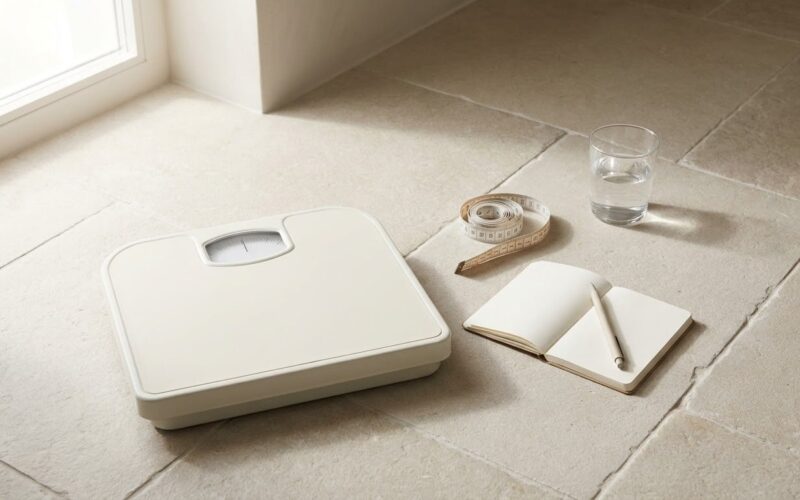
To boost your metabolism naturally, focus on three levers: build lean muscle through strength training, eat enough protein, and stay active through the day. Everything else on this list supports those three. There is no food, drink, or pill that dramatically revs your calorie burn, and nothing here requires a gym membership or a supplement.
This guide is written for 2026 and updated regularly as guidance changes. Most people can work through the nine steps below in a few minutes a day plus two or three short workouts a week. The order matters a little: eating habits come first because they decide whether the movement and training actually stick.
A note before you start. I am not a doctor, and this is general information, not medical advice. If you have a thyroid condition, are pregnant or breastfeeding, take daily medication, or have been told to follow a specific eating plan, talk to your doctor or a registered dietitian before changing how you eat or exercise.
Table of Contents
- What You Need
- Step-by-Step: How to Boost Your Metabolism Naturally
- 1. Build Meals Around Protein and Fiber
- 2. Eat Regularly Instead of Skipping Meals
- 3. Choose Water More Often Than Sugary Drinks
- 4. Add Regular Strength Training
- 5. Walk and Move Throughout the Day
- 6. Support Your Energy with Balanced Portions
- 7. Get Consistent, Adequate Sleep
- 8. Limit Alcohol and Highly Processed Snacks
- 9. Track Patterns Instead of Chasing a Quick Fix
- Common Mistakes
- Frequently Asked Questions
- Does skipping meals slow your metabolism down?
- Does drinking water actually increase metabolism?
- What is the fastest way to boost my metabolism?
- Is there a metabolism booster that actually works?
- How long does it take to boost your metabolism?
- How do I boost my metabolism after 50?
What You Need
You need less gear than most metabolism advice implies. A pair of shoes, a water bottle, and somewhere safe to move is genuinely enough for everything in this guide.
Beyond that, three things help:
- A balanced eating pattern. Regular meals built from protein, vegetables or fruit, a whole-grain or starchy carbohydrate, and some fat. Not a rigid diet, just a repeatable template.
- A way to track activity. A phone step counter, a watch, or a notebook. The point is noticing patterns across weeks, not policing a single day.
- A safe place to start. A neighborhood sidewalk, a living room, or a gym with proper equipment. If you are over 40, have been inactive for a long time, or have an injury or heart condition, get clearance from a clinician first.
For strength training specifically, a set of resistance bands, a pair of dumbbells, or nothing but your own bodyweight will carry you through the first three months. If you are new to resistance training, the beginner strength workouts outlined by Harvard Health are a sensible place to check your form before you add load.
Step-by-Step: How to Boost Your Metabolism Naturally
1. Build Meals Around Protein and Fiber
Protein is the macronutrient your body spends the most energy digesting, an effect called the thermic effect of food. Estimates commonly put protein somewhere around 20 to 30 percent of its own calories spent processing it, compared with roughly 5 to 10 percent for carbohydrates and a much smaller share for fat. Those numbers vary by person and meal size, so treat them as a ranking rather than a promise.
The practical part is easier than the science. Aim for a palm-sized portion of protein at most meals: Greek yogurt, eggs, chicken, fish, tofu, beans, lentils, cottage cheese, or a handful of nuts if nothing else fits. Pair it with fiber, which is what actually keeps you full long enough to stop snacking between meals.
Starting point: one clear protein source at breakfast, which most people who skip it are the ones who graze by 10 a.m. Consistency check: you can name the protein at three meals a day without thinking about it.
2. Eat Regularly Instead of Skipping Meals
Skipping meals does not meaningfully speed up your metabolism, and long gaps often backfire. You get hungrier, and hunger is the strongest predictor of the late-night cupboard raid that undoes the whole plan. The pattern is familiar to almost everyone: skip breakfast, overshoot at dinner, feel tired by 4 p.m., repeat.
What regular eating does is protect your training and your energy. A person who trains hard three times a week and eats an actual meal afterward recovers better than someone squeezing the same session into an empty stomach.
Starting point: three meals a day at roughly consistent times, with a snack only if you are genuinely hungry. Consistency check: you are not thinking about food constantly by mid-afternoon.
3. Choose Water More Often Than Sugary Drinks
Does drinking water increase metabolism? A little, and not for the reason most posts claim. Water has essentially no calories, so it does not add energy expenditure. The real benefit is substitution: a glass of water instead of a sweetened drink or juice removes a meaningful chunk of daily calories without you eating less food, and that is where weight loss actually comes from.
Sugar-sweetened drinks are also the easiest place for a few hundred hidden calories to hide, because they do not fill you up the way solid food does. A large fountain drink can carry 30 to 40 grams of sugar before you feel satisfied.
Starting point: water as your default drink, and keep it with you so the choice is easy. Coffee, tea, and sparkling water count. Consistency check: you go most of the day without a sweetened drink.
4. Add Regular Strength Training
Lean muscle is metabolically active tissue, which is the main reason resistance training shows up at the top of every credible list. Muscle spends energy just to exist, and the effect shows up as a higher resting metabolic rate. It also protects the muscle you already have while you lose fat, which matters far more than the calorie figure for anyone over 35.

You do not need a complicated program. A beginner-friendly week looks like this:
- Two or three sessions a week, on non-consecutive days.
- Six to eight exercises covering squat or sit-to-stand, hinge, push, pull, row, and carry or core.
- Two or three sets of 8 to 12 reps, resting a couple of minutes between sets.
- Progress by adding reps first, then a little more weight or a harder variation once you can hit the top of the rep range with good form.
Consistency check: you can name the date of your last three sessions. Walking is a fine complement to this, but resistance work is the piece that changes your baseline.
5. Walk and Move Throughout the Day
Non-exercise activity thermogenesis, usually shortened to NEAT, is the energy you burn through ordinary movement: walking, standing, housework, stairs, fidgeting. On many people it out-weighs both a formal workout and the thermic effect of food combined, and it is the easiest place to add activity without changing your schedule.
Start where your day already has gaps. A ten-minute walk after two of your meals, one flight of stairs instead of the elevator, or a short call taken standing up all add up. The effect shows up the same day and the next one, which is not true of most habits.
Starting point: aim for a daily step count you can realistically hit on your current baseline, then add ten percent a week. Consistency check: your average step count on a rest day is meaningfully higher than it was four weeks ago.
6. Support Your Energy with Balanced Portions
Balanced portions keep your energy intake steady, and steady intake protects your resting metabolic rate better than aggressive restriction does. A simple plate model beats any food rule: half vegetables or fruit, a quarter protein, a quarter whole grain or starchy vegetable, plus a small amount of fat such as olive oil, nuts, or avocado.
This matters most if you have a history of crash dieting. After months of aggressive cutting, your body often adapts downward and burns less at rest. That is a real physiological response, not a character flaw, and it is a big reason weight loss stalls for people who have repeatedly dieted. Eating consistently and lifting weights is how you rebuild from there.
Consistency check: you finish most meals without feeling like you overdid it.
7. Get Consistent, Adequate Sleep
Sleep is where a surprising amount of metabolic health is won or lost. Short or disrupted sleep raises ghrelin, the hormone that drives hunger, and lowers leptin, the hormone that signals fullness, so you wake up hungrier and eat more the next day. It also raises cortisol, which makes blood sugar handling harder and, over time, shifts fat storage toward the midsection. On top of that, when you are tired, your judgment about food and your willingness to train both suffer.
Most adults do best with seven to nine hours, and the Mayo Clinic gives the same general range. A consistent bedtime matters as much as the total, because the pattern tells your body when to expect rest.
Starting point: pick a wake time and work backward, keeping a wind-down window of thirty minutes with no screens. Consistency check: you stop regularly dozing off mid-evening.
8. Limit Alcohol and Highly Processed Snacks
Alcohol is the easiest habit to underestimate. It has calories with very little protein or fiber, it lowers inhibitions around food, and it disrupts sleep, which lands you back in step seven within one night. NIH News in Health guidance on metabolism lists limiting alcohol among the basics alongside sleep, movement, and water.
Highly processed snacks are less about a metabolic mechanism and more about how easily they add up. The fix is not banning anything. It is making the easy choice a better one: keep something you actually want to eat, like yogurt, fruit, or a small portion of nuts, within reach instead of whatever is in the cupboard at 9 p.m.
Starting point: identify the single most common indulgence and set a limit you can hold for two weeks. Consistency check: the snacking happens less often and the sleep did not get worse.
9. Track Patterns Instead of Chasing a Quick Fix
This is the step most people skip, and it is the one that makes the other eight work. Weigh yourself occasionally, not daily, and pay more attention to energy, hunger, sleep, and strength than to the number on the scale. Day-to-day weight swings mostly reflect water, salt, and carbohydrates, and reading them as fat loss is how people quit a plan that was working.
A practical rhythm: check in once a week on a scale for three or four mornings and use the average, note your energy and your sleep once a day, and review everything every two weeks. Then change one variable at a time. If your weight has not moved for three weeks and your habits are solid, the usual suspects are portion creep, weekend alcohol, or a step count that dropped, not a broken metabolism.
| Timeline | What usually changes |
|---|---|
| Weeks 1 to 2 | Energy levels and hydration habits shift first |
| Weeks 3 to 6 | Strength and stamina improve, clothes fit differently |
| Weeks 7 to 12 | Body composition changes, with weight moving slowly or not at all |
Consistency check: you can describe your own patterns in a sentence or two.
Common Mistakes
Almost everyone trying to boost your metabolism naturally falls into one of these. Here is what goes wrong and what to do instead.
| Mistake | Why it backfires | The fix |
|---|---|---|
| Crash dieting for a few weeks | Aggressive cuts drive hunger up, energy down, and trigger adaptation that burns fewer calories at rest | Set a modest daily deficit and hold it for months rather than days |
| Eating too little to lose it faster | Under-eating costs you muscle, and muscle is the tissue that protects your metabolic rate | Eat enough to support two or three training sessions a week |
| Relying on metabolism booster supplements | Fat burners offer little beyond caffeine and stimulants, and some carry real health risks | Spend the money on food quality or a class instead |
| Overtraining without recovery | Extra sessions do not add up when sleep and food cannot support them, and burnout ends the habit | Two or three sessions with a rest day between beats five in a row |
| Doing only cardio | Endurance work burns calories while you do it but does little for resting metabolic rate | Add at least two resistance sessions a week |
| Reading daily scale weight as fat loss | Water and salt swings swamp fat loss of half a pound a week, and the number is not a verdict | Use weekly averages and let the daily number go |
One more realistic failure: doing everything for ten days and calling it a lifestyle. Any of these habits will look like nothing on a ten-day stretch. Give each one a month before you judge it.
If you have tried several approaches and weight still will not budge, or you notice symptoms like fatigue, feeling cold all the time, or unexplained changes in your resting heart rate, that is a medical question rather than a habit question. A primary care clinician can check for thyroid or other conditions, and a registered dietitian can help you build a plan that accounts for your medical situation.
Frequently Asked Questions
Does skipping meals slow your metabolism down?
Skipping meals is unlikely to slow your metabolism in any meaningful, lasting way. The bigger risk is practical: long gaps make you hungrier, and hunger leads to heavier meals later in the day. Habitually undereating over months can reduce energy expenditure, but that is about total intake over time rather than a missed lunch. Three regular meals a day is a reasonable pattern for most people, and you can adjust it to whatever schedule works.
Does drinking water actually increase metabolism?
Not by much, and not for the reason usually claimed. Water contains no calories, so it does not raise your energy expenditure. It helps in two practical ways: it takes the place of sweetened drinks that would otherwise add a few hundred calories a day, and it makes meals feel more filling. Staying hydrated is a good habit, but it is a supporting habit rather than a metabolism booster on its own.
What is the fastest way to boost my metabolism?
Nothing changes your rate overnight, and the fastest things are usually the ones you abandon. The quickest results come from three habits: lift weights two or three times a week, eat a solid protein portion at each meal, and add a few thousand steps a day. Those three give you the best return for the time. Expect to feel more energetic within a few weeks and to see body composition changes over two to three months.
Is there a metabolism booster that actually works?
Caffeine gives a small, short-lived bump, and that is about it. Green tea extracts and capsaicin show small effects in short studies that rarely translate to meaningful real-world change. Fat burner supplements mostly combine caffeine with laxatives, and some have been linked to liver problems. No over-the-counter product replaces resistance training, adequate protein, sleep, and daily movement for raising your resting metabolic rate.
How long does it take to boost your metabolism?
It depends on what you are measuring. Energy and stamina tend to improve within one to two weeks of consistent training and better sleep. Waist measurements and how your clothes fit tend to move between weeks four and eight. The number on the scale can stall for longer, especially if you are building muscle. If you have crash-dieted in the past, expect the first several weeks to focus on rebuilding habits rather than visible results.
How do I boost my metabolism after 50?
Two things matter most after 50: protecting muscle and protecting sleep. Resistance training two or three times a week is the single most useful step, because muscle loss accelerates in this age range and muscle protects your resting metabolic rate. Second, avoid sharp cuts in calories. Cutting too aggressively tends to cost muscle, which lowers your rate and makes the next attempt harder. A registered dietitian can help you build a plan that fits your medical history.
If you change only one thing while learning how to boost your metabolism naturally, start with protein at breakfast and two strength sessions this week. Add the walking and the sleep once those feel normal, because that order is far more likely to survive contact with a real week. If you are dealing with a health condition or a long history of dieting, bring the plan to a doctor or registered dietitian first.