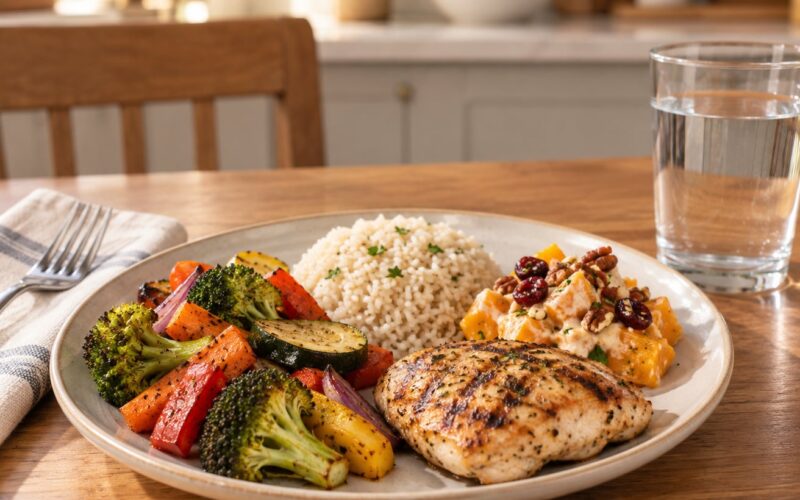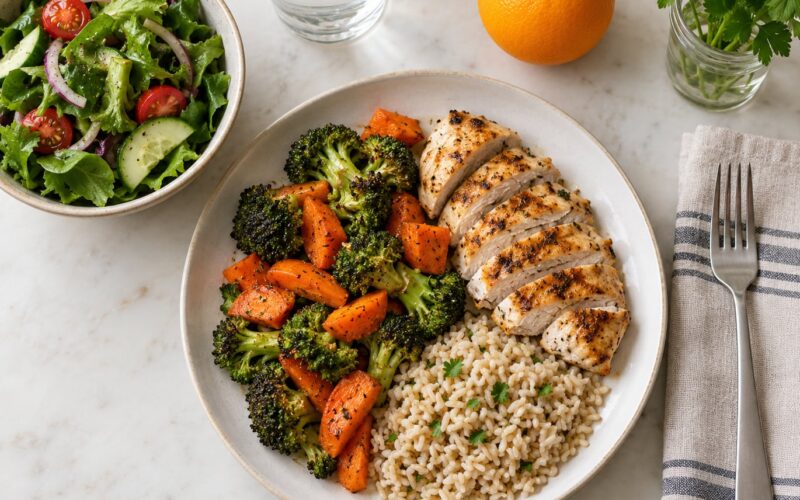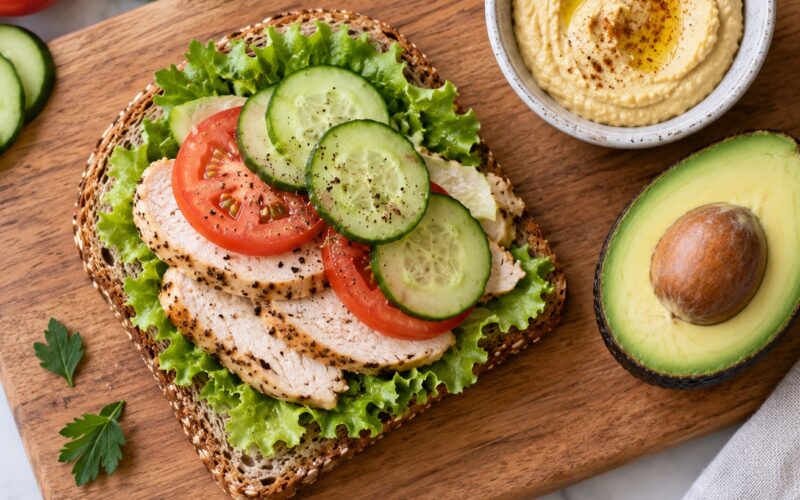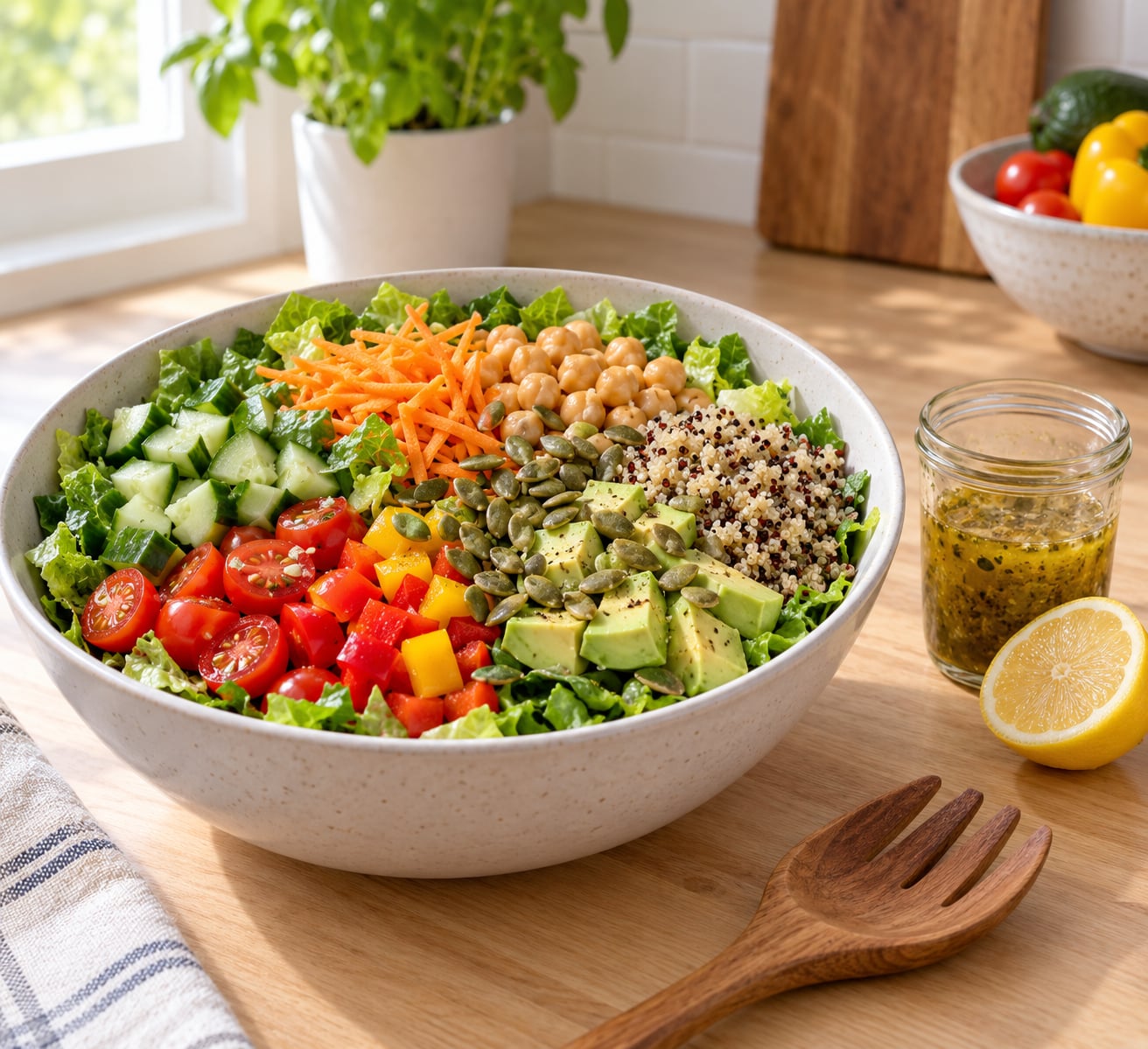
Most salads fail as meals because they are built almost entirely from watery greens and a light dressing, so you finish the bowl and feel hungry again an hour later. To fix that, you need to know how to build a filling salad: start with a hearty greens base, then add a real portion of protein, a fiber-rich carbohydrate, healthy fat, and something crunchy, all held together with a substantial dressing. Five components, about ten minutes of work, and the same formula turns into a different salad every day of the week.
Table of Contents
- What You Need
- Step-by-Step: How to Build a Filling Salad
- 1. Choose a Filling Protein
- 2. Add Fiber-Rich Carbohydrates
- 3. Build a Colorful Vegetable Base
- 4. Include Healthy Fats
- 5. Make Every Bite Interesting
- 6. Dress and Toss the Salad
- Common Mistakes
- Tips for Making Salad More Filling
- Frequently Asked Questions
- What can I add to a salad to make it more filling?
- How do I build a filling salad without protein?
- What is the best dressing for a filling salad?
- How long does a homemade salad stay fresh in the refrigerator?
- Can a filling salad help with weight loss?
- How can I keep a salad from becoming watery?
- Conclusion: Start With Protein, Fiber, and Flavor
What You Need
Before you start chopping, gather one item from each row below. You do not need a long grocery list, and you do not need every option in a category. One choice per component is enough to make a complete meal.
| Component | Typical portion | Easy options |
|---|---|---|
| Hearty greens base | 2 to 3 cups chopped | Romaine, kale, arugula, mixed spring greens |
| Protein | 3 to 4 oz cooked (85 to 115 g) | Grilled chicken, canned tuna, eggs, chickpeas, lentils, tofu, edamame, shrimp |
| Fiber-rich carbohydrate | 1/2 cup cooked | Quinoa, farro, barley, brown rice, roasted sweet potato, whole-grain crackers |
| Healthy fat | 1 to 2 tbsp or a small handful | Avocado, walnuts, pumpkin seeds, feta, olives, olive oil |
| Crunch and flavor | 2 to 3 tbsp | Fresh herbs, citrus, berries or apple, pickles, toasted nuts, seeds |
| Dressing | 2 to 3 tbsp | Olive oil vinaigrette, lemon and olive oil, tahini, yogurt dressing |
Dressing counts as the fat component, so if you are using an oil-based vinaigrette you do not need to add a second fat. If you are using a yogurt or tahini dressing, add a fat such as avocado or seeds.
Step-by-Step: How to Build a Filling Salad
Work through these six steps in order. The order is not fussiness, because the sturdy ingredients go in first and the delicate ones go in last, which keeps the bowl crisp instead of collapsed.
1. Choose a Filling Protein
Protein is the single biggest change you can make, and the portion matters more than the type. Aim for 3 to 4 ounces cooked, roughly the size of the palm of your hand plus a thumb. Three or four hard-boiled eggs, a half cup of chickpeas, or about 3/4 cup of tofu covers the same ground.
For omnivores, grilled chicken, canned tuna, salmon, shrimp, and sliced deli-style turkey all work. For plant-based bowls, lentils, chickpeas, edamame, tofu, and tempeh carry the same role. People who eat a lot of vegetables often describe building large salads around kale, arugula, chard, and red kale topped with nuts, bell peppers, or edamame, which is the same idea with a different base.
Safety note for anything you cook first: chicken and other poultry need to reach 165°F (74°C) internally, ground meat 160°F (71°C), and fish or whole cuts of meat 145°F (63°C).
You will know the portion worked if the bowl still feels substantial two hours later without a second snack.
2. Add Fiber-Rich Carbohydrates
Leafy greens alone do very little to slow digestion. A starchy, fiber-rich carbohydrate is what turns a side dish into a meal that holds. Half a cup of cooked quinoa, farro, barley, or brown rice, a scoop of roasted sweet potato, or a handful of beans does it.
Grain choice comes down to texture. Cooked farro and barley keep their bite through a packed afternoon. Quinoa is neutral and soft. Brown rice and wheat berries are heartier but can turn chewy by lunchtime if the dressing went in early. Cook grains in batches and chill them, and you can pack salads that still taste good on day three.
Cooking from scratch is not required. Frozen roasted sweet potato, canned chickpeas drained and rinsed, and leftover grain from last night’s dinner all count. For gluten-free eating, quinoa, brown rice, millet, and buckwheat hold their texture well.
3. Build a Colorful Vegetable Base
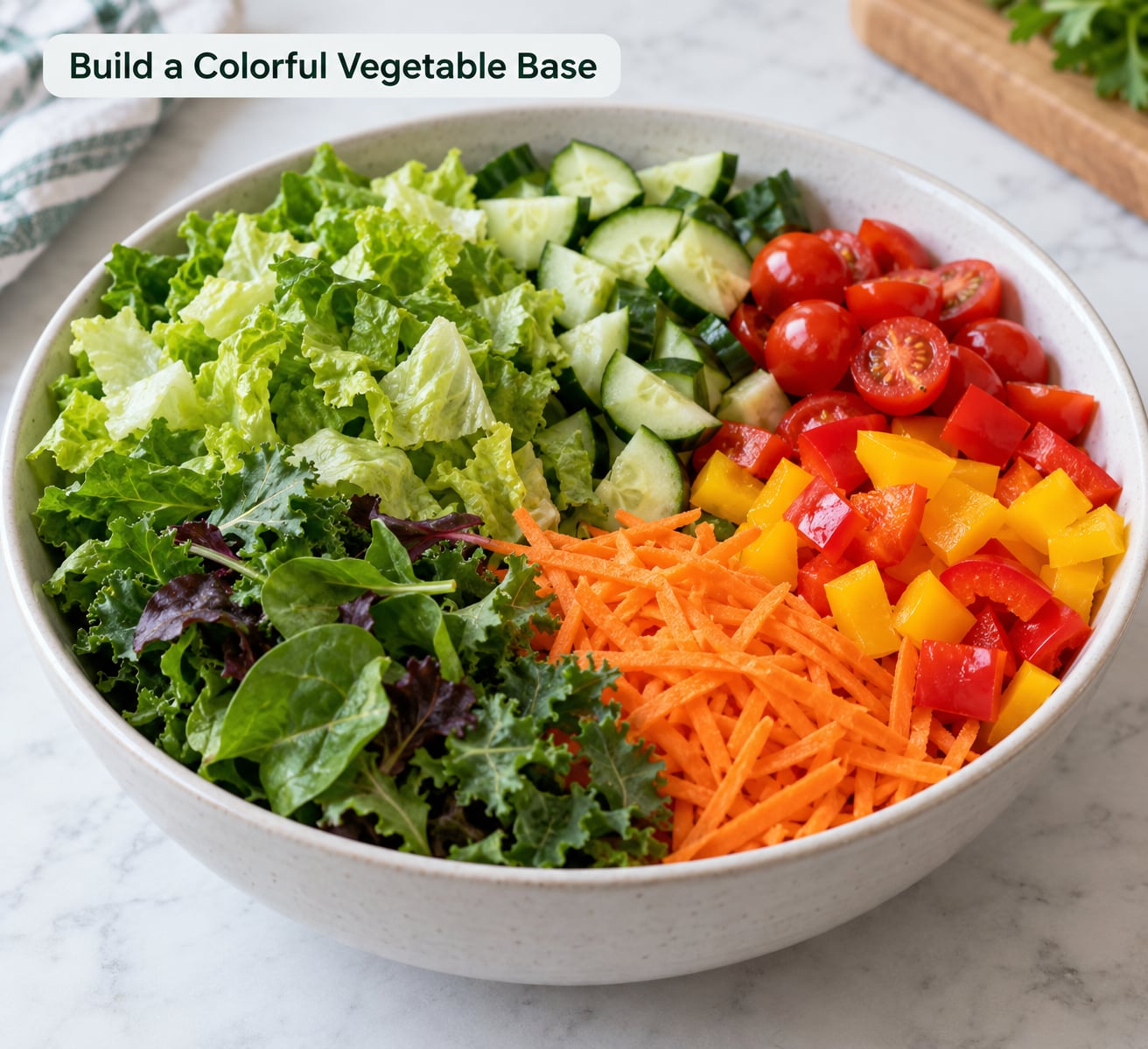
Use greens with some chew to them, then add two or three vegetables that crunch. Romaine, kale, arugula, and chopped cabbage all hold up. Iceberg has almost no fiber and flattens out in minutes, so it works better as a base mixed with something sturdier than as the whole salad.
Variety is what keeps a salad from tasting like the last four salads. Cucumber and celery bring water and crunch, tomatoes and roasted peppers bring sweetness, shredded cabbage and carrots bring bite, and cucumber skins and bell pepper skins add small amounts of fiber most people forget.
Two cups of vegetables per person is a reasonable base. Beyond that, add bulk with the grain and protein rather than with more lettuce, because volume from watery vegetables alone is what leaves people hungry again.
4. Include Healthy Fats
Fat slows digestion and makes vegetables and grains taste worth eating. Half an avocado, a tablespoon of walnuts or pumpkin seeds, a small handful of olives, or a couple of tablespoons of crumbled feta all work.
Portion size here is the whole game for anyone watching calories. A quarter of an avocado is about 80 calories, a tablespoon of nuts is roughly 50, and a tablespoon of olive oil is around 120. Those numbers add up fast once you are pouring straight from the bottle, so measure the oil rather than free-pouring it.
If you skip the fat entirely, add volume with the grain and extra protein instead. Fat-free bowls exist and can be filling, but they rely on protein and fiber doing all the work.
5. Make Every Bite Interesting
This is the step people skip, and it is the one that keeps you eating the same formula on day six. Fresh herbs do more for a bowl than anything else: parsley, mint, basil, cilantro, dill, or chives, chopped fine and added generously.
Then vary one element at a time. Fruit brings acidity and sweetness, so try apple, orange segments, grapes, pomegranate seeds, or blueberries. Cheese or pickled onions bring salt and sharpness. Toasted seeds, croutons, or crushed nuts bring crunch that survives the first bite. A spoonful of something savory and umami-heavy, such as olives, capers, feta, or grated parmesan, gives the bowl a depth that lettuce alone cannot.
Readers on Reddit have made the same point in different words: salad advice that reads like diet rules tends to get ignored, while salads that taste good get repeated.
6. Dress and Toss the Salad
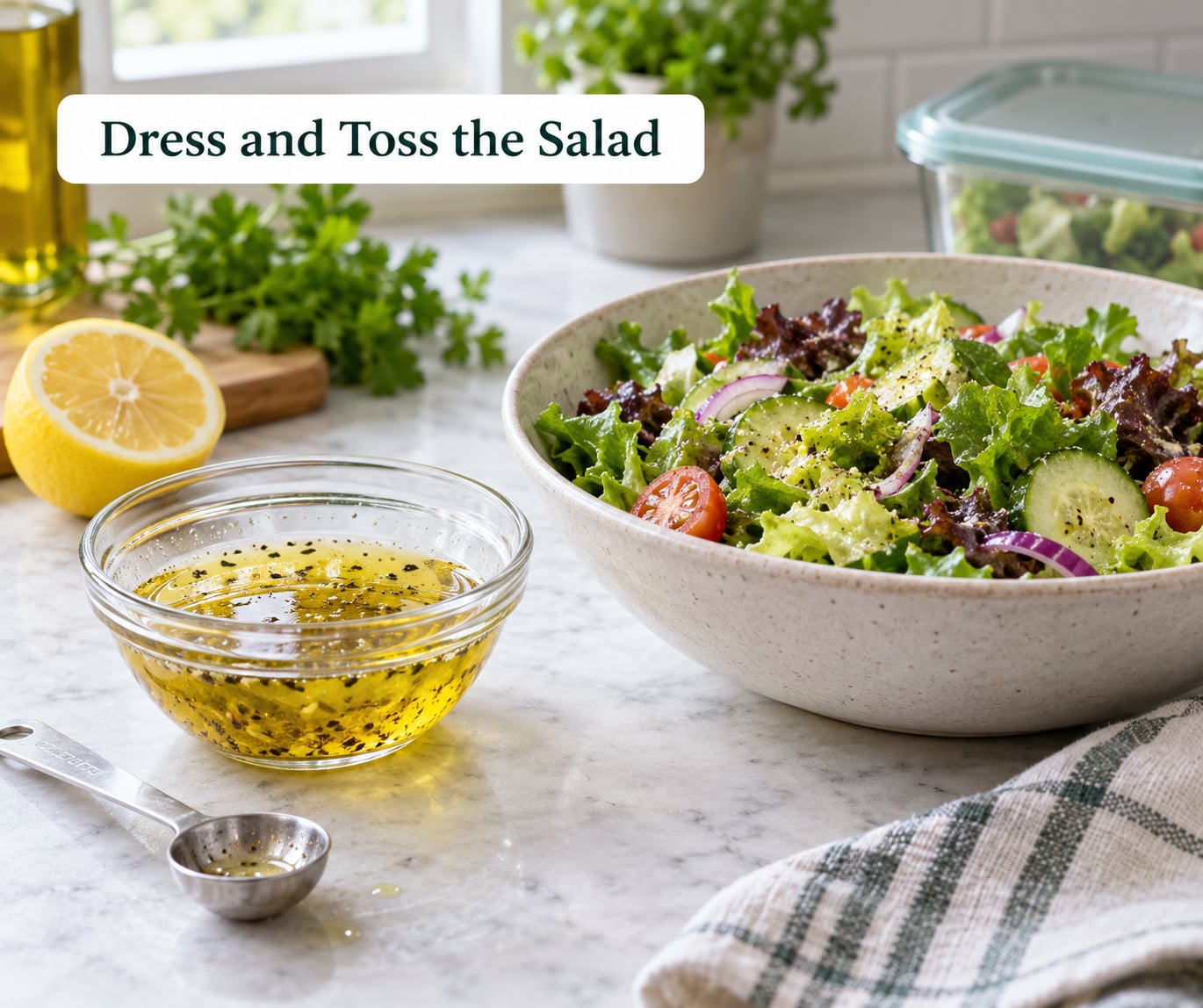
Mix a basic vinaigrette at a three-to-one ratio: three parts oil to one part acid. Two tablespoons of olive oil with the juice of half a lemon, a spoon of Dijon or honey, a pinch of salt and plenty of black pepper covers a full serving. Add chopped herbs and you have the dressing most people describe as their favorite part of a grain salad.
Add 2 to 3 tablespoons to the bowl, not more. Then toss at the bottom, where the sturdy ingredients are, using two tongs or two forks rather than a spoon, so every piece gets coated without crushing the leaves. Taste, then add more if it needs it.
Lightly dressed lettuce feels like you ate nothing. A real vinaigrette contributes fat, and that is part of why a properly dressed bowl holds together as a meal.
Common Mistakes
Almost every disappointing salad comes down to one of six problems, and each has a straight fix.
- Too little protein. A few strips of chicken across a huge bowl does nothing. Measure 3 to 4 ounces cooked, or use a known volume such as half a cup of beans or three eggs.
- Only watery vegetables. Cucumber, tomato, and iceberg together are almost all water and almost no fiber. Add a sturdy green or a roasted vegetable.
- Skipping the carbohydrate. No grain, bean, or potato means no lasting energy. Half a cup is the smallest useful portion.
- Leaving out fat. Without fat, vegetables and grains feel thin and stop feeling satisfying. Measure a tablespoon of oil, seeds, or a slice of avocado.
- Too many toppings, not enough base. A salad built from toppings alone falls apart and eats in four bites. Keep the ratio roughly two parts vegetables to one part everything else.
- Dressing it too early. Salt draws water out of vegetables, and a dressed salad packed in the morning is a watery salad by noon. Keep dressing in a separate jar.
Tips for Making Salad More Filling
A few habits make this formula work on repeat rather than once.
Prep in layers. On Sunday, cook a batch of grain, wash and dry greens properly, and portion protein. Store each component separately and assemble during the week. Add crunchy toppings and dressing only when you eat, and add avocado last so it does not turn brown or mushy.
Keep it crisp. Dry greens stay crisp. A salad-spinner or a clean towel roll does more for texture than anything you can add later.
Watch texture. Mix one soft and one crunchy element. Soft without crunch is boring, and crunch without anything soft is tiring to eat.
Adjust for your day. On a high-protein or high-volume plan, push protein up and let the grain stay modest. On a higher-energy day, add a second fat or a piece of fruit.
Plan storage. Refrigerated at 40°F (4°C) or below and kept separate from the dressing, most components last three to four days. Cooked chicken and seafood keep about three to four days; use what you have within that window and do not rely on smell alone as a freshness test. If you have any immune or digestive condition, ask a doctor or registered dietitian about how long is right for you.
Swap, do not restart. Keep the same five slots and change what fills them. A grain salad with farro, roast squash, chickpeas, pumpkin seeds, and arugula uses the identical formula as a chicken Caesar built on romaine.
This is general nutrition information, not personal medical advice. If you have a health condition, are pregnant, or are managing diabetes, a registered dietitian can help you adapt the portions to your needs.
Frequently Asked Questions
What can I add to a salad to make it more filling?
The three additions that change things most are protein, a starchy carbohydrate, and fat. Add 3 to 4 ounces of chicken, tuna, eggs, chickpeas, lentils, or tofu, plus half a cup of quinoa, farro, barley, or sweet potato, plus a tablespoon of olive oil, nuts, seeds, or avocado. Crunchy toppings and fresh herbs add satisfaction without bulk. The full formula is a hearty greens base first, then those three components, then flavor.
How do I build a filling salad without protein?
Lean on beans, lentils, or edamame, which carry both protein and fiber, and add a grain for staying power. A bowl of chopped romaine and kale with half a cup of chickpeas, half a cup of quinoa, roasted sweet potato, pumpkin seeds, and a lemon vinaigrette is complete without meat or dairy. Tahini or a yogurt-based dressing adds fat and richness if you want the bowl to feel more substantial.
What is the best dressing for a filling salad?
An olive oil vinaigrette is the simplest reliable choice: about three parts oil to one part acid, such as the juice of half a lemon or a tablespoon of red wine vinegar, plus salt, pepper, and chopped herbs. Oil contributes fat, which slows digestion and makes the bowl satisfying. Use 2 to 3 tablespoons per serving and add it just before eating so the vegetables stay crisp.
How long does a homemade salad stay fresh in the refrigerator?
An undressed salad with sturdy greens, cooked grain, and roasted vegetables usually keeps three to four days when refrigerated at 40°F (4°C) or below. Cut fruit, avocado, and crunchy toppings turn soft or brown sooner, so add those last. Store the dressing in a separate jar and combine just before eating. Cooked chicken and seafood keep about three to four days chilled.
Can a filling salad help with weight loss?
It can support weight loss because a salad built with protein, fiber, and fat tends to keep you satisfied for several hours, which makes it easier to eat fewer calories across the day. Volume eating works the same way, with bulky vegetables filling the bowl while staying low in energy density. Weight change still depends on your overall eating pattern, activity, sleep, and health history, so talk to a doctor or registered dietitian for guidance specific to you.
How can I keep a salad from becoming watery?
Dress it at the last moment. Salt and salt-heavy dressings pull water out of vegetables, so a salad dressed at breakfast will pool by lunch. Dry your greens properly after washing, keep cucumber and tomatoes on top rather than underneath, and store components separately until you eat. Packing the dressing in a small jar and shaking it with the salad right before eating solves most packed-lunch problems.
Conclusion: Start With Protein, Fiber, and Flavor
Knowing how to build a filling salad comes down to five slots you fill in the same order every time: hearty greens, 3 to 4 ounces of protein, half a cup of a fiber-rich carbohydrate, a measured portion of healthy fat, and something crunchy or bright for flavor, finished with 2 to 3 tablespoons of dressing. Start tonight with the protein you already have, two or three vegetables you like, a grain from the pantry, a tablespoon of oil or a handful of seeds, and a squeeze of lemon. Change the ingredients next week and the bowl still works.