You can stay active while working from home by breaking your day into short, scheduled bouts of movement instead of one long block of sitting. Stand for two or three minutes every 30 to 60 minutes, walk during phone calls, add a few desk stretches, and block one longer walk or workout into the day.
That works because remote work quietly removes the movement you used to get for free. The commute, the walk to the coffee machine, the stairs at the office — all of it is gone, and nothing replaces it unless you put it on the calendar.
Table of Contents
- What You Need
- How to Stay Active While Working From Home: Step by Step
- 1. Set movement cues that fit your workday
- 2. Take five-minute movement breaks
- 3. Use focused work sessions for a short walk
- 4. Add simple strength and posture movements
- 5. Finish the day with intentional activity
- 6. Review your week and adjust the routine
- Common Mistakes
- Frequently Asked Questions
- How much activity should I get while working from home?
- What can I do during a busy workday when I cannot take a break?
- Are standing desks enough to stay active during the workday?
- Do five-minute movement breaks really help reduce sedentary time?
- What is a beginner-friendly exercise routine I can do at home?
- Conclusion
What You Need
You do not need a gym membership or any equipment to start. A pair of everyday shoes and ten free minutes are genuinely enough for everything in this guide.
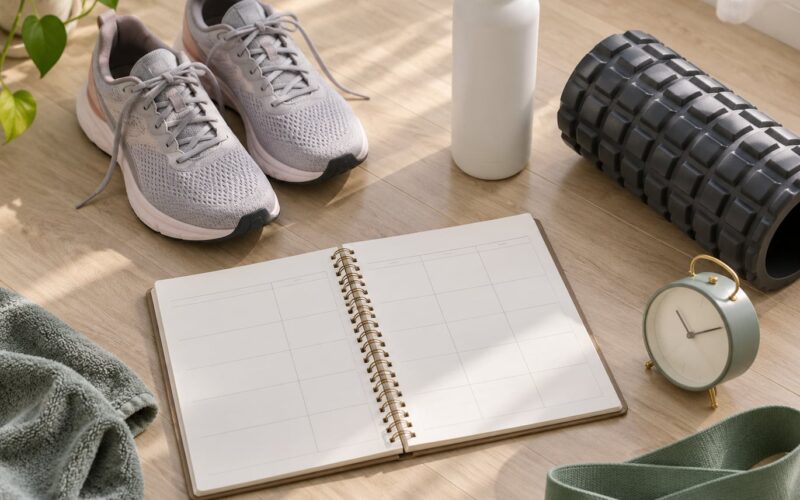
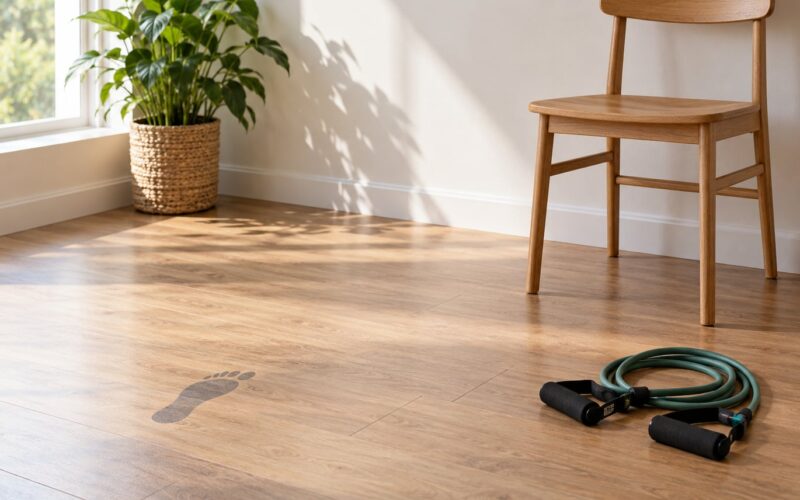
What helps are a few optional things. Comfortable walking shoes matter if you will pace around the block. A water bottle on the desk does more than hydration; it forces you to stand up to refill it. A timer or calendar alert is the single most useful tool, because it removes the need to remember. A stable chair without wheels gives you something to sit on during a walking call and something to lean on for a wall push. Clear floor space, even a rug in the living room, gives you room for a short bodyweight sequence.
A quick safety note: this is general information, not medical advice. If you feel pain, dizziness, unusual shortness of breath or anything else concerning while moving, stop and talk to a doctor or other healthcare professional before continuing.
How to Stay Active While Working From Home: Step by Step
1. Set movement cues that fit your workday
Decide on two or three short movement periods before your first meeting, not during it. Fifteen minutes at 10:30, five minutes after lunch, ten minutes before you log off — written down beats remembered every time.
Then attach each one to something you already do. Movement after the first coffee, movement after you hit send on an important email, movement right before you open your first meeting. This is habit stacking, and it works because you are not adding a new decision, just a new action to an existing one.
Set the reminders on your phone or as calendar events with real titles like “walk” or “stretch” so they stop looking optional. Learning how to stay active while working from home is mostly a scheduling problem, and that is the part you can fix today.
2. Take five-minute movement breaks
Five minutes is long enough to change how you feel and short enough to survive a full day. Walk indoors or outside. Take the stairs instead of waiting for the elevator. Do a slow arm sweep overhead in both directions, then circle your shoulders backward. Do ten bodyweight squats, then ten calf raises. Walk to the end of the street and back.
The goal here is interruption, not intensity. You are breaking up prolonged sitting so your hips, shoulders and lower back do not spend the whole afternoon locked in one position. How you know it is working is simple: you should feel less stiff at 3 p.m. than you did at 11 a.m.
3. Use focused work sessions for a short walk
Pair a block of focused work with a walk. Finish a task, or close out a fifty-minute focus block, and head out for ten to twenty minutes at a brisk pace. Pick somewhere safe and convenient — a sidewalk loop, a quiet street, a park path — and keep your phone with you in case something urgent comes up. Knowing how to stay active while working from home starts here, with movement that is scheduled rather than squeezed into whatever is left over.
It is easier to keep that habit when it has a trigger. A midday walk before the afternoon meetings start, or a walk the moment you finish a difficult deliverable and clear the mental weight that came with it, both anchor the same habit. What kills it is leaving movement to whatever gap happens to appear — a gap you notice is a gap you already sat through.
4. Add simple strength and posture movements
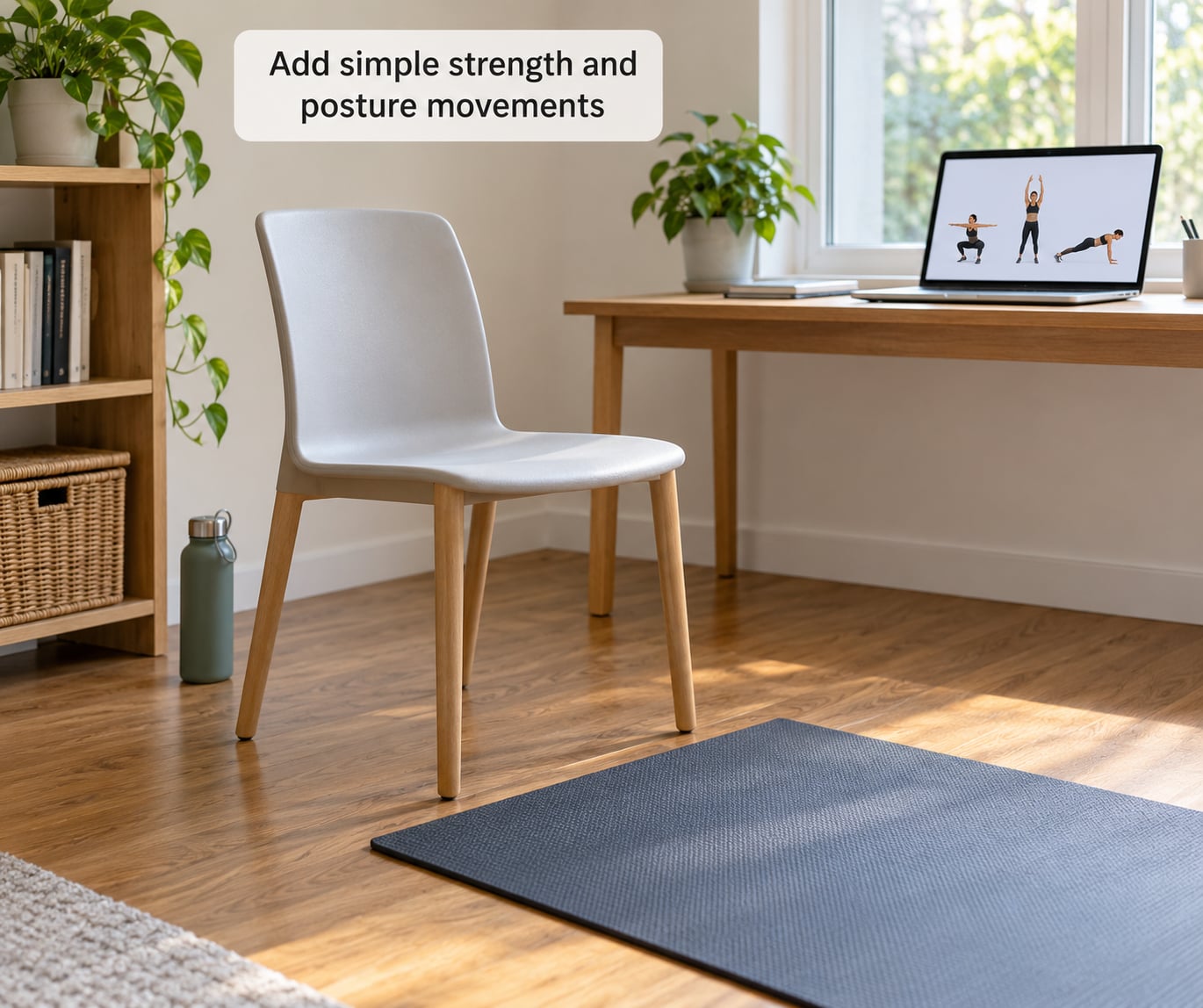
This ten-minute routine needs a chair, a wall and your own body weight. Do ten chair squats, standing up from the seat and sitting back down under control. Do ten wall pushes, hands at shoulder height, body in a straight line. Do fifteen calf raises, rising onto your toes and lowering slowly. Finish with shoulder rolls and two minutes of reaching for the ceiling.
Move slowly and keep your setup stable. This is about posture and muscle tone over months, not about proving anything in one session, and you should stop if any movement hurts rather than pushing through it. If your back or neck already aches from sitting, a physical therapist can tell you which movements are appropriate for you.
5. Finish the day with intentional activity
The hardest habit to build is the one at the end. Give yourself a deliberate transition: a walk around the block, ten minutes of housework that actually involves movement, or whatever you enjoy — a bike ride, gardening, dancing around the kitchen with the music on.
Build the week gradually rather than all at once. Start with a ten-minute walk on three days, then add a fourth day or extend each walk by five minutes when the shorter version feels automatic. Progress you can maintain beats intensity you can only manage in week one.
6. Review your week and adjust the routine
Once a week, spend five minutes looking at what happened. When was your longest unbroken stretch of sitting? Which movement breaks felt easy enough to repeat, and which did you keep skipping? How did your energy and your back and neck feel by the end of the day?
Track consistency, not numbers on a scale. Did you move most days or only two? That is the signal worth watching. If one break keeps getting skipped, it is probably scheduled at the wrong time or is too long — shorten it and move it, rather than declaring yourself bad at this.
Common Mistakes
Saving all movement for the end of the day. One intense evening session does not undo eight hours in a chair. Fix: split the same total time into smaller pieces spread across the workday.
Choosing workouts that are too hard. If your breaks leave you wiped out, you will stop doing them. Fix: pick the gentlest option that still gets you upright and moving.
Working through discomfort. Sharp pain, dizziness or unusual breathlessness are stop signals, not badges. Fix: ease off and see a healthcare professional if it continues.
Forgetting to drink water. Mild dehydration shows up as afternoon sluggishness long before you feel thirsty. Fix: keep a bottle in sight and refill it on your movement breaks.
Leaving movement unscheduled. “I’ll walk more” is not a plan. Fix: put the breaks in the calendar with names and times, and treat them like meetings.
Two habits make the whole system more likely to stick. Stack movement onto something you already do, and pick one routine you can do in your actual living space — a shared family home often rules out anything loud or jumpy. Nobody needs a perfect setup, only one they will still be using in week three.
Frequently Asked Questions
How much activity should I get while working from home?
Aim to break up sitting every 30 to 60 minutes with two or three minutes of movement, plus a longer walk or workout most days. That short-break pattern matters more than one big session because it limits prolonged sitting, which is the part your workday controls. For overall fitness, mainstream guidance is to build toward regular moderate activity across the week.
What can I do during a busy workday when I cannot take a break?
Meetings back to back are the most common obstacle, so use the small windows that remain. Stand up during a phone call, do ten calf raises while waiting for someone to join a call, or walk during audio-only meetings. If the day allows nothing at all, schedule one ten-minute walk the next morning rather than skipping the habit entirely.
Are standing desks enough to stay active during the workday?
Standing more is better than sitting all day, but standing still is still a static posture. Standing desks work best when you alternate: sit for a stretch, stand for a stretch, and add walking or bending so the movement involves real range of motion. Standing all day without changing position can leave your lower back and feet uncomfortable.
Do five-minute movement breaks really help reduce sedentary time?
Yes, mostly because they interrupt unbroken sitting. The harm people worry about is linked to long, continuous stretches of sitting, not to the total minutes a person sits in a day once those stretches are broken up. Several brief five-minute breaks can therefore matter more to comfort, circulation and stiffness than one long session after work.
What is a beginner-friendly exercise routine I can do at home?
Start with ten minutes that needs no equipment: ten chair squats, ten wall pushes, fifteen calf raises, and a minute of shoulder rolls, finishing with a walk around the block. Do it two or three days a week and add a few repetitions or five more minutes of walking each week. Stop and consult a healthcare professional if anything hurts.
Conclusion
Staying active on a work-from-home day comes down to a few short, scheduled movements instead of one long workout. Pick your break times now, choose the gentlest option that gets you upright, and add one walk you will actually take.
Start with the smallest change: schedule a five-minute movement break after your next work interval. Everything else builds on that one habit, and learning how to stay active while working from home gets easier the moment the first reminder goes off.