Yes, walking 30 minutes a day can move the scale, and it is one of the few habits people actually keep for years. A brisk 30-minute walk burns roughly 150 to 200 calories depending on your weight and pace, which adds up to around 1,000 calories a week. That only produces weight loss if what you eat stays steady or drops slightly.
Here is the honest version of how to lose weight walking 30 minutes a day: pick a time, walk at a pace where talking feels like work, repeat it most days of the week, and eat normally without bingeing after. Everything below builds from that.
Table of Contents
- What You Need
- Step-by-Step
- How to Lose Weight Walking 30 Minutes a Day
- Set a Beginner-Friendly Pace
- Build Your Walking Routine
- Pair Walking With Balanced Nutrition
- Track Progress Without Obsessing Over Numbers
- Common Mistakes
- Tips
- Frequently Asked Questions
- Can walking 30 minutes a day help me lose weight?
- How many calories does a 30-minute walk burn?
- Is 30 minutes of walking a day enough to lose weight?
- How quickly will I see results from walking 30 minutes a day?
- What do I do when walking 30 minutes a day stops working?
- What should I do if I feel tired or sore after walking?
What You Need
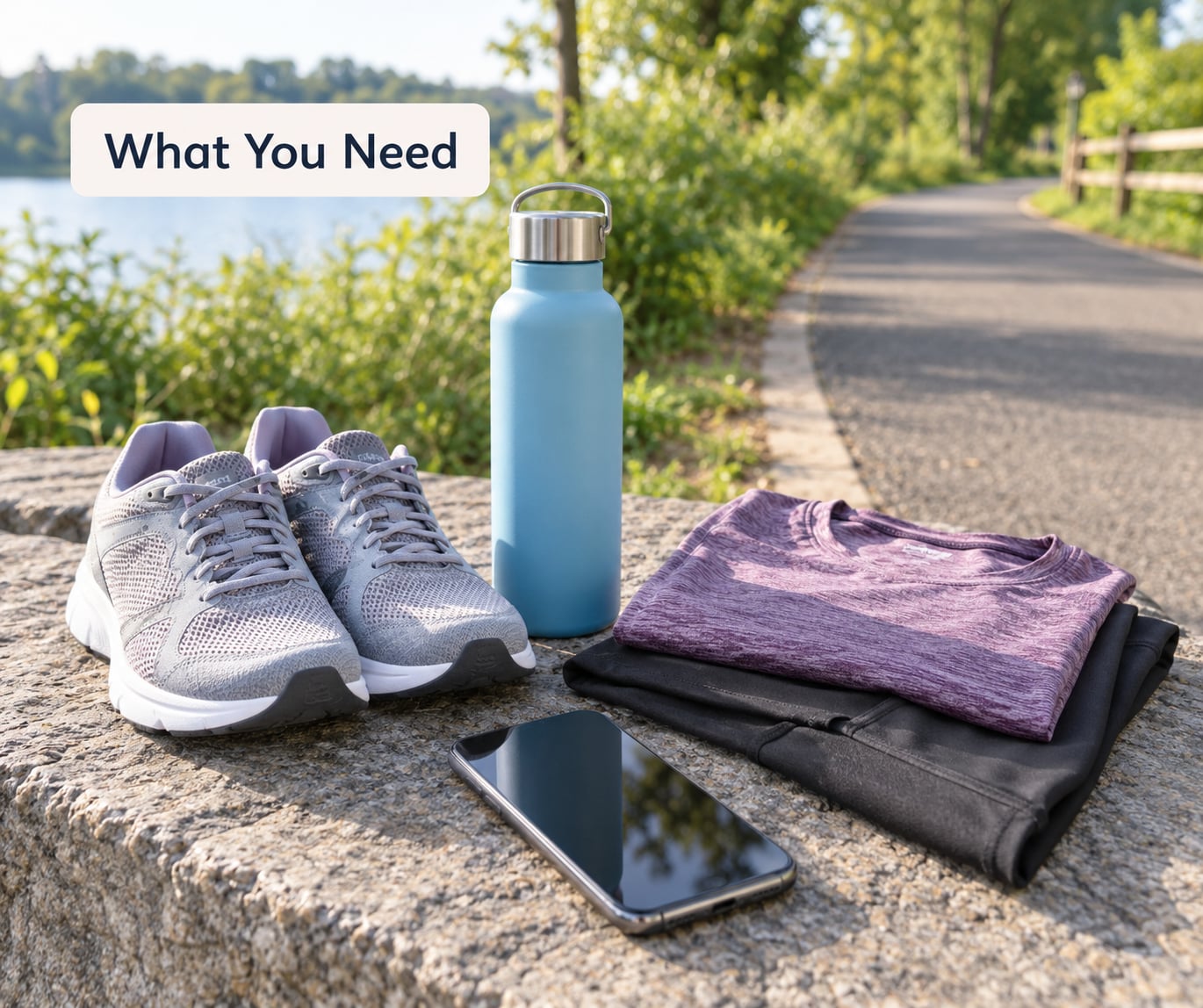
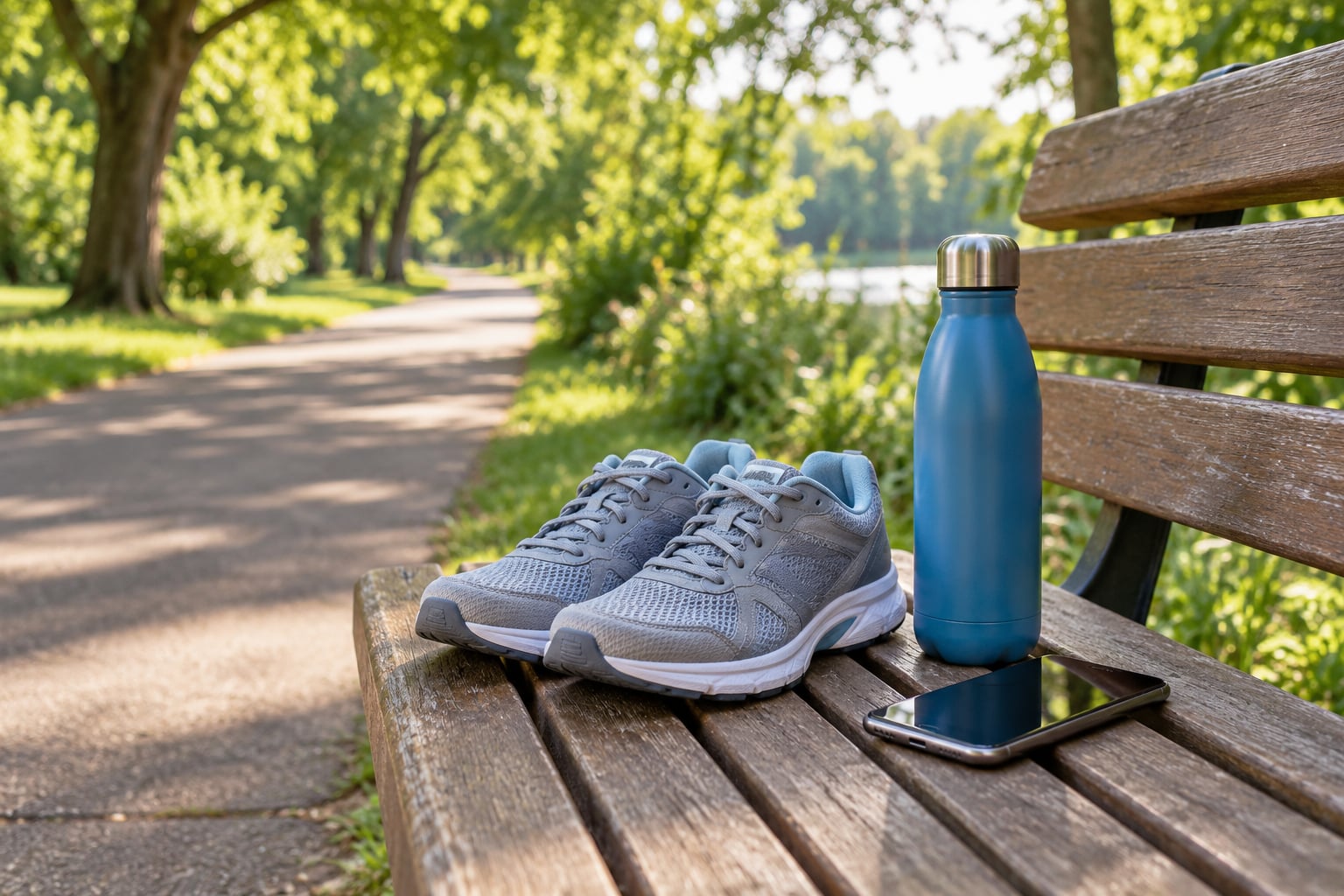
You need surprisingly little. Start with footwear that fits well and has a cushioned sole, because most walking discomfort comes from bad shoes rather than from walking itself.
- Supportive walking shoes that are comfortable from the first minute. Let them down for a walk before you commit to a long route.
- Comfortable clothing you can move in, ideally in layers you can peel off as you warm up.
- A water bottle, particularly in warm weather or on longer routes.
- A watch or phone for timing, step count and distance. You do not need a specialist fitness tracker.
- A safe walking location with even footing, good lighting and somewhere to sit if you need to stop.
No special equipment, supplement, gym membership or wearable is required. Walking needs no recovery gear, no changing room and no childcare, which is exactly why it survives a bad week.
Step-by-Step
How to Lose Weight Walking 30 Minutes a Day
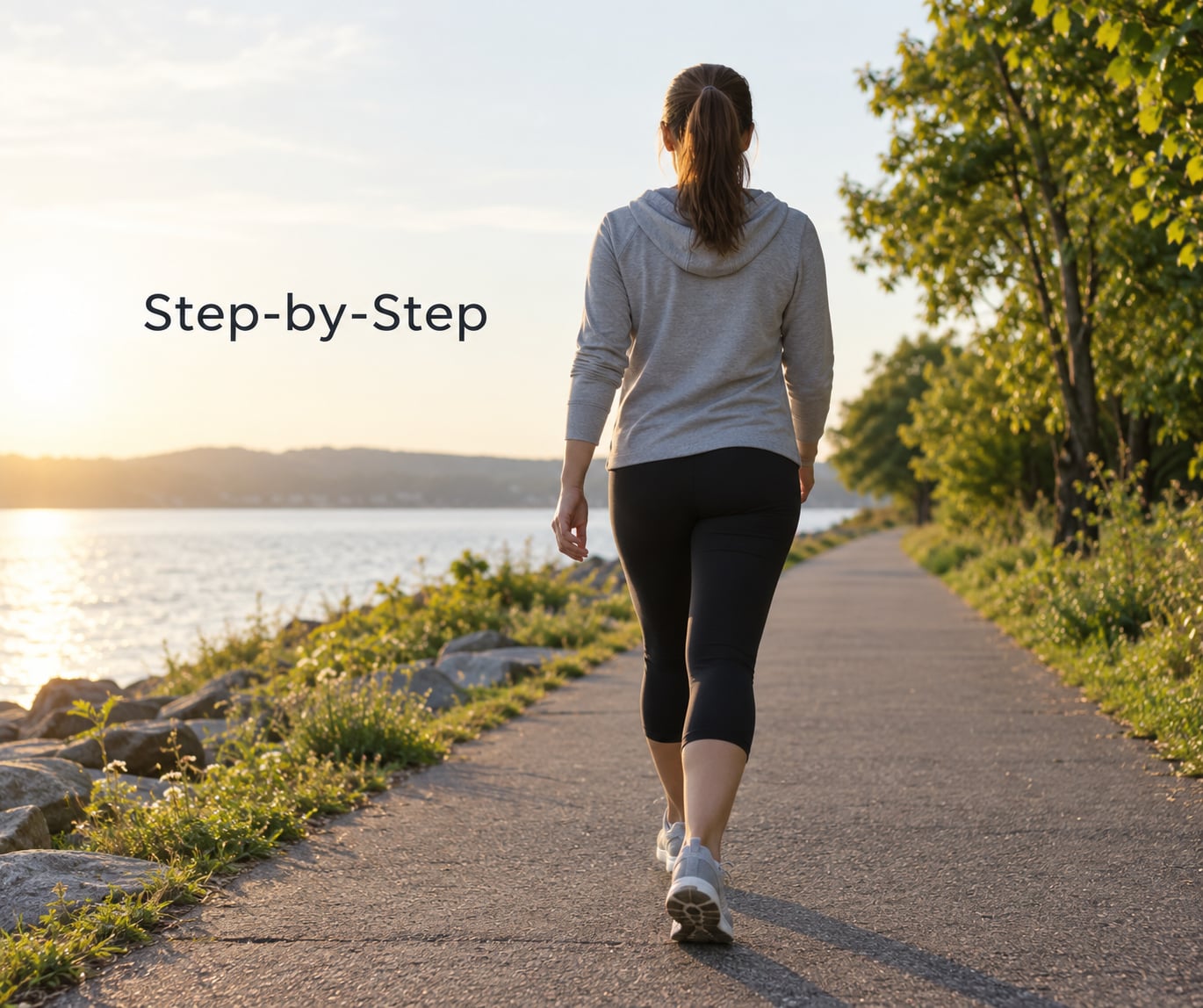
The method is boring and it works. Walk for 30 minutes on most days, keep a pace that raises your effort without making recovery miserable, and hold your eating steady. Weight follows the gap between what you burn and what you take in, and 30 minutes of walking widens that gap by 150 to 200 calories a day.
Public health bodies such as the Mayo Clinic, the NHS and the CDC generally point to about 150 minutes of moderate activity a week for adults, which lines up neatly with 30 minutes, five days. That guideline describes activity for health, not for weight loss specifically, so treat the two as related but not identical.
Do not expect a single session to show up tomorrow. Water weight moves on its own schedule, and a daily change that small takes several weeks to show up as a trend rather than a spike.
Set a Beginner-Friendly Pace
Start at a pace where you can breathe through your nose and still talk in full sentences. The NHS describes brisk walking as around 3 mph, which is a useful anchor, but effort matters more than a number on a watch.
Use the talk test as your gauge. If you can speak easily, speed up a little. If you can talk but not sing, you are in the brisk range most weight-loss plans mean. If you are gasping for air, slow down.
Use the first five minutes to warm up at an easy pace and the last five to cool down. Beginners often lose weight by quitting rather than by pushing too hard in week one, and starting too fast is the fastest route to sore calves and an abandoned habit.
Cadence helps too. Around 100 to 120 steps per minute is a common target for a brisk walk, and keeping your steps shorter rather than reaching forward reduces the load on your knees.
Build Your Walking Routine
Anchor the walk to something that already happens. Right after lunch, before you pick up your phone in the morning, or straight after work, so it attaches to an existing anchor rather than relying on motivation.
If 30 minutes at once does not fit, split it. Two 15-minute walks burn a similar number of calories to one 30-minute walk, and a trial published in Obesity in 2019 found that 25 minutes twice a day, six days a week, outperformed a single 50-minute session on weight loss. Short bouts also remove the excuse that you did not have time.
Progress in small steps. Add two or three minutes to the session, or add a second walk, once the current length feels ordinary. Keep at least one or two rest days a week, and expect the plan to hold steady rather than climbing every week.
Turn ordinary trips into walking. Park further from the shop, take the long way round, or walk part of the commute. Those daily steps, often called NEAT, add up quietly and they do not require any extra time.
Pair Walking With Balanced Nutrition
Walking works with your eating, not against it. The people who see steady loss are the ones eating regular meals with reasonable portions, not the ones skipping food to compensate for calories burned.
- Build meals around a protein source such as beans, eggs, fish, chicken, tofu or dairy, which helps you feel full after a walk.
- Fill half the plate with vegetables or salad, and add fruit and whole grains as the carbohydrate part of the meal.
- Eat at regular times, with most of your eating during the day rather than after dinner.
- Cut back on sugary drinks and large portions of highly processed snacks, which is usually where the extra calories hide.
You do not need a restrictive diet, and crash cutting alongside a new exercise habit is a reliable way to feel exhausted and quit both. If you have a medical condition, take medication, or have a history of disordered eating, talk to a doctor or a registered dietitian before changing what you eat.
Track Progress Without Obsessing Over Numbers
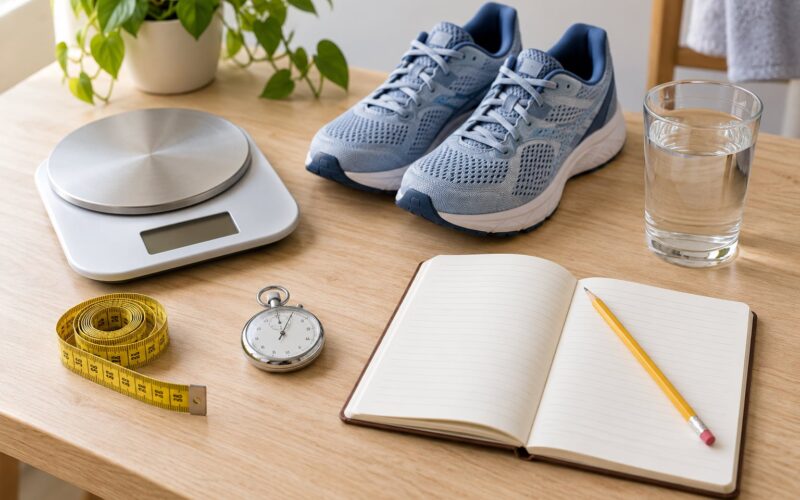
Notice a few things instead of one. How many days you walked, how long each session lasted, how hard it felt, how you slept and how your energy held up. Those tell you whether the routine is working even when the scale is quiet.
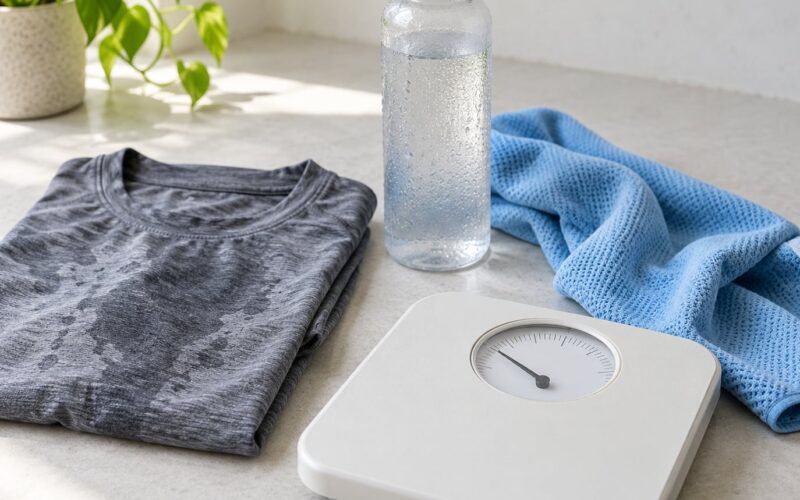
If you weigh, weigh the trend rather than the day. A weekly average over a month is more informative than a single reading, and a normal rise after a salty meal or a rest day means very little.
Progress one variable at a time. When 30 minutes feels easy, add five minutes. When the duration stops changing anything, add a short incline or a few bursts of faster walking. Holding the intensity steady and adding time first is the version most people can keep.
Common Mistakes
Starting too fast. The fix is to spend a full week at an easy pace before adding anything, and to judge sessions by how you feel the next morning, not by how hard they felt at the time.
Treating a walk as a quick fix. A 30-minute walk is worth roughly the calories in a small snack, so it cannot outrun a large surplus on its own. The fix is to expect modest, compounding change rather than dramatic weekly drops.
Skipping meals after a walk. Compensation is common, and it quietly cancels the effort. The fix is a normal meal with protein and vegetables within a couple of hours of finishing.
Stopping when progress feels slow. Fat loss is rarely linear, and the scale often stalls in weeks three to six while clothing still fits differently. The fix is to check the trend over a month before deciding anything.
Ignoring pain. Sharp pain in a knee, hip, foot or shin, or pain that changes your gait or lasts more than a couple of days, is a signal to stop and get it checked. The fix is to see a doctor or a physical therapist, and to check your shoes, which are usually the fixable part.
Tips
A habit sticks when it is easy to start on a bad day. A few things help more than any trick.
- Put a podcast, an audiobook or a playlist on before you leave, so the walk has something in it besides your own thoughts. A small study from Fairleigh Dickinson University found walkers who listened to music lost more weight than those who did not, though the sample was small.
- Ask someone to join you, or join a walking group. Social commitment is the most reliable thing in most walking forums.
- Pick routes with lighting, pavement and somewhere to stop. If the route is miserable you will take the long way home less often.
- Replace shoes when the midsole feels flat rather than when the upper looks worn.
- Have a backup plan for rain, heat or bad days: a treadmill, a hallway loop, or 10 minutes of walking indoors. The indoor option is what protects the streak on the days that would otherwise break it.
- Add two short strength sessions a week, even body-weight only. While you are in a calorie deficit, resistance work helps you hold on to lean mass so some of the loss comes from fat rather than muscle.
Set yourself a maintenance target before you ever need it. Once weight settles, the goal becomes keeping the walk, because a habit you keep is a habit that keeps working.
Frequently Asked Questions
Can walking 30 minutes a day help me lose weight?
Yes. A daily 30-minute walk raises your activity level, adds roughly 150 to 200 calories a day and makes weight management easier to sustain than most other exercise. It works best alongside balanced eating, because the calorie gap is what actually changes your weight. The walk itself also helps mood, sleep and circulation, which often show up before the scale does.
How many calories does a 30-minute walk burn?
Roughly 150 to 200 calories for most adults walking at an easy to brisk pace, and more for a power walk. The figure scales with body weight and pace, so a heavier person walking quickly burns more than a lighter person ambling. Any accurate number depends on your own weight, so treat trackers as an estimate rather than a promise, and remember the goal is the weekly total, not the single session.
Is 30 minutes of walking a day enough to lose weight?
It is enough to create a real deficit if your eating stays steady, which is a modest rate of loss rather than a fast one. Most people who combine daily walking with a balanced diet report losing roughly 0.5 to 1.5 lb a week, with 1 to 2 lb per week generally treated as the maximum sustainable pace. Walking alone, without any food change, often stalls because the body compensates.
How quickly will I see results from walking 30 minutes a day?
Expect the first changes in energy, sleep and mood within a week or two, and visible weight change in roughly 8 to 12 weeks for most people. Scale readings move up and down daily, so look at a monthly average rather than a single weigh-in. Waist measurement often moves before the scale does, and knee or foot discomfort often eases as weight comes off, which is its own early sign.
What do I do when walking 30 minutes a day stops working?
A plateau usually means something else has changed, not that walking stopped working. First check whether your eating has drifted, then progress one variable at a time: add five minutes, then add an incline, then add short bursts of faster walking, then add a second weekly strength session. If the scale is flat for three to four weeks, a doctor or registered dietitian can help you look at the whole picture.
What should I do if I feel tired or sore after walking?
Mild muscle soreness in the first couple of weeks is normal and usually settles. Soreness that lasts longer, or joint pain in a knee, hip or foot, means you added time or speed too fast, so cut back to a shorter, easier pace and build again. Sharp pain, swelling, pain that changes how you walk, or chest pain during a walk should be checked by a doctor before you continue.
Start tonight, not Monday. Put on shoes, walk 30 minutes at a pace where talking is a bit of work, and eat your dinner as you normally would. Repeat it tomorrow. That is the whole plan, and on this one the boring version genuinely wins. Updated for 2026.