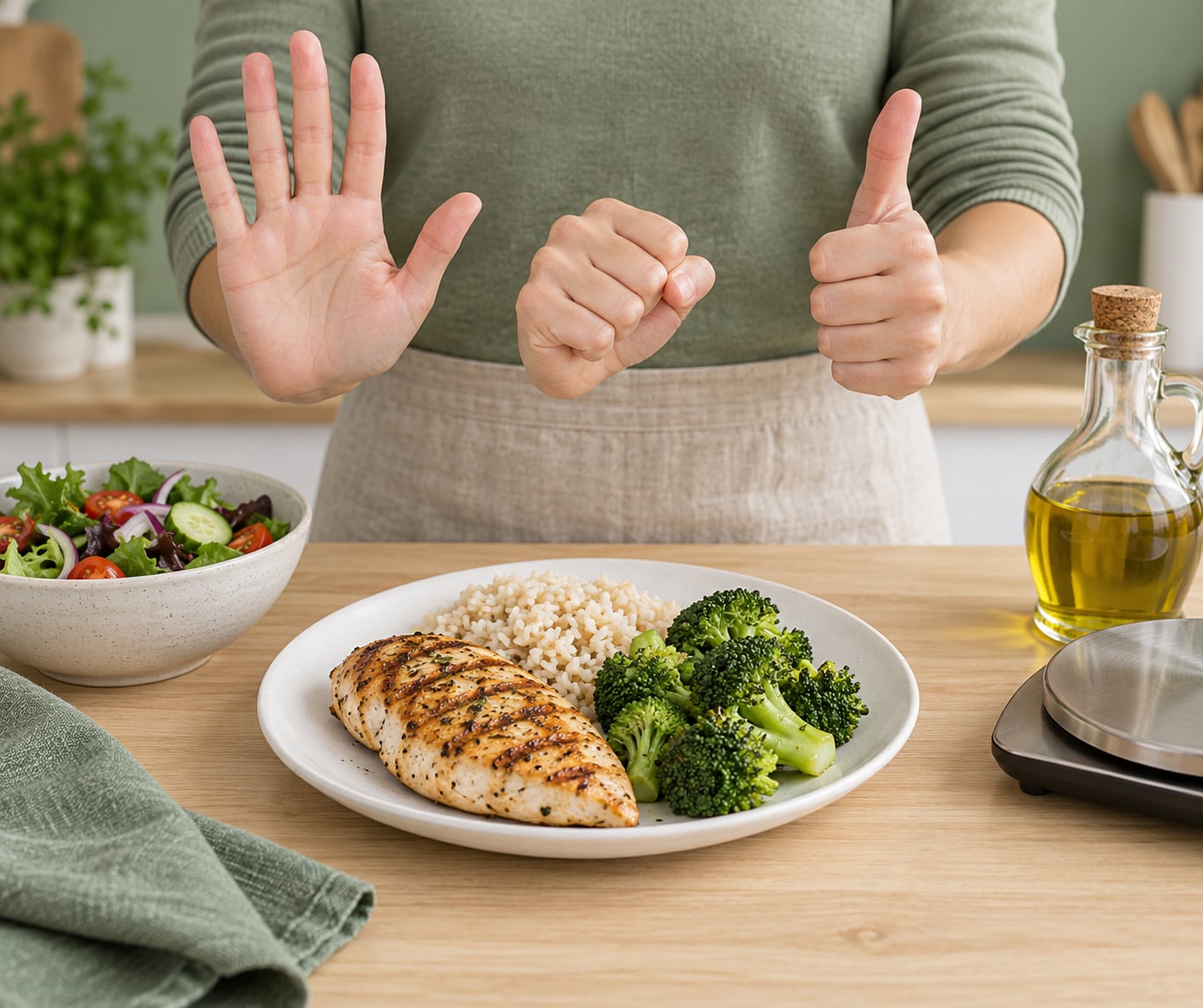
To estimate portions without any equipment, use your palm for protein, your fist for grains and starchy foods, your thumb for fats, and a fingertip for teaspoons. Learning how to use your hand to measure portion sizes takes about ten seconds a meal and costs nothing, which is why it is the go-to method for anyone who finds a food scale tedious.
The reason it works at all is proportionality. Adult hand size stays roughly fixed after growth and scales with body size, so a portion measured against your hand lands somewhere near what your body needs without you having to know a single number. Precision Nutrition, the best-known source on the method, puts hand portions at 95 percent as accurate as weighing, and they hold up in restaurants, at buffets and at other people’s houses where a scale is useless.
Here is the whole set on one screen:
| Hand part | What it measures | Rough amount |
|---|---|---|
| Palm (no fingers or thumb) | Protein | About 3-4 oz, roughly 85-115 g, cooked |
| Closed fist | Cooked starches and grains | About 1 cup |
| Cupped hand | Vegetables, fruit, cereal, loose snacks | About 1 cup |
| Whole thumb | Oils, butter, nut butter, avocado, cheese | About 1 tablespoon |
| Thumb tip to first joint | Dressing, sauce, small fats | About 1 teaspoon |
| Two cupped hands | Snack foods like chips or pretzels | About 1 oz |
| Index and middle finger width | Cheese slices | About 1 oz |
One warning before you use it: these are estimates, not prescriptions. Anyone with diabetes on insulin, kidney disease, a history of disordered eating, or a performance target should weigh food or follow their clinician’s plan instead.
Table of Contents
- What You Need
- Step-by-Step: How to Use Your Hand to Measure Portion Sizes
- Use Your Palm for Protein Portions
- Use Your Fist for Grains and Starchy Foods
- Use Your Thumb for Fats and Portions of Cheese
- Use Your Hand as a Plate and Bowl Guide
- Check Your Estimate Against Food Labels
- Common Mistakes
- Tips for Making Portion Estimates Easier
- Frequently Asked Questions
- How accurate are hand portions?
- Should I use my fist, palm, or thumb for vegetables?
- Does the size of my hand affect portion control?
- Can I use hand measurements instead of a food scale?
- How do I measure portions when eating restaurant food?
- Are hand portion sizes appropriate for weight loss?
- Conclusion
What You Need
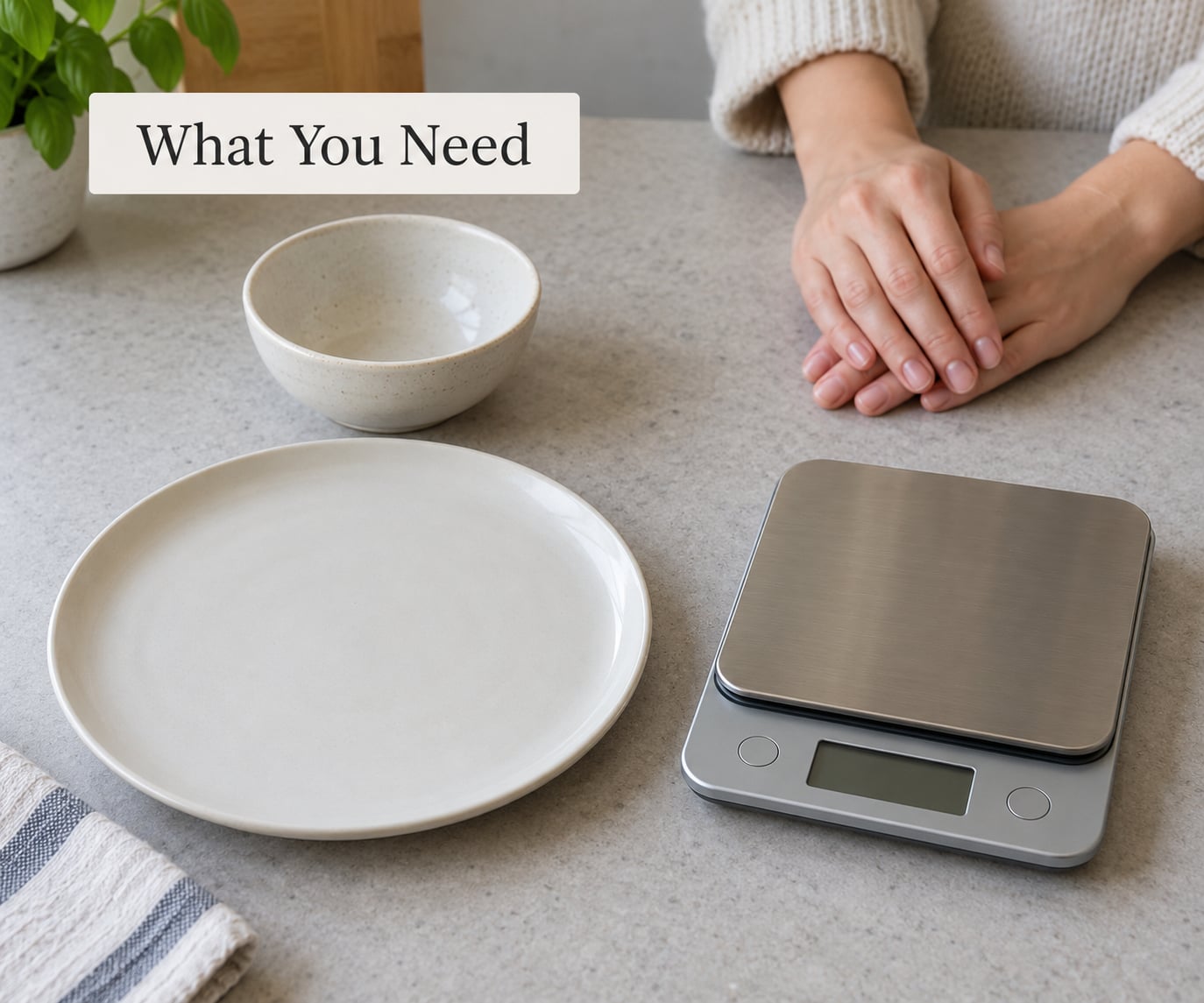
Honestly, almost nothing. Clean hands and a plate or bowl you already eat from is the whole kit. The two optional extras earn their keep: a kitchen scale for a one-time calibration, and the nutrition label on packages you eat often.
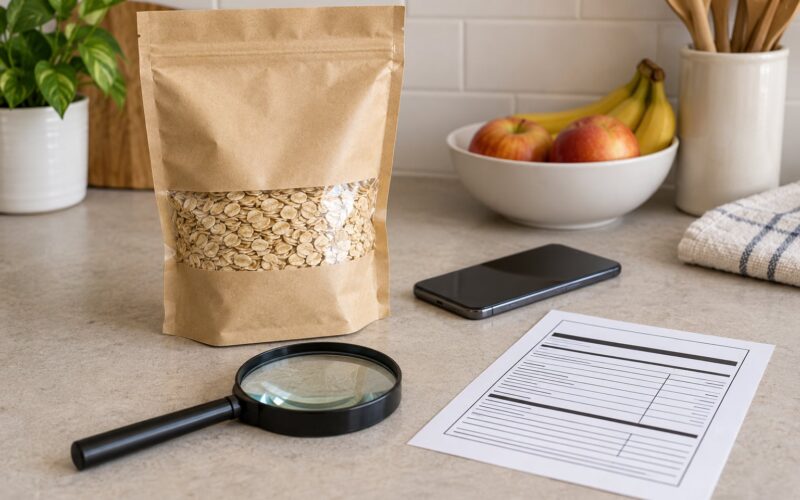
That label matters more than people expect. A single serving is a defined weight, so it is the only fixed reference in your kitchen, and comparing one hand portion against it takes about a minute.
Step-by-Step: How to Use Your Hand to Measure Portion Sizes
Hold your hand the way you would hold a serving, and compare the food against the relevant part. The four steps below cover the vast majority of what goes on a plate.
Use Your Palm for Protein Portions
A palm without the fingers or thumb, about the thickness of your little finger, estimates 3 to 4 ounces of cooked protein, or 85 to 115 grams. That covers a chicken breast, a salmon fillet, two eggs, a cup of beans or a thick slab of tofu.
This is where most people land when they look up how to use your hand to measure portion sizes, and it is the easiest of the measures to get right because cooked protein is dense and holds its shape.
Users on r/loseit describe the palm measure as the first thing they reach for when they cannot find a scale, and it holds up well on dense proteins. It is less reliable on things that are mostly air, like a piece of fried chicken or a large scoop of tuna salad.
Measure after cooking where you can, and remember the estimate describes a serving, not what you must eat.
Use Your Fist for Grains and Starchy Foods
A closed fist, filled level, comes to roughly 1 cup of cooked rice, pasta, potato, quinoa or oatmeal. Measure it after cooking. A cup of dry rice cooked up becomes two to three cups, so judging raw grains with a fist is one of the most common ways people overshoot.
Some guides swap these two, using the fist for vegetables and a cupped hand for starches. Either convention works as long as you stay consistent with it and check against a label once.
Density does the rest of the work here. A fist of mac and cheese carries far more energy than a fist of steamed broccoli, which is why the same hand can be a very different portion depending on what you scoop.
Use Your Thumb for Fats and Portions of Cheese
A whole thumb, from knuckle to base, stands in for about 1 tablespoon of oil, butter, nut butter, avocado or soft cheese. From the tip to the first joint it is roughly 1 teaspoon, which is the right measure for salad dressing, sauce or a pat of butter on toast.
Two fingers held together, index and middle, cover about 1 ounce of sliced cheese. That one catches most people out because a single slice off the block is usually closer to an ounce than a third of one.
Serving size and appetite are different numbers. A thumb is what a serving of fat looks like; how much you eat is a separate decision.
Use Your Hand as a Plate and Bowl Guide
A cupped hand works as a bowl for vegetables, fruit, cereal or a handful of nuts, landing at roughly a cup. Because most adults own the same dinner plate week after week, that plate becomes a measuring device too: a quarter of it is a side, a third is a main starch, half is a portion of vegetables.
That is the plate method in plain terms, and it works as a second check on your hand portions rather than a replacement for them. If the plate looks like the hand portion you just built, you are roughly where you meant to be.
The weakest spot for hand estimates is small amounts. A spoonful of pine nuts, a drizzle of oil poured straight from the bottle, a spoon of grated parmesan: people under-log these constantly, and a thumb or fingertip is the only realistic way to catch them.
Check Your Estimate Against Food Labels
Pull out a package you eat weekly, check the serving size on the front, and weigh what you normally put on your plate. Most people find their habitual portion runs one and a half to two times the label serving, which is exactly the gap hand measuring is meant to close.
Do this for the calorie-dense foods first: nuts, oils, cheese, chocolate, peanut butter. Precision Nutrition’s conversion figures land a hand palm of protein near 145 calories, a fist of vegetables near 25, a cupped hand of carbohydrates near 120 and a thumb of fat near 100, so those four measures are not small numbers.
Once you have compared, the label becomes a memory anchor. You stop weighing and start recognizing, which is the whole point.
Common Mistakes
Borrowing someone else’s hand. Portion guides built for a 5’2″ woman will not match a 6’2″ man. Use your own hand, and if you are estimating for another adult, use theirs.
Filling the plate by default. A full plate is a serving only on a small plate. Serve onto a smaller dish and let the empty one be the signal that you are done.
Treating hand portions as medical guidance. These are population-level visual estimates from nutrition research, including Shinozaki’s 2025 work in Appetite and Gibson’s 2016 study in the Journal of Nutritional Science, which found most finger-width estimates within about 25 percent of true weight. Nobody should be prescribed a portion size by a hand rule.
Forgetting sauces, dressings and cooking oil. Practitioners report this as the most common gap in logged days. Measure the oil going into the pan with your thumb, not the bottle you are holding.
Measuring starches raw. Dry rice and dry pasta roughly triple in volume when cooked. Always fist cooked food.
Expecting one fixed number for every food. A fist of leafy greens and a fist of granola are not remotely equivalent. Density, preparation and what is mixed in change everything, and r/LifeProTips threads are full of fair criticism about the method’s vagueness. The measure is a floor, not a verdict.
Tips for Making Portion Estimates Easier
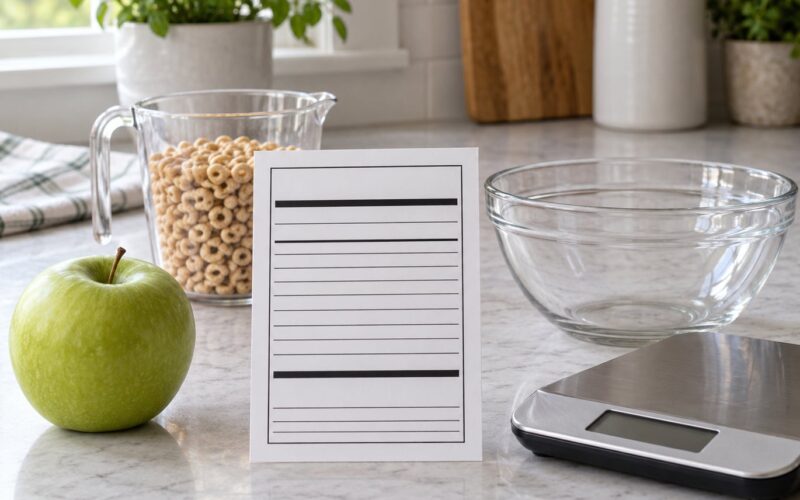
Measure once, write the numbers down. Weigh a palm of chicken and a fist of rice, note the grams, and you have a personal conversion card that works for the rest of your life. Doing this properly beats re-reading how to use your hand to measure portion sizes every single meal.
Serve from the counter, not the container. Eating with the spoon still in the bag is how portions get lost, and the same applies to the big shared bag of chips at a friend’s house.
Pause before seconds, once. Not to judge the food, just to notice whether you are actually hungry. Most second servings happen on reflex rather than hunger.
Use a scale when precision actually changes the outcome: first weeks of a structured plan, calorie-dense recipe testing, and anything your doctor has asked you to track.
At restaurants, portion half before you start and box the rest. At family dinners, serve yourself the portion rather than taking what is on the platter, because buffet-style serving has no upper limit built into it.
Frequently Asked Questions
How accurate are hand portions?
Roughly, which is usually close enough. Precision Nutrition reports hand portions at about 95 percent as accurate as other tracking methods, and independent work in Appetite found most finger-width estimates within 25 percent of actual weight. Fists are the least reliable measure, especially for loose foods like rice. Treat hand portions as an everyday guide and reach for a scale when the number genuinely matters.
Should I use my fist, palm, or thumb for vegetables?
A cupped hand or closed fist works well for vegetables, and both come to roughly a cup. For leafy greens you can eat more loosely, and for dense cooked vegetables a smaller handful is plenty. The palm is for protein and the thumb is for fats, so if you remember nothing else, remember that mixing them up is what causes the biggest errors.
Does the size of my hand affect portion control?
Yes, and that is the logic behind the whole method. Hand size tracks body size and stays stable once you stop growing, so your palm gives a portion scaled to you rather than to an average stranger. This also means you cannot use a friend hand or a chart built for someone of a different build, and it means your own measure is the only one that fits.
Can I use hand measurements instead of a food scale?
For everyday eating, yes. A scale is a tool for precision, and precision matters most when you are starting a structured plan, testing a recipe, or tracking something your clinician has asked you to track by weight. If you are managing diabetes with insulin, kidney disease, or a history of disordered eating, follow medical guidance and weigh food rather than estimating.
How do I measure portions when eating restaurant food?
Split the meal in half when it arrives and move one side onto a side plate before you take a bite, which handles most oversized entrees instantly. For sides, a cupped hand is about a cup, so ask for less and add later if you want more. For oils and dressings, use your thumb as the yardstick for what goes on rather than what came with it.
Are hand portion sizes appropriate for weight loss?
They are a reasonable everyday tool for weight loss because they are fast, free and usable anywhere, which is what makes them sustainable over months. What they cannot do is prescribe a calorie target for you. Weight change depends on your total intake, activity, sleep and health history, so talk to a doctor or registered dietitian before using any portion rule as a weight loss plan.
Conclusion
Your palm for protein, a fist for cooked grains, a thumb for fats and a fingertip for teaspoons: that is a working portion system you can carry into any restaurant in 2026, with nothing to buy and nothing to clean. That is the short answer to how to use your hand to measure portion sizes, and everything past it is calibration.
Start with one food you eat every day. Weigh a serving, compare it to your hand, and note the difference. Do that twice and you will already be more accurate than most people reading labels.