To find clothes that fit while losing weight, you buy for the size you are this month, not the size you hope to hit. Measure your waist, hips and chest, learn the fit signs that mean size down, and restock with adjustable waistbands, wrap styles and forgiving fabrics that stretch across a range. Most of the work is a 20-minute monthly check.
Clothes that fit well do more than look better. They make getting dressed one less thing to fight on a hard morning, and they give you a clear non-scale signal that things are moving. The trick is not spending more. It is spending later, on fewer pieces that hold up while your measurements shift week to week.
Last reviewed: October 2026. This is general information, not medical advice. If you have a medical condition, are pregnant, or are planning a major change in activity, talk to your doctor or a registered dietitian before changing your eating or exercise routine.
Table of Contents
- What You Need
- How to Find Clothes That Fit While Losing Weight Step by Step
- 1. Measure Your Current Shape Before Shopping
- 2. Shop Your Usual Size First, Then Compare the Next Size
- 3. Choose Adjustable or Flexible Clothing
- 4. Test Comfort Before You Buy
- 5. Plan a Small Weight-Loss Clothing Budget
- Common Mistakes
- Frequently Asked Questions
- What is the 3-3-3 rule for clothes?
- What is the 3-3-3 rule to lose weight?
- Why do my clothes still fit while I am losing weight?
- Is every 10 pounds a dress size?
- Should I buy clothes in my goal size?
- How do I shop for clothes when I am between sizes?
What You Need
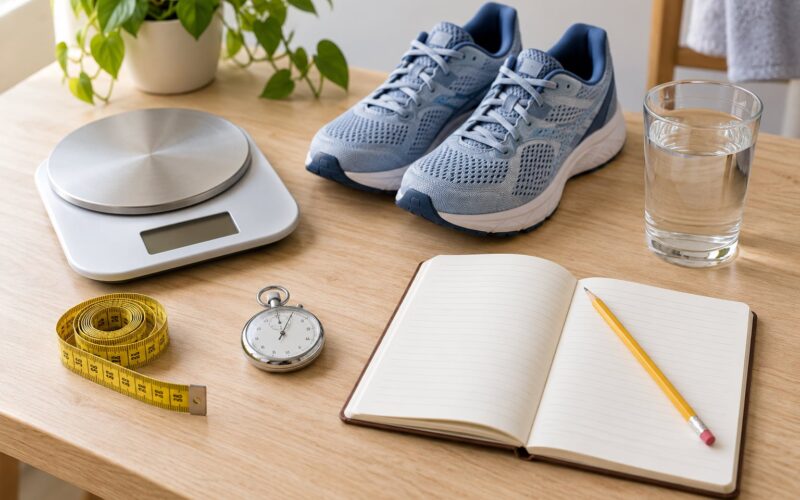
None of this needs a special kit, but a few things make the job much easier.
- A flexible measuring tape. The cloth kind, not a rigid tape measure. For a waist, wrap it around the narrowest part without pulling it tight. You should be able to slide one finger underneath.
- Two or three pieces you already own that fit well. Lay them out and measure them flat. This gives you a garment reference, which is more useful than a number on a label.
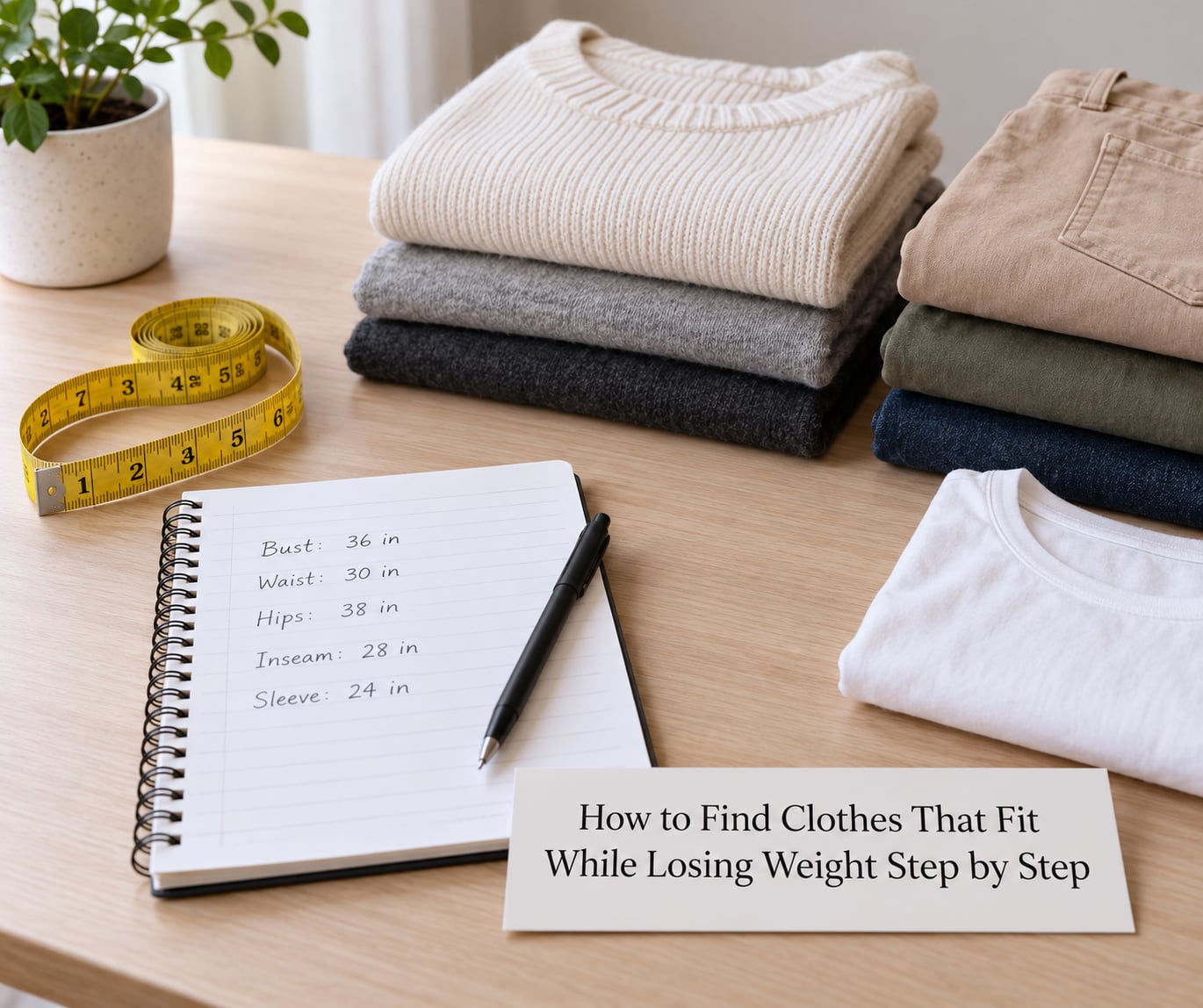
- A notebook or your phone notes. Record waist, hip, chest and inseam, plus the size and brand that worked. Patterns repeat, and you stop re-guessing.
- A spending number for the month. Even a rough one. It turns shopping from a mood into a decision.
- Clothes you can move in. Try-on clothes that let you walk, bend and sit. Fitting-room poses tell you nothing about a Tuesday.
How to Find Clothes That Fit While Losing Weight Step by Step
1. Measure Your Current Shape Before Shopping
Most people start at the scale. Waist measurement is far more useful for fit. Weight is a number for the whole body; a tape gives you a number for the part that actually buttons, zips and bears weight. If you keep only one habit for how to find clothes that fit while losing weight, make it this one.
Write down four: waist at the narrowest point, hip at the widest, chest or bust across the fullest part, and inseam from the crotch seam to your shoe. If your weight loss is reshaping you, add an upper-arm measurement, because sleeves and armholes often change before your waist does.
Measure once a month, same time of day, same conditions. A half inch of slump in how you stand will convince yourself nothing changed. Take the numbers and compare them to the garments you already own, not to a chart on a website, because every brand fits differently.
Those numbers tell you when to replace rather than restock. As a general guideline, a 1 to 2 inch drop in waist is what usually prompts a pant change, 2 to 3 inches affects shirts, and 2 to 4 inches in the waist is where dresses start to look wrong. Rules of thumb like these come from sizing conventions, not a law of nature, so treat them as a reason to try something on rather than a verdict.
2. Shop Your Usual Size First, Then Compare the Next Size
Try the size you normally buy and then the one next to it, in whichever direction makes sense. Brands do not share a standard, and a size 12 in one label can sit next to a size 14 in another, so the number on the tag means very little on its own.
Pay attention to a small set of areas instead. Where does the fabric pull? Which way does the button gapping go? Do the sleeves reach your wrists when your arms hang, or do you look like you are wearing your dad’s shirt? Judge the garment in front of a mirror and from the side, then decide on the body you are in this week.
Here is how those signals translate into a size-down moment.
| Garment | Sign it is time to size down |
|---|---|
| Jeans and pants | Waistband gaps at the button, fabric pulls behind the knee, or the waist rides down when you stand |
| Skirts | Waistband gapping or a skirt that swings instead of sitting |
| Shirts and blouses | Buttons pull open, fabric tents at the middle, or sleeves stop at mid-forearm |
| Dresses | Waist is loose while the bust or hip area pulls, often with a visible gap at the zipper |
| Belts and underwear | Bands dig in, ride up, or a belt has more slack than you can pull out |
| Bras | Straps slip, the band rides, or the wire cup sits differently than it used to |
| Shoes | Feet feel loose or slippers around the toe, which often happens before clothing size changes |
Underwear and bras deserve their own trip. Everything else on your body is a fabric panel, but a badly fitting bra is genuinely uncomfortable, and getting fitted in a bra is quick. A specialty fitting, where it exists, costs less than replacing a bad one in a year.
3. Choose Adjustable or Flexible Clothing
This is where the real savings live. A garment with an adjustable or forgiving waist can cover several sizes, so you buy once instead of three times. Readers on r/loseit describe the same logic: drawstring and elastic-waist pants and skirts let you tighten week by week instead of starting a whole new wardrobe each month.
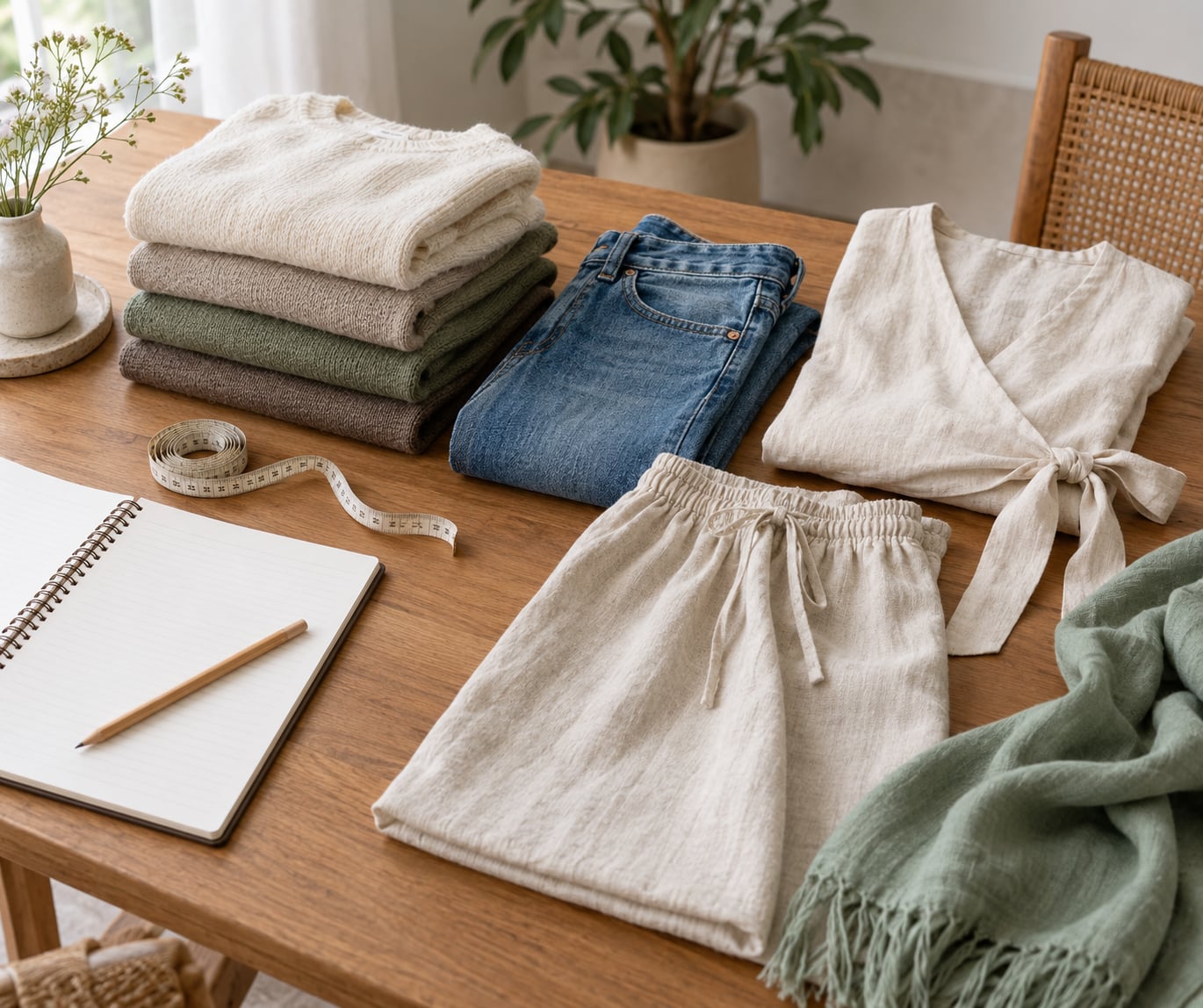
- Elastic waistbands, drawstrings and smocked backs. For trousers, skirts, lounge pants and sleepwear. These are the workhorses of the transition period.
- Wrap tops and wrap dresses. One size covers a wide range because the fit comes from how you tie it, not from a seam.
- A-line and flowy silhouettes. A straight A-line skirt or a loose dress gives you room without looking like a sack with a belt added.
- Stretch denim, jersey and viscose knits. Knits are the piece I tell people to buy first, because they forgive small size differences better than woven fabric.
- Adjustable straps and toggle fastenings. Useful on bras, camisoles and jumpsuits, where a fixed strap length is the thing that gives first.
Secondhand is a natural fit here, too. Buying used means a slightly-off fit matters much less, since a tailor can take two inches out of a waistband in minutes and the item was never expensive in the first place. People on r/WeightLossAdvice and r/oldhagfashion treat thrift and consignment shopping as the default rather than a compromise.
4. Test Comfort Before You Buy
A garment that passes the mirror can still fail the chair. Work through this in the fitting room, and give it about two minutes rather than a quick look.
- Waistband: button or zip it and bend forward. Can you slide two fingers in at the front? Sitting down should not create a hard roll.
- Shoulders and sleeves: shrug both shoulders. If the seam bites, the item is too small even if the waist works.
- Bust, chest or upper arm: raise your arms overhead. Stretch knit that recovers is fine; a seam that stays stretched is not.
- Hip and seat: step and twist. Twist seams that pull at the seat are the most common return reason for pants.
- Movement: walk across the store, sit on a bench, reach for something on a high shelf. Most fit problems show up in the shoulder and hip when you move, not when you stand still.
Then pick a color and fabric you will actually wear. In-between clothes get worn hard, and if you dislike a color, it will sit in the closet and cost you nothing but the money.
5. Plan a Small Weight-Loss Clothing Budget
Your measurements will change for a year or more. Spending like that stops is expensive, so decide what each piece is for before you pay for it.
Prioritize a small number of versatile basics that mix and match, since the work and everyday clothes you use most are the ones worth making adjustable. A structured blazer over a shifting shape, a belt or two, and one pair of well-fitting shoes change a whole outfit without a closet full of new items. Shoes and bags do not resize, which makes them the cheapest way to make new clothes look intentional.
Run the numbers with cost per wear. If a piece will be worn daily for six months, divide what you paid by the number of days you will realistically wear it, then compare that figure to the cheaper item. It changes what feels expensive, and it makes the thrift store an obvious answer for categories where quality does not matter much.
Shop sales, outlet sections and consignment, and be disciplined about timing: end-of-season sales clear out the sizes you do not need, while brands in stock at your current size are often the ones missing from discount racks. The reverse is also true, and that is worth knowing before you blame yourself for not finding a size.
Do not buy at your smallest expected size, though. Buying clothes two or three sizes down to save shopping trips means living in a garment that does not fit, which reads as deliberate discomfort rather than progress.
Finally, decide what happens to the pieces that no longer work. Belts, cinch ties, a tailor taking in a waistband, consignment, donation, or a bag for resale are all reasonable. Many readers keep one pair of the old, larger pants or jeans as a visible marker of how far they have come, and that habit does more for motivation than any new outfit.
Common Mistakes
Almost all the wasted money comes from a handful of predictable moves.
Buying everything at the size you expect to reach. You will wear it for maybe a month before it becomes a problem, and you will have spent real money to feel small in public. Fix: buy for today. If you want to invest, invest in one piece that fits well and is easy to alter.
Trusting the label over a fitting. Size 12 is not a measurement, and two brands rarely agree. Fix: carry your numbers on your phone, compare the garment to a piece you already own, and let fit win.
Ignoring comfort and dressing for the size you wish you were. A too-small outfit looks intentional for exactly one day. Fix: run the movement test above before you pay.
Wearing clothes that are suddenly far too big. Baggy denim riding down to the hips reads as carelessness, not progress. Fix: cinch, take in or replace, even if the piece is technically still your size.
Buying a full new wardrobe during rapid change. This is the most expensive habit and the one that produces a closet full of things you wore twice. Fix: replace three or four items at a time, only when they stop working.
Holding on to the old clothes out of caution. Hanging onto every size as a safety net is a common crutch that makes shopping impossible. Fix: keep one or two meaningful pieces, donate the rest, and let the closet hold the current you.
Waiting for the finish line to shop at all. Clothes that fit badly cost you motivation. Fix: a small monthly purchase is maintenance, not waste.
Frequently Asked Questions
What is the 3-3-3 rule for clothes?
There is no single official 3-3-3 rule for clothing. The phrase circulates online and is applied to a few different ideas, such as re-measuring every three months, sizing down about every third month, or choosing three adjustable features per garment. The useful part is simpler: buy for your current size, track your waist monthly, and expect to size down roughly every 8 to 10 pounds.
What is the 3-3-3 rule to lose weight?
As a weight-loss rule, 3-3-3 is not established in mainstream guidance from bodies such as the CDC, NIH or WHO, and it has no clinical meaning. Some versions circulate online. If you want a plan you can follow, talk with your doctor or a registered dietitian, who can account for your age, activity level, medications and any health conditions before recommending a pace.
Why do my clothes still fit while I am losing weight?
Weight loss is not distributed evenly, so the scale can move while your clothes barely change. Some of the lost mass comes from water and glycogen early on, and fat leaves the waist and face before it leaves the arms, hips or chest. Muscle gain can also keep a garment the same size even as fat drops, which is a good outcome. Measure your waist and hips monthly rather than trusting a size label.
Is every 10 pounds a dress size?
No. The common rule of thumb is that losing 8 to 10 pounds often moves you down one size, but a dress size usually responds to the bust, waist and hip as a group, so a change in one area may not shift it. Denim and shirts respond faster, often at 1 to 3 inches of waist change, because those garments fit closer to the body. Treat 10 pounds as a starting estimate, not a promise.
Should I buy clothes in my goal size?
Probably not. Goal-size clothes fit badly for months, and a long stretch of uncomfortable clothes can quietly undermine your motivation. Buy for the size you are now, favor adjustable waistbands and forgiving fabrics, and replace a few items at a time as measurements change. If you want to invest in one durable piece, have it altered to your current measurements so it fits now.
How do I shop for clothes when I am between sizes?
Try both sizes and judge the garment rather than the tag. Skip anything that gapes at the waist, pulls across the chest, rides down when you button it, or stays stretched after you raise your arms. Elastic waistbands, drawstrings, wrap styles and stretch knits are the safest buys while your size is in motion. Secondhand and tailoring extend the life of any piece you already own.
Start with one measurement and one honest look at the closet. Take your waist today, write it down, and sort what you own into what fits now, what is too small and what is too big. Then buy a single adjustable piece in a color you like, and repeat that once a month. That monthly loop is the whole answer to how to find clothes that fit while losing weight. You will look put together the whole way down, and you will spend a fraction of what an interim wardrobe usually costs.